






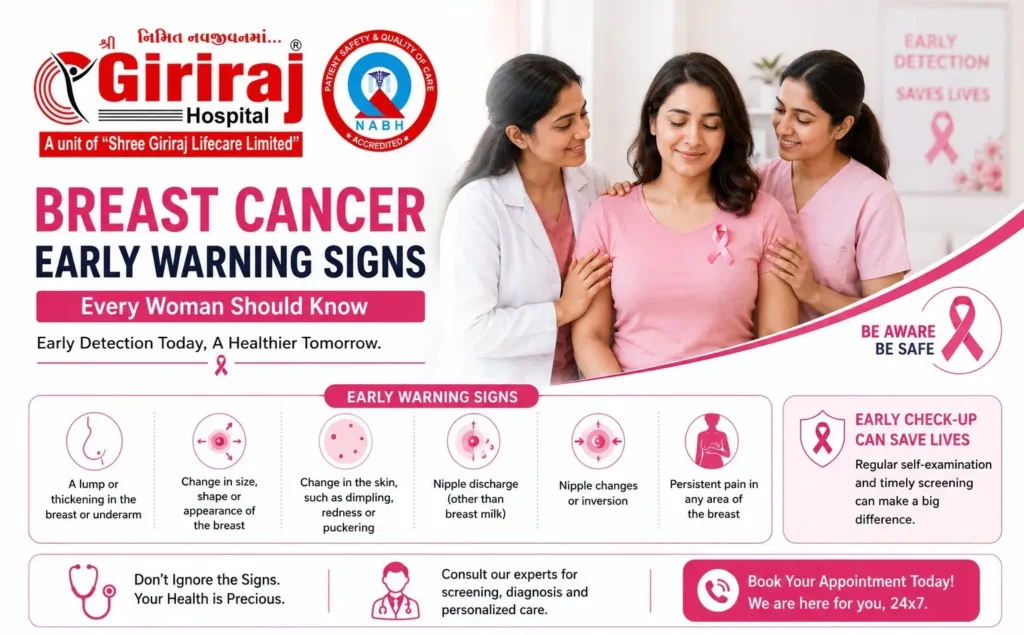
Most breast changes turn out to be harmless, but knowing the breast cancer early warning signs is what allows the small number that aren’t to be caught while treatment is still simplest. Breast cancer has overtaken cervical cancer as the most common cancer among Indian women, accounting for nearly 25% of all cancers in women nationally (ICMR-National Cancer Registry Programme, 2020), and India sees over 1.78 lakh new cases every year (National Cancer Registry Programme, 2024). More than half of these cases are still diagnosed at Stage 3 or 4, when treatment becomes far more complex.
At Shree Giriraj Hospital in Rajkot, our Oncology and Oncology Surgery department focuses on catching breast changes early, when the widest range of treatment options is still available. This article explains what to look for, who is at higher risk, how doctors diagnose and stage breast cancer, what treatment involves, and what to expect around cost and Ayushman Card coverage.
What Is Breast Cancer?
Breast cancer happens when cells in the breast begin growing and dividing abnormally, forming a mass or spreading through breast tissue. Most breast cancers start in the milk ducts or the glands that produce milk, though the disease can develop in different parts of the breast.
This matters because breast cancer, unlike many other cancers, often gives the body a chance to notice something is different, through a lump, a skin change, or a nipple change, well before it becomes advanced. That window is exactly why breast awareness and regular screening make such a meaningful difference to outcomes.
| Think of It Like This Picture breast tissue as a well-organised filing system, with each cell knowing its job and its place. Cancer is like a handful of files starting to misfile themselves and multiply out of control. Left unnoticed, that disorganisation spreads. Caught early, while it’s still confined to one drawer, it’s far easier to sort out completely. |
Breast cancer screening is most effective as part of a broader preventive health routine. Our guide to cancer screening tests everyone should know explains how breast screening fits alongside other routine tests, all coordinated through our Oncology and Oncology Surgery department here in Rajkot.
Warning Signs You Should Never Ignore
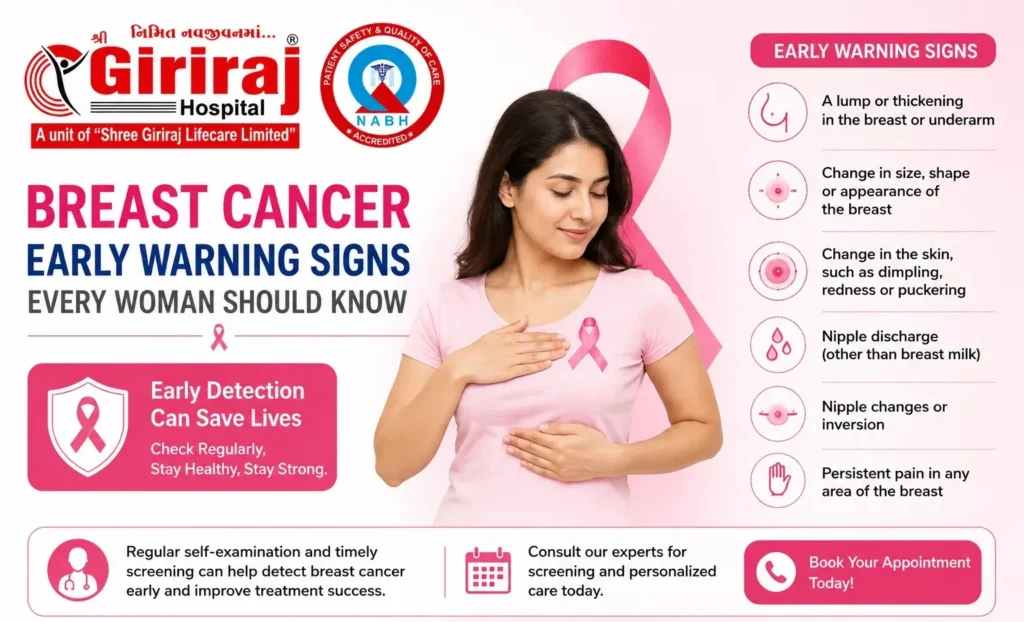
Early Warning Signs
- A new lump or thickening in the breast or underarm, usually painless
- A change in breast size or shape not related to your menstrual cycle
- Dimpling or puckering of the skin, sometimes resembling orange peel texture
- Nipple discharge that’s clear or bloody, especially from one side without squeezing
- A nipple turning inward or becoming flattened when it wasn’t before
- Redness, scaliness, or persistent rash on the nipple or surrounding skin
- Swelling of all or part of the breast, even without a distinct lump
- Persistent breast or armpit discomfort that doesn’t follow your usual monthly pattern
Advanced or Serious Warning Signs
- A rapidly growing or hardening lump
- Firm swelling of lymph nodes near the collarbone or armpit
- Skin ulceration or an open sore on the breast that isn’t healing
- Significant, unexplained breast asymmetry that’s new and worsening
- Persistent bone pain, unexplained fatigue, or unintended weight loss alongside a breast change
| When to Seek Emergency Care Immediately Breast cancer itself is rarely a sudden emergency, but a rapidly spreading skin infection over the breast, severe unexplained pain, or heavy, uncontrolled bleeding from a breast lesion needs urgent evaluation. Get to the nearest hospital’s emergency department right away in these situations rather than waiting for a routine appointment. |
Our Ambulance Services are available across Rajkot for exactly these rare but urgent situations, while our Oncology and Oncology Surgery team evaluates every other new breast change through a proper, unhurried consultation.
Causes and Risk Factors
Common Causes
Age: Risk rises steadily after age 40, though breast cancer can and does occur in younger women, so age alone should never rule out concern about a genuine symptom.
Genetics and Family History: Inherited mutations, particularly in the BRCA1 and BRCA2 genes, meaningfully raise risk. Having a mother, sister, or daughter with breast or ovarian cancer is a significant factor worth discussing with a doctor.
Hormonal Factors: Longer lifetime exposure to oestrogen, through early periods, late menopause, or hormone therapy, is linked to somewhat higher risk.
Reproductive History: Having no children, or having a first child later in life, is associated with modestly higher risk, while longer breastfeeding duration appears to offer some protective effect.
Lifestyle Factors: Obesity, particularly after menopause, limited physical activity, and regular alcohol consumption are each linked to increased risk.
Dense Breast Tissue: Women with dense breast tissue on mammography have a modestly higher risk and may need additional imaging like ultrasound for accurate screening.
Who Is at Risk
- Women over 40, with risk continuing to rise with age
- Anyone with a first-degree relative diagnosed with breast or ovarian cancer
- Women who test positive for BRCA1 or BRCA2 gene mutations
- Those with a personal history of chest radiation before age 30
- Women with dense breast tissue or a personal history of benign breast disease
- Anyone with obesity, particularly after menopause
Having one or more of these risk factors doesn’t mean breast cancer is inevitable, and many women diagnosed have no identifiable risk factor at all. For overall risk-factor management, our Internal Medicine department can help coordinate broader preventive care alongside breast-specific screening.
Stages of Breast Cancer
Doctors stage breast cancer from 0 to 4 based on tumor size, lymph node involvement, and whether it has spread elsewhere. The stage at diagnosis is one of the strongest predictors of treatment approach and outlook.
| Stage | General Description | What It Means for Treatment |
|---|---|---|
| Stage 0 | Abnormal cells confined to ducts, not yet invasive | Often highly treatable with localised approaches |
| Stage 1 | Small tumor, no or minimal lymph node involvement | Usually treated with surgery, often breast-conserving |
| Stage 2 | Larger tumor and/or limited lymph node spread | Combination of surgery with additional treatment |
| Stage 3 | Larger tumor with more extensive lymph node involvement | More intensive combination treatment typically needed |
| Stage 4 | Spread beyond the breast to other organs | Focus shifts to systemic treatment and long-term management |
Why the Stage Matters
An earlier stage generally means more treatment options, including breast-conserving surgery, and often a more straightforward recovery. This is the single biggest reason breast awareness and regular screening genuinely change outcomes.
| Clinical Insight Not every breast cancer grows or behaves the same way, even at the same stage. Factors like hormone receptor status and specific tumor characteristics, confirmed through biopsy, shape the treatment plan just as much as the stage itself. |
Surgical evaluation and staging discussions are coordinated through our Oncology and Oncology Surgery department, working closely with diagnostic imaging from the outset.
How Is Breast Cancer Diagnosed?
Blood Tests
- Complete Blood Count (CBC): checks overall health before any procedure
- Hormone Receptor and HER2 Testing: performed on biopsy tissue to guide treatment choice, not a standalone blood test but essential to diagnosis
- Liver and Kidney Function Tests: checked before certain treatments to confirm they’re safe to proceed
Imaging Tests
- Mammogram: a low-dose breast X-ray and the standard first screening test
- Ultrasound: helps distinguish a solid lump from a fluid-filled cyst, and is useful for dense breast tissue
- MRI: used for high-risk patients or when mammogram and ultrasound results are unclear
Other Diagnostic Procedures
- Clinical Breast Examination: a doctor’s hands-on check, often the first step that prompts further testing
- Core Needle Biopsy: removes a small tissue sample to confirm whether a lump is cancerous
- Sentinel Lymph Node Biopsy: checks whether cancer has reached nearby lymph nodes, usually done alongside surgery
A mammogram alone isn’t the full picture. Results are interpreted together with clinical examination and, when needed, a biopsy, before any diagnosis is confirmed. Our Health Check-up Plans, including the Non-Invasive Cardiology & Radiology Package, can help bundle breast screening with broader preventive testing.
Sample collection for related blood work is handled through our Collection of Laboratory Samples service, which can come to your home if a visit isn’t convenient.
Treatment Options for Breast Cancer
Treatment depends on the stage, tumor characteristics, and individual patient factors. Most patients need a combination of approaches rather than a single treatment.
Non-Surgical / Medical Management
Chemotherapy, hormone therapy, and targeted therapy are provided through our Oncology and Oncology Surgery department, chosen based on the tumor’s specific characteristics confirmed through biopsy.
Surgical / Procedural Treatment
Surgical options range from breast-conserving surgery, removing only the tumor and a margin of surrounding tissue, to mastectomy, removing the whole breast, depending on tumor size, location, and patient preference. Lymph node evaluation is typically performed alongside the primary surgery.
Advanced or Emerging Treatments
For patients needing radiation therapy, this is coordinated through referral to a specialised radiation oncology centre, and our Second Opinion & Teleconsultation service helps make that transition smooth. Patients requiring closer monitoring after surgery are supported by our Critical Care team when needed.
Cost is understandably a major concern for a diagnosis that often involves multiple stages of treatment. Eligible breast cancer surgery and hospital-based treatment are covered under the Ayushman Bharat PM-JAY scheme; our detailed PM-JAY guide explains exactly how the cashless process works.
Breast Biopsy – What to Expect, Step by Step
A biopsy is often the step that causes the most anxiety, so knowing what it involves can make it feel far more manageable.
Preparing for a Biopsy
- Your doctor will explain which type of biopsy is recommended based on your imaging results
- You may be advised to avoid blood-thinning medication for a short period beforehand
- Wear comfortable, easy-to-remove clothing on the day of the procedure
During the Procedure
- Local anaesthesia numbs the area, so most patients feel pressure rather than sharp pain.
- Using imaging guidance where needed, a thin needle removes a small tissue sample from the area of concern.
- The procedure itself typically takes approximately 30 to 45 minutes from start to finish.
- A small bandage is applied, and you’re able to go home the same day in almost all cases.
Immediately After – Recovery
Most patients experience only mild soreness, managed with simple pain relief, and can resume normal activities within a day. Results typically take a few days to return. For the rare case needing closer monitoring, our ICCU is available, though this is uncommon for a routine biopsy.
Please be reassured that a biopsy result, whatever it shows, is simply information that helps plan the right next step, and the same care team supports you through the wait and beyond.
Recovery and Life After Breast Cancer Treatment
Week 1
Do follow wound care instructions closely after any surgical procedure, and rest as advised. Don’t lift heavy objects or resume strenuous activity until your surgical team confirms it’s safe.
Weeks 2 to 4
This period typically involves the first follow-up appointment to check healing, review pathology results in full, and confirm the next phase of treatment if further therapy is planned.
Month 2 to 3
Many patients begin or continue chemotherapy, hormone therapy, or radiation during this window, alongside a gradual return to daily activities as energy allows.
Long-Term: Follow-Up and Monitoring
Long-term care includes regular follow-up visits, ongoing hormone therapy where prescribed, and continued screening of the other breast, since regular monitoring remains important well beyond active treatment.
| A Patient’s Story One of our patients, a 44-year-old teacher from Rajkot, found a small lump during a routine self-check and came in the same week rather than waiting to see if it changed. A biopsy confirmed early-stage breast cancer, and she underwent breast-conserving surgery followed by referral for radiation therapy. She has since returned to teaching full-time. Every case is different, but her experience shows why acting on a new symptom quickly matters. |
Our article on a full body checkup in Rajkot explains how breast screening can be built into routine preventive visits going forward, as part of our broader patient care approach.
Cost and Insurance / Ayushman Card Coverage
The cost of breast cancer diagnosis and treatment in India varies widely depending on the stage, whether surgery is breast-conserving or a mastectomy, and whether chemotherapy or radiation is needed. We do not publish fixed prices here, since every treatment plan is different; our billing desk can provide a written estimate once your specific case is assessed.
Factors that affect total cost include the type of surgery, the number of chemotherapy cycles if needed, and whether radiation therapy is part of the plan.
Is this treatment covered under PM-JAY? Yes, for eligible procedures. Eligible breast cancer surgery and hospital-based treatment are covered under the Ayushman Bharat PM-JAY scheme for eligible families. Once eligibility is confirmed through the Ayushman card, the hospital coordinates directly with the scheme so covered treatment proceeds on a cashless basis.
Our on-site Ayushman Mitra desk assists families with the entire verification and approval process, and our cashless health insurance facility covers a wide network of insurers and TPAs for eligible treatment.
For a full walkthrough of eligibility and the cashless process, read our Ayushman Bharat Health Card / PM-JAY guide. If you would like to discuss your specific situation, speak to our team and we will guide you through the next steps.
Do’s and Don’ts for Breast Health
| Do This | Don’t Do This |
|---|---|
| Perform a monthly self-check, ideally a week after your period ends | Don’t skip self-checks just because a previous one was normal |
| Get a mammogram on the recommended schedule from age 40 onward | Don’t delay screening due to fear of what it might show |
| Report any new lump or change to a doctor within a few weeks | Don’t wait months to see if a change goes away on its own |
| Mention family history of breast or ovarian cancer to your doctor | Don’t assume family history from an aunt or grandparent doesn’t matter |
| Maintain a healthy weight and stay physically active | Don’t ignore weight gain as unrelated to overall breast health |
| Limit alcohol intake as part of general risk reduction | Don’t assume moderate drinking has no bearing on risk |
| Ask your doctor to explain an unclear mammogram result clearly | Don’t assume an unclear result automatically means cancer |
| Ask about cost and PM-JAY coverage early in the process | Don’t delay care due to assumed cost without checking first |
Building breast screening into a regular health check-up routine is the simplest way to make sure it actually happens on schedule, rather than becoming something that keeps getting postponed.
Common Myths About Breast Cancer
| Myth | Fact |
|---|---|
| Only a lump means breast cancer | Skin changes, nipple discharge, or swelling without a distinct lump can also be early signs |
| Breast pain is a common early sign of cancer | Pain is rarely the first symptom; most breast cancer lumps are painless, which is why they’re easy to dismiss |
| Only women with a family history get breast cancer | Most women diagnosed with breast cancer have no family history of the disease at all |
| Young women don’t need to worry about breast cancer | While risk rises with age, breast cancer does occur in younger women and any new symptom deserves evaluation |
| Men can’t get breast cancer | Male breast cancer is rare but real, and is often diagnosed later since awareness is lower |
| A normal mammogram means you’re completely safe until the next one | Mammograms can miss some cancers, so new symptoms between screenings should still be reported |
| Breast cancer treatment always means losing the breast entirely | Many early-stage cancers are treated with breast-conserving surgery rather than full mastectomy |
| For proper breast cancer treatment you need to travel to a big city | Shree Giriraj Hospital provides this care to the same standard as top hospitals in larger cities, right here in Rajkot |
Why Choose Shree Giriraj Hospital for Breast Cancer Care?
Choosing where to get evaluated for a breast concern is a decision worth making without unnecessary delay. You can read more about our hospital here, but the points below focus on what matters most for breast health specifically.
Coordinated Diagnosis and Surgical Oncology
Our Oncology and Oncology Surgery department manages diagnosis, staging, and surgical treatment as one coordinated process, rather than separate referrals across different providers.
Coordinated Gynaecology Support
For patients whose care also involves gynaecological factors, our High-Risk Gynaecology & Obstetrics department works alongside oncology for a complete picture of women’s health.
Critical Care Backup When Needed
For patients who need closer post-surgical monitoring, our Critical Care team and ICCU provide that level of support without requiring transfer elsewhere.
Two Accessible Campus Locations
Our Rajkot Main and Kuvadava campuses both support breast screening and oncology follow-up, giving patients across the city genuinely convenient access to ongoing care.
Transparent, Cashless Ayushman Bharat / PM-JAY Coverage
Eligible breast cancer surgery and treatment are covered under the PM-JAY scheme, and our Ayushman Mitra desk manages verification and cashless processing directly. Read more in our PM-JAY guide.
You do not have to navigate a breast health concern alone. Our experienced doctors are ready to guide you through evaluation, diagnosis, and treatment. If you’d like a broader view of what to look for in a hospital, our guide on the best hospital in Rajkot covers the key factors worth considering.
Book a consultation with our oncology team today to get a clear answer instead of living with uncertainty.
Frequently Asked Questions
What is the first sign of breast cancer?
The most common first sign is a new, usually painless lump in the breast or underarm. Other early signs include changes in breast size or shape, skin dimpling, or nipple discharge, though not every case starts with a lump.
At what age should breast cancer screening start?
Clinical breast exams are generally recommended every 1 to 3 years starting in your 20s and 30s, with mammograms typically starting around age 40. Women with a strong family history or genetic risk may need to start screening earlier, based on their doctor’s guidance.
Is breast pain a sign of cancer?
Breast pain alone is rarely the first sign of cancer. Most breast cancer lumps are painless. That said, persistent, unexplained pain that doesn’t follow your normal cycle is still worth having checked.
Is breast cancer treatment covered under Ayushman Bharat?
Yes, eligible breast cancer surgery and hospital-based treatment are covered under the PM-JAY scheme for eligible families, including cashless treatment. See our full Ayushman Bharat / PM-JAY guide for the step-by-step process.
Does Shree Giriraj Hospital treat breast cancer?
Yes. Our Oncology and Oncology Surgery department manages diagnosis, surgery, and chemotherapy directly, with coordinated referral for radiation therapy when needed.
How do I book an appointment for a breast concern?
You can book an appointment online for a consultation, or come directly to our hospital if you have an urgent concern that needs prompt evaluation.
How do I perform a breast self-exam?
Check visually in front of a mirror for changes in size, shape, or skin texture, then use the pads of your fingers to feel the breast in circular motions, both lying down and standing, covering the entire breast and underarm area. The best time is a few days after your period ends, when breasts are least tender.
Can men get breast cancer?
Yes, though it’s rare. Men have much less breast tissue, which sometimes makes changes easier to notice, but awareness is generally lower, so male breast cancer is often diagnosed at a later stage.
Does a family history of breast cancer mean I will definitely get it?
No. Family history raises risk but doesn’t guarantee diagnosis, and most women with breast cancer have no family history at all. If you have a strong family history, discussing earlier or additional screening with a doctor is worthwhile.
What happens if a mammogram shows something unclear?
An unclear mammogram usually leads to additional imaging, like an ultrasound, or occasionally a biopsy for definitive answers. Most unclear results turn out not to be cancer once follow-up testing is complete.
Conclusion and Next Steps
Knowing the breast cancer early warning signs and acting on them promptly, rather than waiting to see if they pass, remains one of the most effective things a woman can do for her long-term health. Most changes are not cancer, and the ones that are get caught earlier when you don’t wait.
If you’ve noticed a new breast change or are due for screening, don’t wait. Contact our Oncology and Oncology Surgery department in Rajkot for an evaluation, or book an appointment for a consultation.
Get in touch with our team with any questions about symptoms, cost, or PM-JAY coverage. Our staff are ready to support you at every step.
Read More: