







Most serious health problems don’t announce themselves early – which is exactly why a full body checkup Rajkot residents can trust has become one of the most searched preventive-health terms in the city. Diabetes, high cholesterol, thyroid disorders, and early kidney or liver changes often develop silently for years before symptoms appear. Non-communicable diseases now account for an estimated 66% of all deaths in India (World Health Organization, 2023), and a large share of that burden is preventable or manageable when caught early.
A national health survey also found that nearly 1 in 4 Indian adults has never had a routine health screening, even though most chronic conditions are far easier to treat when identified before symptoms begin (National Family Health Survey, 2022). At Shree Giriraj Hospital, the Health Check-Up Plan programme is designed to make preventive screening simple, structured, and doctor-backed rather than a one-off lab report with no follow-up. You can learn more about the hospital’s approach to preventive and patient-first care on the About Us page.
This guide explains what a full body checkup actually includes, who should prioritise one, how to choose between package tiers, what happens on checkup day, how to interpret and act on your results, and what it typically costs – so you can book with confidence instead of guesswork.
What Is a Full Body Checkup?
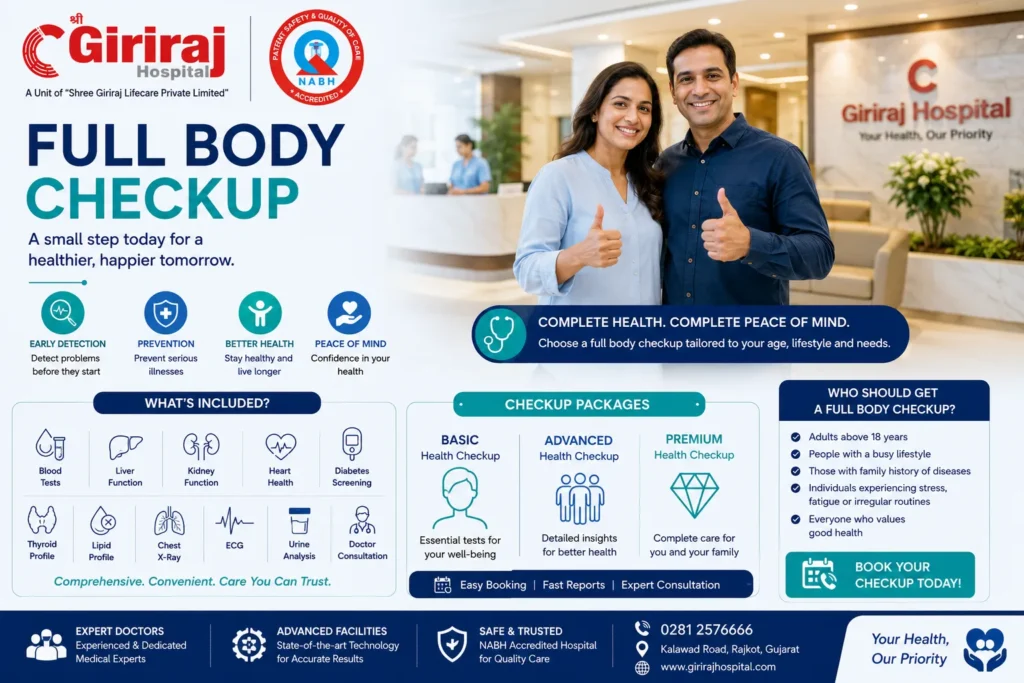
A full body checkup is a structured set of blood tests, imaging, and a physical examination designed to assess how your major organs – heart, liver, kidneys, thyroid, and lungs – are functioning, all in a single visit. Rather than testing for one specific illness, it builds a broad baseline of your health so problems can be caught while they are still easy to manage.
It matters for everyone, not just people who feel unwell. Office professionals, homemakers, senior citizens, and even fit-looking young adults can carry silent risk factors such as borderline sugar levels or early fatty liver changes. At Shree Giriraj Hospital, the Health Check-Up Plan is reviewed by physicians from Internal Medicine so that any abnormal finding is followed by an actual medical conversation, not just a PDF report.
| Think of it this way A full body checkup works like a routine service for a car – you don’t wait for the engine to fail before checking the oil, brakes, and battery. Catching a small issue during a scheduled check is always cheaper and safer than dealing with a breakdown later. |
Signs You Shouldn’t Delay a Checkup
Many people postpone a checkup because they “feel fine.” But certain signs – even mild ones – suggest it’s time to get screened rather than wait for your next scheduled visit.
Early Warning Signs
- Persistent tiredness or low energy despite adequate sleep
- Unexplained weight gain or weight loss over a few months
- Frequent thirst, hunger, or urination
- Mild but recurring headaches or dizziness
- Digestive changes such as bloating, acidity, or irregular bowel habits
- Family history of diabetes, heart disease, or cancer with no personal screening yet
- Skipping annual checkups for more than 2 years
Signs That Need Prompt Medical Attention
- Chest discomfort, breathlessness, or palpitations
- Sudden or severe swelling in the legs or abdomen
- Blood in urine or stool
- Yellowing of the skin or eyes (jaundice)
- Unexplained, rapid weight loss
- Fainting spells or repeated dizziness
| When to Seek Emergency Care Immediately Chest pain, sudden breathlessness, or fainting are never “wait and watch” symptoms. Reach the nearest emergency department immediately, or call the hospital’s Ambulance Service for immediate transport. |
Some of these signs overlap with heart-related and neurological red flags. Our related articles on early signs of heart disease you should never ignore and stroke symptoms everyone should know explain how to tell a routine symptom apart from a genuine emergency.
Causes and Risk Factors Behind Silent Health Problems
Most conditions found during a full body checkup build up gradually, shaped by a mix of age, genetics, and daily habits. There’s no single “cause” to blame, and there’s no benefit in feeling guilty about how you’ve been living – the goal now is simply to get informed.
Common Contributing Factors
- Sedentary routines: long hours at a desk or behind the wheel reduce metabolic activity and raise the risk of high blood sugar and cholesterol.
- Diet patterns: a diet heavy in fried snacks, sweets, and refined carbohydrates – common in festive and daily Gujarati cuisine – can gradually raise blood sugar and lipid levels.
- Family history: a parent or sibling with diabetes, heart disease, or thyroid conditions meaningfully raises personal risk, even with a healthy lifestyle.
- Stress and sleep debt: chronic stress and poor sleep affect blood pressure, blood sugar regulation, and heart health over time.
- Tobacco and alcohol use: both are established risk factors for liver, heart, and lung conditions detected during routine screening.
Who Should Prioritise Screening
- Adults above 30, even without symptoms
- Anyone with a family history of diabetes, heart disease, or cancer
- People with desk-based jobs and minimal daily activity
- Individuals who are overweight or have a large waist circumference
- Smokers and regular alcohol consumers
- Women planning pregnancy or past menopause
Because heart and metabolic risk factors are so closely linked, many patients are guided toward the Cardiology and Nephrology teams for a focused follow-up when their checkup flags an abnormal reading.
Types of Full Body Checkup Packages
Not every patient needs the most extensive package available. Shree Giriraj Hospital’s Health Check-Up Plan is organised into tiers so you can match the depth of screening to your age, risk factors, and budget.
| Package Tier | Best Suited For | What It Typically Covers |
|---|---|---|
| Health Basic | Young adults with no symptoms, first-time screening | Core blood work, blood sugar, basic lipid profile |
| Health Essential | Adults 25–40 wanting a broader baseline | Basic panel plus liver and kidney function tests |
| Health Vital | Adults 30+ or those with mild risk factors | Essential panel plus thyroid and expanded cardiac markers |
| Health Vital Plus | Adults with a family history of chronic disease | Vital panel plus additional imaging and specialist review |
| Health Proactive | Adults 40+ wanting a comprehensive annual review | Wider organ-function panel with physician consultation |
| Health Active | Physically active adults and fitness-focused individuals | Fitness-oriented panel including bone and joint markers |
| Health Expert | Seniors or high-risk individuals wanting the deepest screening | Most comprehensive panel with imaging and specialist referrals |
Focused Cardiac and Radiology Screening
Patients specifically concerned about heart risk can opt for the Non-Invasive Cardiology & Radiology Package, which combines cardiac-specific tests with imaging for a more targeted assessment than a general package alone.
| Clinical Insight The right package isn’t always the most expensive one. A 28-year-old with no family history may get more value from Health Essential than Health Expert, while a 45-year-old with a parent who had a heart attack should not settle for Health Basic. Ask your doctor which tier matches your actual risk profile. |
What Is Included in a Full Body Checkup?
A comprehensive package combines three categories of testing, each answering a different question about your health.
Blood Tests
- Complete Blood Count (CBC): checks for anaemia, infection, or blood-related disorders.
- Fasting blood sugar and HbA1c: screens for diabetes and pre-diabetes.
- Lipid profile: measures cholesterol and triglycerides to assess heart disease risk.
- Liver function test (LFT): checks how well the liver is processing and filtering substances.
- Kidney function test (KFT): measures how effectively the kidneys remove waste from the blood.
- Thyroid profile: screens for an overactive or underactive thyroid gland.
Imaging Tests
- Chest X-ray: screens the lungs and heart shadow for visible abnormalities.
- Abdominal ultrasound: checks the liver, kidneys, gallbladder, and pancreas for structural issues.
- ECG (electrocardiogram): records the heart’s electrical activity to detect rhythm irregularities.
Other Diagnostic Procedures
- Physical examination: a doctor checks blood pressure, weight, BMI, and general physical signs.
- Vision and dental screening (select packages): identifies issues that routine blood work cannot detect.
Results are explained in plain language by your physician, not just handed over as raw numbers. Where a finding needs a closer look, patients are guided directly to Gastroenterology for liver-related concerns or Internal Medicine for a broader evaluation.
How to Choose the Right Checkup Option
The right package depends on your age, family history, current symptoms, and how recently you were last screened – not simply the most expensive option available.
If You’re Screening for the First Time
Start with a foundational tier and build from there based on what your results show. The hospital’s Wellness Program can also help first-time patients understand which lifestyle areas need the closest attention alongside their test results.
If You Have a Family History or Existing Risk Factors
A more comprehensive tier with imaging and specialist review is usually worth the additional cost, since it can catch conditions a basic panel would miss entirely.
If You Can’t Visit In Person Right Away
Patients who want to discuss a prior report or symptoms before booking a package in person can use Second Opinion & Teleconsultation to speak with a doctor remotely and get guided toward the right screening tier.
Wherever possible, avoid choosing a package purely on price. A cheaper panel that misses a relevant risk factor can end up costing more in the long run – both financially and in terms of delayed treatment.
Your Checkup Day – Step by Step
Preparing for Your Checkup
- Fast for 8 to 10 hours before your appointment if your package includes blood sugar or lipid testing
- Carry a list of current medications and any previous reports
- Wear loose, comfortable clothing for ease during the physical examination and ECG
- Stay well hydrated with plain water, and avoid alcohol for 24 hours beforehand
The Procedure
- Registration: you check in at the reception, confirm your package, and complete any required paperwork.
- Sample collection: a trained technician draws blood and collects any other required samples, usually within 10–15 minutes.
- Imaging and ECG: you proceed to X-ray, ultrasound, and ECG as included in your package.
- Physical examination: a physician records your vitals, weight, and BMI, and discusses your history and any current symptoms.
- Wrap-up: the entire visit typically takes approximately 1 to 2 hours, depending on the package chosen.
Immediately After Your Visit
Most reports are ready within 24 to 48 hours. If any finding needs urgent attention, the hospital’s care coordinators will contact you directly rather than leaving you to interpret the report alone. For patients who need same-day specialist input, the Doctors team is available for a follow-up consultation right after your results are in. Rest assured, the entire process is designed to be efficient and unhurried, without the long waits typical of a standalone diagnostic lab.
After Your Checkup – Understanding and Acting on Your Results
Getting your report is only half the process. What you do with it over the following weeks determines whether the checkup actually improves your health.
Week 1: Reviewing Your Report
- Do: schedule a follow-up consultation to have every abnormal value explained in context
- Don’t: self-diagnose from a single number without understanding the full picture your doctor sees
Weeks 2 to 4: Acting on Findings
- Begin any medication or lifestyle changes your doctor recommends
- Book a specialist consultation if your report points to a specific department, such as cardiology or gastroenterology
- Start tracking simple metrics at home, such as blood pressure or blood sugar, if advised
Month 2 to 3: Building the Habit
If lifestyle changes were recommended, this is when they need to become routine rather than a short burst of motivation. Structured guidance through the Wellness Program can help translate report findings into a sustainable daily routine.
Long-Term: Making It Annual
A single checkup gives you a snapshot; repeating it annually gives you a trend line, which is far more useful for catching a developing problem early. Most doctors recommend yearly screening for adults over 30, and more frequent monitoring for those with existing risk factors.
| A Patient’s Story (Representative Example) A 41-year-old teacher from Rajkot booked a routine checkup expecting a clean report. It flagged borderline high blood sugar with no symptoms at all. Three months of dietary changes and monitoring brought her levels back to a healthy range – a reminder that the value of a checkup often isn’t in what’s already wrong, but in what it stops from becoming a bigger problem. |
If any finding requires a hospital admission or closer monitoring, our guide on what happens inside an ICU can help ease any anxiety about what advanced care actually looks like – though for the vast majority of patients, a checkup finding simply means a conversation and a follow-up plan, nothing more.
Cost and Insurance Coverage for a Full Body Checkup
Full body checkup costs in India vary depending on the number of tests included, whether imaging is part of the package, and whether home sample collection is chosen over an in-hospital visit. Rather than a single fixed number, cost is best understood as a range tied to the depth of screening you choose.
Factors That Affect Total Cost
- Number and type of tests included in the chosen package tier
- Whether imaging (ultrasound, X-ray, ECG) is bundled in
- Whether a physician consultation and report explanation is included
- Add-on tests requested based on personal or family risk factors
Many corporate and individual health insurance plans offer a preventive health checkup benefit once every one or two years, either fully or partially reimbursed – it is worth checking your specific policy terms before booking. Shree Giriraj Hospital’s insurance desk can help verify what your plan covers. To confirm your eligibility and understand payment options, patients are encouraged to speak with our team via Contact Us or while scheduling a visit through Book an Appointment.
Do’s and Don’ts Before Your Full Body Checkup
| Do This | Don’t Do This |
|---|---|
| Fast for 8–10 hours if your package includes sugar or lipid testing | Eat a heavy meal or sweets right before a fasting blood test |
| Get a full night’s sleep before your appointment | Stay up late or attend a heavy social function the night before |
| Drink plain water to stay hydrated | Drink tea, coffee, or juice before a fasting test |
| Carry previous reports and a list of current medications | Skip mentioning ongoing medication, even if it feels minor |
| Schedule your checkup for the morning when possible | Exercise vigorously right before your appointment, which can skew results |
| Wear loose, comfortable clothing for the physical exam and ECG | Wear tight or layered clothing that delays the examination |
| Avoid alcohol and smoking for at least 24 hours beforehand | Assume one “normal” report years ago means you can skip this year’s checkup |
| Ask your doctor to explain every abnormal value in context | Search the internet for a diagnosis before speaking with your doctor |
Common Myths About Full Body Checkups
| Myth | Fact |
|---|---|
| If I feel fine, I don’t need a checkup | Conditions like diabetes, high cholesterol, and early liver changes commonly show no symptoms until they’ve progressed significantly |
| A full body checkup can diagnose every possible disease | It is a broad screening tool, not a diagnosis of everything; specific symptoms may still need targeted specialist tests |
| Cheaper checkup packages online are just as good as a hospital-based one | Standalone lab packages often skip the physician review and imaging that catch issues blood tests alone would miss |
| Once you’re on medication for a condition, checkups aren’t necessary anymore | Ongoing monitoring is exactly how doctors confirm your treatment is working and adjust it if it isn’t |
| Young, fit-looking people don’t need to bother with screening | Risk factors like high cholesterol or borderline sugar levels can appear well before any visible change in fitness or weight |
| A normal report means you can skip checkups for several years | Annual screening builds a trend over time, which is far more valuable than a single normal result years apart |
| For this kind of comprehensive screening, you need to travel to a big city | Shree Giriraj Hospital provides full body checkup packages to the same clinical standard as top hospitals in larger cities – right here in Rajkot |
Why Choose Shree Giriraj Hospital for Your Full Body Checkup?
Choosing where to get screened is more than picking the lowest price online – it shapes whether an abnormal finding actually leads to timely care. Here is what sets Shree Giriraj Hospital apart for patients comparing options for a full body checkup in Rajkot.
A Structured, Tiered Health Check-Up Programme
The Health Check-Up Plan is organised into seven clear tiers, so patients can choose a package that genuinely matches their age and risk profile instead of guessing between generic “basic” and “premium” labels.
Doctor-Reviewed Results, Not Just a Report
Every checkup includes a physician review through Internal Medicine, so abnormal findings come with an actual explanation and next-step plan, not just a number on a page.
Direct Access to Specialist Departments
When a result points to a specific concern, patients can be guided directly to Cardiology or Nephrology for focused follow-up, all within the same hospital.
Modern, Purpose-Built Facilities
From sample collection to imaging, patients are screened within a facility designed for both accuracy and comfort – see the Hospital Infrastructure page for more detail.
Two Accessible Campuses
Shree Giriraj Hospital operates from Rajkot Main (27 Navjyot Park, 150 Ft Ring Road, Rajkot – 360005) and Kuvadva (Plot No. 28, 29, 30, Near Wankaner Chowkdi, Kuvadva, Rajkot – 360023), giving patients across the city and surrounding areas a nearer point of access to preventive screening.
Insurance Support
The hospital works with a wide network of insurers and TPAs to help verify preventive-checkup benefits under eligible policies. Reach the insurance desk through Contact Us for a coverage check before your visit.
To take the next step, meet our specialist team by consulting the Doctors page, and book your full body checkup with our team today through Book an Appointment.
Frequently Asked Questions
What is included in a full body checkup?
A typical package includes blood tests (CBC, sugar, lipid profile, liver and kidney function, thyroid), imaging such as a chest X-ray and abdominal ultrasound, an ECG, and a physical examination with a doctor.
How often should I get a full body checkup?
Most doctors recommend an annual checkup for adults over 30, and more frequent screening for those with existing risk factors or a strong family history of chronic disease.
Is fasting required before a full body checkup?
Yes, if your package includes fasting blood sugar or a lipid profile, you’ll typically need to fast for 8 to 10 hours beforehand. Your care team will confirm exact instructions when you book.
Is a full body checkup covered under insurance?
Many health insurance policies include a preventive checkup benefit once every year or two. Contact our insurance desk through Contact Us to confirm what your specific plan covers.
What is the difference between a basic and comprehensive health checkup?
A basic package covers core blood work like sugar and a simple lipid panel, while comprehensive tiers add liver, kidney, and thyroid testing along with imaging and a more detailed physician review.
At what age should I start getting yearly checkups?
Most doctors suggest starting structured annual screening from age 30, though anyone with a family history of chronic disease may benefit from starting earlier.
How long does a full body checkup take?
A typical visit takes approximately 1 to 2 hours, covering sample collection, imaging, ECG, and a physician consultation, depending on the package chosen.
Does Shree Giriraj Hospital offer different checkup packages?
Yes, the Health Check-Up Plan includes seven tiers – from Health Basic to Health Expert – so patients can choose a package matched to their age and risk profile.
How do I book a full body checkup?
You can schedule a checkup directly through the Book an Appointment page, or call the hospital’s contact numbers listed on the Contact Us page.
What happens if my report shows an abnormal result?
A physician will review the finding with you in plain language and, if needed, refer you to the relevant specialist department for further evaluation and a treatment plan.
Conclusion
A full body checkup isn’t about expecting bad news – it’s about giving yourself and your doctor the information needed to catch small issues while they’re still easy to manage, or simply confirming that you’re on the right track.
If it’s been more than a year since your last screening, or you’ve never had one at all, don’t wait for symptoms to make the decision for you. Explore the Health Check-Up Plan at Shree Giriraj Hospital, Rajkot, and take a proactive step for your long-term health. You can book an appointment directly online, or reach our team through the Contact Us page for any questions before your visit.
Read More: Early Signs of Heart Disease You Should Never Ignore | Fatty Liver Disease – The Silent Health Threat | Stroke Symptoms Everyone Should Know – or explore more articles on our Blogs page.