





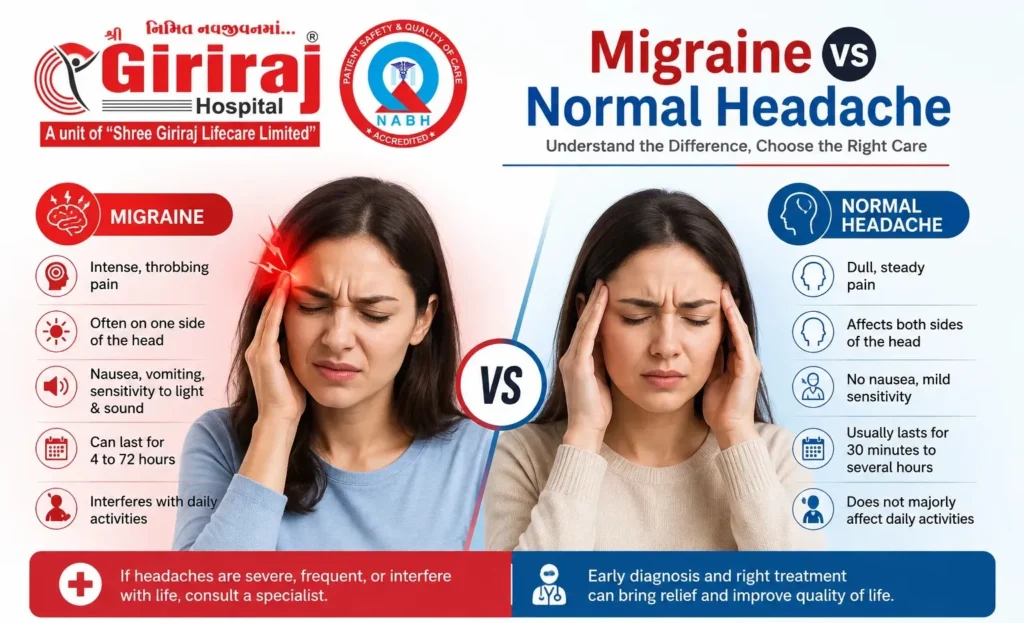
Almost everyone gets a headache from time to time, but not every headache is the same. Learning the migraine vs headache difference helps you get the right treatment faster instead of guessing with random painkillers. Tension headaches remain the most common headache type worldwide, while migraine is the second most common but far more disabling, affecting an estimated 14 to 25% of Indians at some point in their lives (Journal of the Association of Physicians of India, 2024). Globally, migraine is recognised as one of the leading causes of disability in adults under 50 (World Health Organization, 2024).
At Shree Giriraj Hospital, our Neurology & Interventional Neurology team in Rajkot regularly sees patients who have lived with unexplained head pain for years, simply because they never knew what type of headache they were dealing with. This article explains what separates a migraine from a regular headache, the warning signs that need urgent attention, common causes and triggers, how doctors diagnose the two, the treatments available, and what long-term management looks like, including cost and Ayushman Card coverage.
What Is a Migraine? What Is a Headache?
A headache is simply pain or pressure felt anywhere in the head, scalp, or neck. It is usually a symptom rather than a disease on its own, often caused by everyday triggers like stress, dehydration, or poor posture. Most headaches are mild to moderate and improve with rest, water, or a simple painkiller.
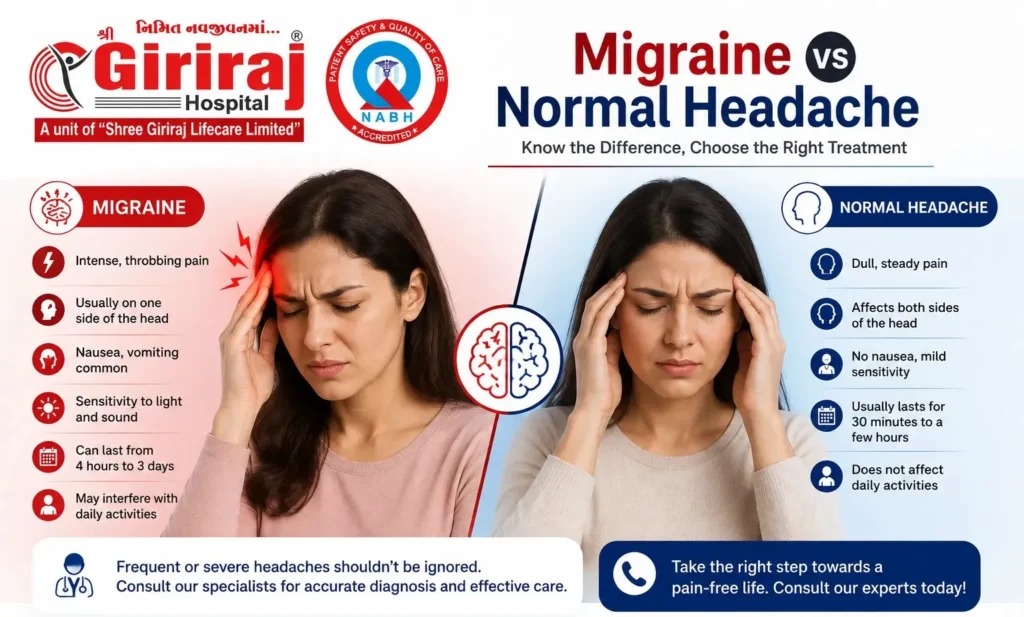
A migraine is different. It is a neurological condition, not just a stronger headache. A migraine typically causes throbbing pain on one side of the head, often paired with nausea, vomiting, and extreme sensitivity to light and sound. A migraine attack can last anywhere from 4 to 72 hours if untreated, compared to a typical headache that usually settles within a few hours.
| Think of It Like This Imagine your brain as a smoke alarm. A regular headache is like the alarm briefly beeping because of a burnt piece of toast, a passing, low-level trigger. A migraine is like the alarm going off because of an actual electrical fault in the wiring. It takes longer to settle, brings in other systems (nausea, vision changes), and keeps happening until the underlying issue is properly managed. |
Because a severe, sudden headache can occasionally signal something more serious, it is worth reading our guide on stroke symptoms everyone should know so you know when head pain needs emergency attention rather than routine care. Ongoing evaluation of recurring headaches and migraines is handled by our Neurology & Interventional Neurology department here in Rajkot.
Warning Signs You Should Never Ignore
Early Warning Signs
- A headache that is noticeably more intense than your usual headaches
- Throbbing pain that is limited to one side of the head
- Nausea or vomiting alongside the head pain
- Sensitivity to light, sound, or strong smells
- Visual disturbances such as flashing lights, blind spots, or zigzag lines before the pain starts
- A stiff neck, mood changes, or unusual food cravings a day or two before the headache
- Head pain that worsens with normal daily activity, like climbing stairs
- Frequent headaches that are starting to interfere with work or sleep
Advanced or Serious Warning Signs
- A sudden, severe “thunderclap” headache unlike anything felt before
- Headache following a fall, blow to the head, or accident
- Headache with confusion, slurred speech, or weakness in an arm or leg
- Headache with a stiff neck, high fever, or a rash
- New, unusually severe headaches in anyone over the age of 50
- Headache that changes character or worsens despite regular medication
- Vision loss or fainting alongside the headache
| When to Seek Emergency Care Immediately A sudden, extremely severe headache, a headache after a head injury, or a headache accompanied by confusion, weakness, or slurred speech should never be treated at home. Get to the nearest hospital’s emergency department right away, since these signs can point to conditions that need urgent evaluation and treatment. |
Our Ambulance Services are equipped to respond quickly across Rajkot for exactly this kind of emergency, while our Neurology & Interventional Neurology team is on standby to assess red-flag headaches the moment a patient arrives.
Causes and Risk Factors
Common Causes
Tension and Stress: The most common cause of an everyday headache, often described as a tight band of pressure around the head, usually linked to muscle tension in the neck and scalp.
Dehydration and Missed Meals: Not drinking enough water or skipping meals can trigger head pain within hours, especially in Rajkot’s hot, dry months.
Migraine Triggers: Certain foods, strong smells, bright or flickering lights, hormonal shifts, and disrupted sleep can set off a migraine attack in people who are prone to them.
Sinus Congestion: Inflammation in the sinuses from allergies or infection can cause pain around the forehead, cheeks, and eyes that worsens when bending forward.
Eye Strain and Screen Time: Long hours in front of screens without breaks is an increasingly common cause of daily headaches, particularly among working professionals.
Underlying Medical Conditions: Uncontrolled high blood pressure, certain medications, and rarely, structural issues in the brain can also cause persistent headaches.
Who Is at Risk
- People with a family history of migraine, since genetics play a strong role
- Women, particularly during hormonal shifts like periods, pregnancy, or menopause
- Adults under high, sustained work or academic stress
- People with irregular sleep schedules or chronic sleep deprivation
- Those with uncontrolled high blood pressure or other cardiovascular risk factors
- Heavy consumers of caffeine or alcohol, or those who stop either abruptly
None of these triggers are a personal failing, and many people who develop migraines have no obvious cause at all. If uncontrolled blood pressure is contributing to your headaches, our Internal Medicine department can help bring it under control, and our article on high blood pressure symptoms explains the connection in more detail.
Types of Headache vs Migraine
The most useful way to understand the migraine vs headache difference is to compare the main types side by side.
| Type | Typical Pain | Duration | Common Extra Symptoms |
|---|---|---|---|
| Migraine | Throbbing, usually one-sided | 4 to 72 hours | Nausea, vomiting, light/sound sensitivity, visual aura |
| Tension Headache | Dull, tight band-like pressure | 30 minutes to a few hours | Usually none, mild scalp tenderness |
| Cluster Headache | Sharp, intense pain around one eye | 15 minutes to 3 hours, in cycles | Red or watery eye, nasal congestion on one side |
| Sinus Headache | Deep pressure in forehead, cheeks, or nose | Hours to a few days | Worsens on bending forward, linked to congestion |
Why Getting the Type Right Matters
Painkillers that work well for a tension headache often do very little for a migraine attack, and using them too frequently can eventually cause a separate problem called a medication-overuse headache. Correctly identifying the type guides which treatment, and which specialist, is the right fit.
| Clinical Insight Migraine and tension headache can genuinely overlap in the same person on different days, or even blend into a single episode. If your headaches don’t fit neatly into one category, that itself is a good reason to get a proper neurology evaluation rather than guessing. |
For headaches that turn out to be linked to sinus infections or nasal congestion, our ENT department can assess and treat the underlying cause alongside our neurology team.
How Is a Migraine Diagnosed?
Blood Tests
- Complete Blood Count (CBC): rules out infection or anaemia as a contributing factor
- Blood Sugar Test: checks whether low or high glucose is triggering the headaches
- Thyroid Function Test: an under- or overactive thyroid can sometimes cause frequent headaches
Imaging Tests
- MRI Brain: used when red-flag symptoms are present, to rule out structural causes
- CT Scan: a faster option, often used first in an emergency setting
- MR Angiography: examines the brain’s blood vessels when the headache pattern is unusual
Other Diagnostic Procedures
- Detailed Symptom History: the single most important diagnostic tool for migraine, since most migraines don’t show up on any scan
- Headache Diary: tracking frequency, triggers, and duration helps doctors confirm the pattern
- Blood Pressure Check: to rule out hypertension as a contributing cause
Importantly, most straightforward migraines do not need a scan at all. Imaging is generally reserved for patients with red-flag symptoms or an unusual headache pattern. Our Health Check-up Plans, including the Non-Invasive Cardiology & Radiology Package, can help rule out silent cardiovascular contributors to frequent headaches.
Our Neurology & Interventional Neurology specialists take a detailed history first, and only recommend scans when the symptoms genuinely call for one, avoiding unnecessary tests wherever possible.
Treatment Options for Migraine and Headache
Treatment depends heavily on which type of head pain you have, how often it occurs, and how much it affects daily life. A plan that works well for occasional tension headaches is rarely enough for frequent migraines.
Non-Surgical / Medical Management
Most headaches and migraines are managed without surgery. Simple painkillers help occasional tension headaches, while migraine-specific medications, along with preventive daily medication for frequent attacks, are prescribed based on individual patterns. Our Internal Medicine team supports management of related conditions like high blood pressure that can worsen headache frequency.
Surgical / Procedural Treatment
Surgery is rarely needed for migraine or common headache types. In the small number of cases where an underlying structural issue is found on imaging, a treatment plan is created individually with a specialist, and referred onward as needed.
Advanced or Emerging Treatments
For patients with severe, hard-to-control migraines, newer preventive therapies and targeted nerve-blocking injections are available under specialist supervision.
Patients experiencing a severe attack with red-flag symptoms may need short-term monitoring under our Critical Care team in our ICCU until the underlying cause is confirmed safe.
Cost is often a concern for families managing a chronic condition. Neurological consultation and eligible hospital-based treatment for headache disorders is covered under the Ayushman Bharat PM-JAY scheme; our detailed PM-JAY guide explains exactly how the cashless process works.
Living with Migraine: Long-Term Management
The First Week After Diagnosis
Do start a simple headache diary, noting the time, duration, and possible trigger for each episode. Don’t stop any newly prescribed preventive medication early just because you feel fine for a few days, since these medicines often need consistent use to show benefit.
Weeks 2 to 4
This period is usually about identifying patterns. Diet, sleep, hydration, and stress levels are reviewed against the headache diary, and any clear triggers are gradually reduced. Some patients begin a low dose of preventive medication during this phase if attacks are frequent.
Month 2 to 3
Most patients start noticing whether their management plan is working by this stage. Attack frequency and severity are reassessed, and medication or lifestyle recommendations are fine-tuned based on the results.
Long-Term Management
Beyond three months, the focus shifts to maintenance: keeping consistent sleep and meal timings, staying hydrated, managing stress, and attending periodic follow-ups so the treatment plan can be adjusted as needed over time.
| A Patient’s Story One of our patients, a 34-year-old teacher from Rajkot, had lived with what she assumed were “normal” weekly headaches for years, managing them with over-the-counter tablets. After a proper evaluation, she was diagnosed with migraine and started on a preventive treatment plan alongside simple lifestyle changes. Within two months, her attacks dropped from weekly to once or twice a month. Every case is different, but her experience shows how much a correct diagnosis can change day-to-day life. |
For patients whose headaches are linked to neck tension or posture, our Patient Care team can coordinate broader support alongside neurology.
If you would prefer to discuss ongoing symptoms without an in-person visit, our Second Opinion & Teleconsultation service is also available, and our guide on what happens inside an ICU may help if a red-flag headache ever requires short-term monitoring.
Cost and Insurance / Ayushman Card Coverage
The cost of migraine and headache care in India varies depending on how many consultations are needed, whether imaging is required, and whether ongoing preventive medication is prescribed. We do not publish fixed prices here, since every treatment plan is different; our billing desk can provide a written estimate once your treatment plan is confirmed.
Factors that affect total cost include the number of follow-up visits, whether an MRI or CT scan is needed, and whether advanced preventive therapies are recommended for frequent, severe migraines.
Is this treatment covered under PM-JAY? Yes, for eligible hospital-based care. Neurology consultations and eligible inpatient treatment for headache and migraine-related complications are covered under the Ayushman Bharat PM-JAY scheme for eligible families. Once eligibility is confirmed through the Ayushman card, the hospital coordinates directly with the scheme so that covered treatment proceeds on a cashless basis.
Our on-site Ayushman Mitra desk assists families with the entire verification and approval process. For a full walkthrough of eligibility and the cashless process, read our Ayushman Bharat Health Card / PM-JAY guide. If you would like to discuss your specific situation, speak to our team and we will guide you through the next steps.
Do’s and Don’ts for Migraine and Headache Patients
| Do This | Don’t Do This |
|---|---|
| Keep a simple headache diary noting timing and possible triggers | Don’t ignore a pattern of frequent, worsening headaches |
| Stay well hydrated, especially during Rajkot’s hot summer months | Don’t skip meals, since this is a common headache trigger |
| Keep consistent sleep and wake-up times, even on weekends | Don’t rely on painkillers more than 2 to 3 days a week |
| Take short screen breaks every 30 to 45 minutes | Don’t stop preventive medication abruptly without medical advice |
| Rest in a quiet, dark room during a migraine attack | Don’t push through a severe migraine with strong light or noise around you |
| Track and gently reduce known food or smell triggers | Don’t assume every bad headache is “just stress” |
| Get your blood pressure checked periodically | Don’t self-diagnose a sudden, severe, unusual headache at home |
| Seek medical advice if headaches start disrupting sleep or work | Don’t wait months to consult a doctor once headaches become frequent |
Regular health check-ups can help identify blood pressure or other underlying issues that may be contributing to frequent headaches before they become harder to manage.
Common Myths About Migraine vs Headache
| Myth | Fact |
|---|---|
| A migraine is just a really bad headache | A migraine is a distinct neurological condition with its own set of symptoms, phases, and triggers, not simply a more intense version of a regular headache |
| Only stress causes headaches and migraines | Diet, sleep, hormones, weather changes, and genetics can all play a role, often together |
| Painkillers are always the safest way to manage frequent headaches | Using painkillers too often can cause medication-overuse headaches, making the problem worse over time |
| If a scan comes back normal, the headache isn’t real | Most migraines never show up on any scan; diagnosis is based mainly on symptom history, not imaging |
| Migraines only affect women | Migraines are more common in women, but men and children can and do experience them too |
| You just have to live with chronic migraines | Many patients see significant improvement with the right combination of preventive medication and lifestyle changes |
| Skipping a meal occasionally is harmless | Missed meals are one of the most common and easily avoidable headache triggers |
| For proper migraine treatment you need to travel to a big city | Shree Giriraj Hospital provides this care to the same standard as top hospitals in larger cities, right here in Rajkot |
Why Choose Shree Giriraj Hospital for Migraine and Headache Care?
Choosing where to get a proper headache diagnosis is a decision that affects your day-to-day quality of life. You can read more about our hospital here, but the points below focus on what matters most for migraine and headache care specifically.
Dedicated Neurology Evaluation, Not Guesswork
Our Neurology & Interventional Neurology department takes a detailed symptom history before recommending any test, so patients are not routed into unnecessary scans.
Emergency Pathway for Red-Flag Headaches
When a headache shows warning signs of something more serious, our Ambulance Services and Critical Care team are ready to respond quickly, a level of emergency-linked support a diagnostics-only chain cannot offer.
Coordinated Care for Underlying Conditions
When high blood pressure or heart-related factors are contributing to headaches, our Cardiology department works alongside neurology, so the whole picture is treated, not just the symptom.
Sinus and ENT Overlap Addressed in One Place
For headaches that turn out to be sinus-related, our ENT team can evaluate and treat the underlying cause without sending patients elsewhere for a separate opinion.
Transparent, Cashless Ayushman Bharat / PM-JAY Coverage
Eligible neurology care is covered under the PM-JAY scheme, and our Ayushman Mitra desk manages verification and cashless processing so families can focus on getting better instead of paperwork. Read more in our PM-JAY guide.
You do not have to keep guessing about your headaches. Our experienced doctors are ready to help you find out exactly what is causing yours, at our Rajkot Main and Kuvadava campus locations. If you’d like a broader view of what to look for in a hospital, our guide on the best hospital in Rajkot covers the key factors worth considering.
Book a consultation with our neurology team today to get a clear answer instead of living with uncertainty.
Frequently Asked Questions
What is the main difference between a migraine and a headache?
A headache is general pain or pressure in the head that is usually mild and short-lived, while a migraine is a neurological condition with throbbing, often one-sided pain, lasting 4 to 72 hours and typically accompanied by nausea, vomiting, or sensitivity to light and sound.
What is the first sign of a migraine?
Many people notice subtle warning signs a day or two before the headache begins, such as mood changes, neck stiffness, or food cravings. Some also experience an aura, brief visual disturbances like flashing lights, shortly before the pain starts.
Can a headache turn into a migraine?
A tension headache does not directly become a migraine, but ignoring early migraine symptoms or overusing painkillers can make headache patterns worse and harder to distinguish over time.
Is a migraine a sign of something serious?
Most migraines are not dangerous on their own, but a sudden, unusually severe headache, or one with confusion, weakness, or slurred speech, needs urgent medical evaluation to rule out more serious causes.
How can I tell if it’s a migraine or just a tension headache?
Tension headaches feel like a dull, tight band on both sides of the head without other symptoms. Migraines are typically throbbing, one-sided, and accompanied by nausea or sensitivity to light and sound. A neurology evaluation can confirm which type you’re experiencing.
Is migraine treatment covered under Ayushman Card?
Yes, eligible neurology consultations and hospital-based treatment for headache and migraine-related complications are covered under the PM-JAY scheme, including cashless treatment for eligible families. See our full Ayushman Bharat / PM-JAY guide for the step-by-step process.
Does Shree Giriraj Hospital treat both migraines and headaches?
Yes. Our Neurology department evaluates and treats the full range of headache disorders, with support from ENT and Cardiology when an underlying cause is contributing to the pain.
How do I book an appointment for recurring headaches?
You can book an appointment online for a non-emergency consultation, or come directly to our emergency department if you are experiencing a sudden, severe, or unusual headache right now.
Are migraines hereditary?
Genetics play a strong role in migraine. If one or both parents have migraines, their children have a noticeably higher chance of developing them too, though not everyone with a family history will be affected.
Can changing my diet reduce migraine attacks?
For some people, yes. Identifying and avoiding specific food triggers, along with regular meal timing and good hydration, can meaningfully reduce how often migraines occur, though it varies from person to person.
When should I finally see a doctor about my headaches?
If headaches are becoming more frequent, more severe, are not responding to over-the-counter medication, or are starting to interfere with work, sleep, or daily activities, it is time for a proper evaluation rather than continued self-management.
Conclusion and Next Steps
Understanding the migraine vs headache difference is the first step toward getting the right treatment instead of cycling through painkillers that don’t quite work. Most headaches are manageable, but persistent or unusual patterns deserve a proper evaluation.
If your headaches are frequent, severe, or simply confusing, don’t wait to find out why. Contact our Neurology & Interventional Neurology department in Rajkot for a proper evaluation, or book an appointment for a consultation.
Get in touch with our team with any questions about symptoms, cost, or PM-JAY coverage. Our staff are ready to help you finally understand what your headaches are telling you.