


High blood pressure symptoms are often so mild that most people never notice them until a routine check-up reveals the problem. This is exactly why hypertension is called the “silent killer” – it quietly damages the heart, kidneys, and brain for years before any warning sign appears. At Shree Giriraj Hospital’s Cardiology department in Rajkot, doctors regularly see patients who are surprised to learn their blood pressure has been high for a long time.
Roughly 1 in 4 adults in India lives with high blood pressure, and nearly half of them do not know it (Source: ICMR, 2023). Left unmanaged, high blood pressure significantly raises the risk of heart attack, stroke, and kidney disease. This article explains what high blood pressure is, the symptoms to watch for, why it happens, and what you can do about it.
What Is High Blood Pressure?
High blood pressure, also called hypertension, means the force of blood pushing against your artery walls stays too high over time. Blood pressure is written as two numbers – systolic (the pressure when your heart beats) over diastolic (the pressure when your heart rests between beats). A reading consistently at or above 140/90 mmHg is generally considered high, while a normal reading is closer to 120/80 mmHg or below.
Think of your arteries like garden hoses. When water pressure inside the hose stays too high for too long, the hose walls stretch, weaken, and eventually wear out faster. Your blood vessels react the same way – years of high pressure make them stiffer and more prone to damage, which is why hypertension quietly affects the heart, brain, eyes, and kidneys at the same time.
High blood pressure matters to almost every adult reading this because it rarely causes obvious discomfort in its early stages. That is precisely why regular blood pressure checks matter more than waiting for symptoms to appear.
Warning Signs of High Blood Pressure You Should Never Ignore
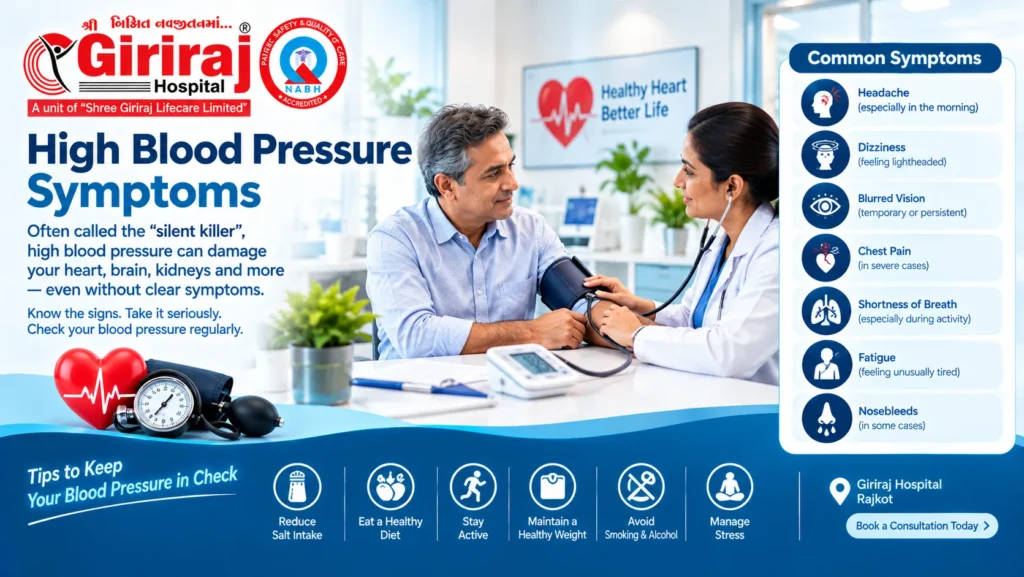
Recognising symptoms early can help you get treatment before serious damage occurs. Most people with high blood pressure have no symptoms at all in the early stages, which is why it is often only caught during a routine check-up or an unrelated visit to the doctor.
Early signs that may appear:
- Occasional headaches, especially at the back of the head
- Mild dizziness or a light-headed feeling
- Blurred or disturbed vision
- Fatigue that does not improve with rest
- Slight breathlessness during normal activity
- A pounding sensation in the chest, neck, or ears
Early Signs
These early symptoms are often mistaken for stress, poor sleep, or normal tiredness. Because they are vague, many patients delay a check-up for months or years.
Advanced or Serious Signs
When blood pressure has been high for a long time or spikes suddenly, symptoms become harder to ignore. These include severe headache, chest pain, confusion, difficulty speaking, and nosebleeds that do not stop easily.
When to see a doctor immediately: Sudden severe headache, chest pain, blurred vision, difficulty speaking, or numbness on one side of the body can signal a hypertensive emergency or stroke. Call an ambulance and reach the nearest emergency department right away.
A commonly missed sign is fatigue – many patients assume tiredness is simply due to a busy lifestyle, when it may actually be their body’s response to consistently elevated blood pressure.
Common Causes and Risk Factors for High Blood Pressure
Understanding why high blood pressure develops helps patients take practical steps to manage it rather than feeling like it happened by chance.
Common Causes
- A diet high in salt, fried food, and processed snacks
- Excess body weight, especially around the abdomen
- Long-term stress and poor sleep
- Lack of physical activity
- Excess alcohol consumption and tobacco use
- Underlying kidney or hormonal conditions in some cases
Risk Factors
- Family history of high blood pressure or heart disease
- Age above 40 years
- Diabetes or high cholesterol
- Sedentary desk-based work
- Frequent consumption of high-sodium foods like pickles, papad, and fried snacks common in Gujarati households
Diabetes and high blood pressure often occur together, and this combination is especially common across Gujarat and Saurashtra, where diet and lifestyle patterns increase risk for both conditions. Recognising these overlapping risk factors early allows patients to manage them together rather than treating each in isolation.
Types and Stages of High Blood Pressure
Doctors classify blood pressure into clear categories, which helps decide how urgently treatment is needed.
| Category | Systolic (mmHg) | Diastolic (mmHg) | What It Means for You |
|---|---|---|---|
| Normal | Below 120 | Below 80 | Maintain current healthy habits |
| Elevated | 120–129 | Below 80 | Lifestyle changes recommended |
| Stage 1 Hypertension | 130–139 | 80–89 | Medical evaluation advised |
| Stage 2 Hypertension | 140 and above | 90 and above | Treatment usually required |
| Hypertensive Crisis | Above 180 | Above 120 | Seek emergency care immediately |
Most patients diagnosed with high blood pressure fall into Stage 1 or Stage 2. The stage a patient is in directly guides whether the doctor recommends lifestyle changes alone or adds medication to the treatment plan.
How Is High Blood Pressure Diagnosed?
A cardiologist or internal medicine specialist typically diagnoses high blood pressure using a combination of readings and tests.
Blood Tests
Basic blood tests check kidney function, blood sugar, and cholesterol levels, since these often influence blood pressure control.
Imaging Tests
An ECG (electrocardiogram) and sometimes an echocardiogram check whether the heart has been affected by prolonged high pressure.
Other Procedures
Doctors often recommend ambulatory blood pressure monitoring, where a small device records your blood pressure over 24 hours to rule out “white coat” readings that are only high at the clinic.
Diagnosis is usually straightforward and painless, and it is confirmed with at least two or three readings taken on different days rather than a single visit. Once confirmed, diagnosis leads directly into building a personalised treatment plan.
Treatment Options for High Blood Pressure
Treatment depends on how high your blood pressure is, your age, and any other health conditions you may have. Your doctor will recommend the best option based on your individual case.
Non-Surgical / Medical Management
For most patients, treatment starts with lifestyle changes – improved diet, regular activity, and weight management. If blood pressure remains high, doctors add blood pressure medications, which work by relaxing blood vessels, reducing fluid volume, or slowing the heart rate.
Ongoing Monitoring
Patients with Stage 1 hypertension may be monitored for a few months on lifestyle changes alone before medication is added. Those with Stage 2 or higher usually begin medication immediately alongside lifestyle changes.
Blood pressure management is a long-term partnership between patient and doctor. Regular follow-up visits allow your cardiology team to adjust your plan as your readings improve or your needs change.
Recovery and Life After Diagnosis
Being diagnosed with high blood pressure is not the end of a normal life – it is the start of managing your health more actively. Most patients continue their regular routines while making a few key adjustments.
- First 2 weeks: Focus on reducing salt intake and starting light daily walks
- Weeks 2–4: Blood pressure is rechecked to see how the body is responding to changes
- Month 2–3: Most patients see stable readings if following the plan consistently
- 6 months and beyond: Long-term monitoring becomes routine, similar to a regular health check-up
Diet plays a major role – reducing salt, increasing fruits and vegetables, and limiting fried food make a measurable difference within weeks. Medication and follow-up visits should continue as advised, even once readings normalise.
Patient story: A 52-year-old shop owner from Kuvadva came in after months of unexplained tiredness. His blood pressure was found to be significantly elevated. With a combination of lifestyle changes and regular monitoring at Shree Giriraj Hospital, his readings stabilised within three months, and he describes feeling more energetic than he had in years.
Managing high blood pressure well leads to a longer, more active life – and most patients say the hardest part is simply getting started.
Do’s and Don’ts for Managing High Blood Pressure
| Do This | Don’t Do This |
|---|---|
| Check your blood pressure regularly, even without symptoms | Wait for symptoms before getting checked |
| Reduce salt in cooking and avoid extra salt at the table | Rely on pickles and papad as daily side dishes |
| Take a 30-minute walk most days of the week | Stay sedentary for long stretches at work |
| Take medications at the same time each day | Skip doses once you feel better |
| Manage stress through regular breaks and sleep | Ignore chronic stress and poor sleep patterns |
| Get an annual health check-up after age 40 | Assume you are fine because you feel fine |
Reducing tobacco and alcohol use, rather than stopping abruptly without guidance, is often a more sustainable starting point for many patients. Consistency with these small daily habits matters far more than occasional strict efforts.
Common Myths About High Blood Pressure
| Myth | Fact |
|---|---|
| You will feel symptoms if your blood pressure is high | Most people have no symptoms at all, even with significantly high readings. Regular checks are the only reliable way to know. |
| Once your blood pressure is normal, you can stop medication | Stopping medication without medical guidance often causes blood pressure to rise again. Any changes should be discussed with your doctor. |
| Only older people need to worry about high blood pressure | High blood pressure increasingly affects people in their 30s and 40s due to lifestyle and stress factors. |
| Patients from Rajkot or Saurashtra need to travel to Ahmedabad for proper heart care | Shree Giriraj Hospital’s Cardiology team in Rajkot offers full diagnostic and treatment services for blood pressure and related heart conditions, without the need to travel. |
| Home remedies alone can control high blood pressure | Lifestyle changes help significantly, but they work best alongside medical guidance, especially for Stage 2 hypertension. |
If you have heard something about high blood pressure that concerns you, ask our specialist team – clearing up misinformation early prevents unnecessary worry or risky delays in treatment.
Why Choose Shree Giriraj Hospital for High Blood Pressure Care in Rajkot?
Managing high blood pressure well depends on consistent, accessible, and knowledgeable care – and that is exactly what shapes how Shree Giriraj Hospital’s Cardiology team works with patients.
Experienced Cardiology Team Close to Home
Shree Giriraj Hospital’s Cardiology department brings specialist blood pressure and heart care to Rajkot, so patients from across Saurashtra do not need to travel to a bigger city for reliable diagnosis and treatment.
Comprehensive Diagnostic Support
From ECG to echocardiogram and routine blood work, diagnostic tests are available on-site, helping your doctor build a complete picture of your heart health without delays between appointments.
Critical Care Backup When It’s Needed
For the rare cases where blood pressure spikes into an emergency, Shree Giriraj Hospital’s Critical Care unit is equipped to stabilise patients quickly.
Support for Related Conditions
Since high blood pressure often occurs alongside diabetes, kidney issues, or heart disease, patients benefit from having Nephrology and Internal Medicine specialists within the same hospital.
Insurance and Ayushman Support
Shree Giriraj Hospital is empanelled under PM-JAY / Ayushman Bharat, and the hospital’s team assists with cashless processing for eligible treatments related to hypertension complications.
Our Cardiology team is ready to help – book a consultation today and get your blood pressure checked properly.
Frequently Asked Questions
What is considered high blood pressure?
A reading of 140/90 mmHg or above, taken on more than one occasion, is generally considered high blood pressure. A doctor will confirm this with repeated readings before diagnosis.
Can high blood pressure be cured completely?
High blood pressure is usually managed rather than cured, especially once it has developed due to age or long-term lifestyle factors. With consistent treatment, most patients keep their blood pressure well controlled and lead a normal life.
Is high blood pressure hereditary?
Family history increases your risk, but lifestyle factors like diet, weight, and activity level also play a major role. Having a family history simply means it is worth checking your blood pressure more regularly.
What foods should I avoid with high blood pressure?
Reducing salt, pickles, papad, fried snacks, and processed foods can meaningfully help control blood pressure. Your doctor or dietitian can guide you on a personalised eating plan.
How often should I check my blood pressure?
Adults over 40, or anyone with risk factors like diabetes or a family history, should check their blood pressure at least once a year, or more often if already diagnosed.
Is high blood pressure treatment covered under Ayushman Card?
Routine outpatient blood pressure check-ups are typically not covered under PM-JAY, but hospitalisation for related complications, such as heart or kidney issues, may be covered under eligible categories. Our Ayushman Mitra desk can confirm your specific eligibility.
Can I come to Shree Giriraj Hospital just for a blood pressure check?
Yes. Shree Giriraj Hospital’s Cardiology and Internal Medicine departments in Rajkot welcome patients for routine blood pressure checks as well as full evaluations if needed.
Does stress alone cause high blood pressure?
Chronic stress can contribute to high blood pressure, especially combined with poor sleep and lifestyle habits, but it is rarely the only cause. A full evaluation helps identify all contributing factors.
Start Managing Your Blood Pressure Today
High blood pressure rarely announces itself with obvious symptoms, which is exactly why regular checks matter more than waiting to “feel” unwell. Getting the right care at the right time changes the long-term outlook significantly, and you do not have to manage it alone.
Our Cardiology team at both our Rajkot Main and Kuvadva campuses is ready to help you understand your numbers and build a plan that fits your life. Book an appointment with our Cardiology team today, or contact us to learn more.
Explore more: Early Signs of Heart Disease You Should Never Ignore | Best Cardiologist in Rajkot