

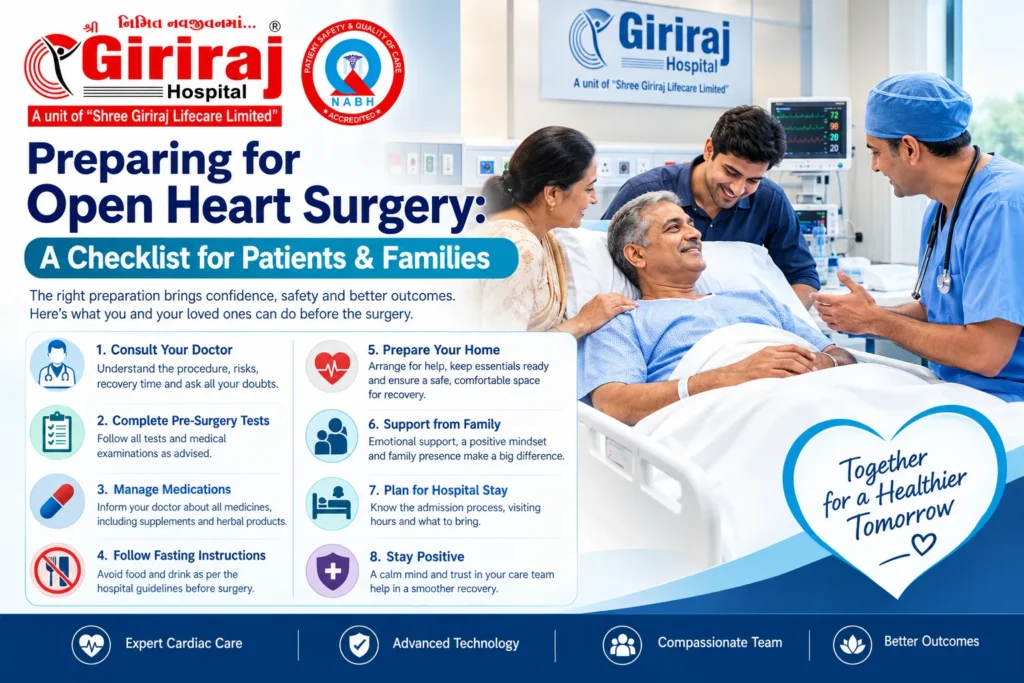
A doctor has just told you or someone you love that open heart surgery is the recommended path forward. Along with the medical weight of that sentence comes a flood of practical questions: what tests come next, what to bring to the hospital, who should be there, and how to make sure nothing important gets missed in the days leading up to surgery.
Preparing for open heart surgery is as much a logistical and emotional process as it is a medical one. This checklist-style guide walks through everything patients and families in Rajkot typically need to organize – medical, financial, practical, and emotional – so that by the time surgery day arrives, the only thing left to focus on is getting through it.
What Counts as “Open Heart Surgery”?
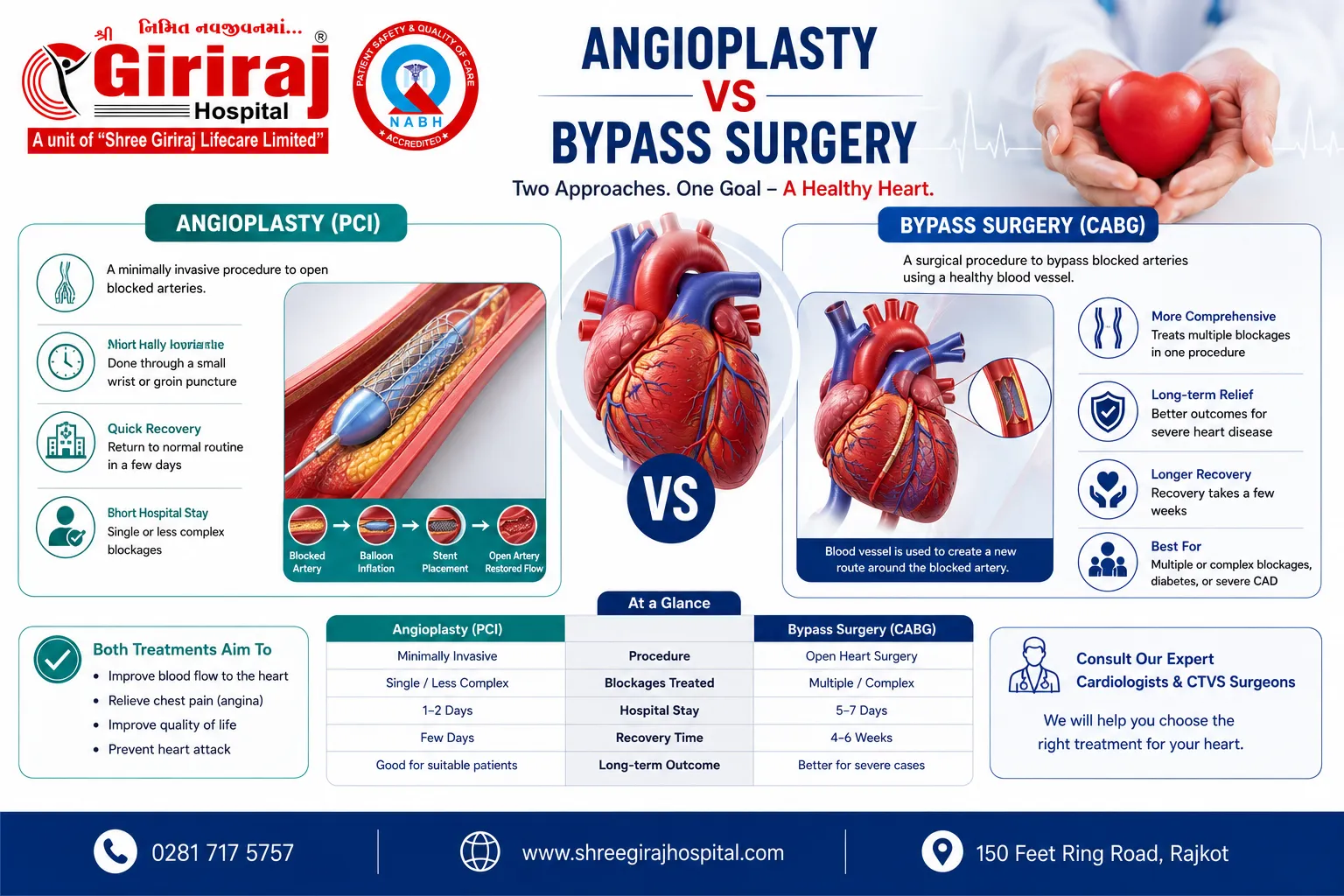
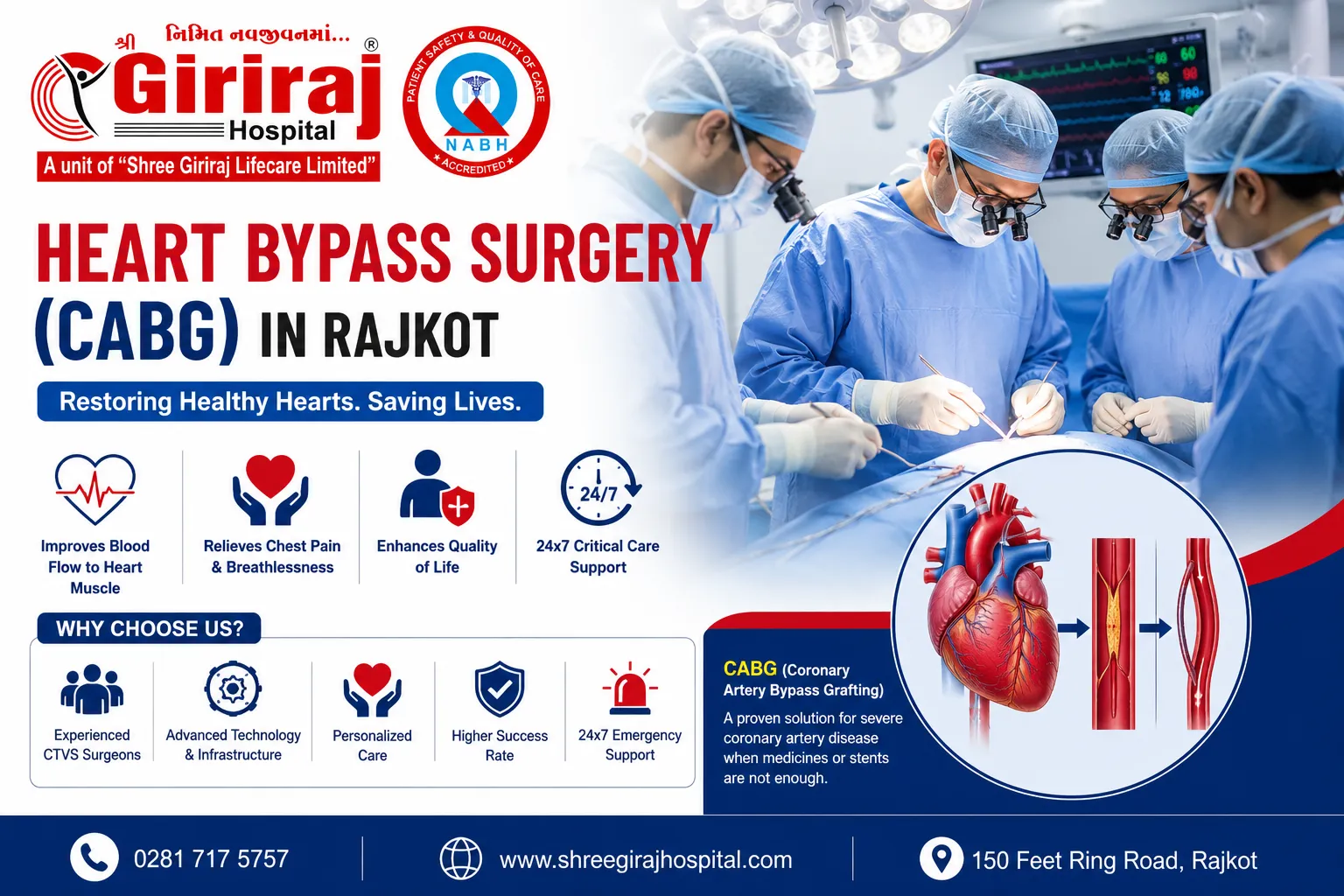
Open heart surgery refers to any procedure where the chest is surgically opened to operate directly on the heart. This includes coronary artery bypass grafting (CABG), heart valve repair or replacement, correction of congenital heart defects, and aortic surgery. It’s distinct from minimally invasive procedures like angioplasty or catheter-based valve replacement, which don’t require opening the chest.
Preparing for open heart surgery looks somewhat different depending on which procedure you’re facing, but the broad categories of preparation – medical clearance, physical readiness, financial planning, and emotional support – apply across nearly all of them.
Planned vs. Emergency Surgery: How Preparation Differs
Not everyone gets weeks of lead time. Preparing for open heart surgery looks very different depending on whether the procedure is scheduled in advance or needed urgently, and it helps to understand which situation you’re in.
Planned (elective) surgery
When surgery is scheduled weeks in advance, there’s time to complete every step in this guide methodically – testing, physical preparation, insurance paperwork, and home setup. This is the most common scenario for conditions like stable coronary artery disease or a gradually worsening valve problem.
Urgent or emergency surgery
In emergencies – an acute heart attack, sudden valve failure, or aortic dissection – there simply isn’t time for weeks of preparation. The medical team moves quickly through essential testing only, and families are guided through the same emotional and financial steps, just compressed into hours rather than weeks. If you’re in this situation, focus on communicating clearly with the surgical team and leaning on hospital staff to help navigate paperwork quickly, rather than trying to complete every checklist item listed here.
Step 1: Medical Evaluation and Pre-Surgery Testing
The weeks before surgery are typically filled with appointments. This isn’t bureaucracy for its own sake – each test gives your surgical team a clearer, safer picture of how your body will handle the procedure.
What tests are done before open heart surgery?
- Blood tests – checking clotting factors, kidney function, blood counts, and blood type/cross-match in case a transfusion is needed
- Echocardiogram – detailed imaging of heart structure and valve function
- ECG (electrocardiogram) – checking heart rhythm and electrical activity
- Coronary angiography – mapping blockages precisely before bypass surgery
- Chest X-ray – a baseline view of the heart, lungs, and chest structure
- Pulmonary function tests – especially important if you have any history of lung disease
- Dental check-up – an often-overlooked step; untreated dental infections can be a source of complications after heart surgery
Preparing for open heart surgery medically also means a full review of every medication and supplement you take. Certain blood thinners, including common ones like aspirin or clopidogrel, often need to be paused several days before surgery – but this decision should always come from your surgical team, never made independently.
Step 2: Physical Preparation in the Weeks Before Surgery
How your body enters surgery genuinely affects how it comes out the other side. A few weeks of focused physical preparation can meaningfully improve recovery.
Quit smoking as early as possible
Smoking slows healing, increases infection risk, and raises complication rates during and after cardiac surgery. Even stopping two to four weeks before surgery measurably improves outcomes – every bit of lead time helps.
Eat well and manage existing conditions
If you have diabetes, tightly controlled blood sugar in the weeks leading up to surgery reduces infection risk and supports better wound healing. A balanced, protein-adequate diet in general helps your body handle the physical demands of major surgery and recovery.
Stay as active as your condition allows
Unless your cardiologist has specifically restricted activity, gentle regular movement – short walks, light daily activity – can help maintain strength going into surgery, which pays off directly during the early days of recovery.
Treat any active infections first
A cold, urinary tract infection, or skin infection can all be reasons to delay surgery. Report any signs of illness to your surgical team promptly rather than waiting for your next scheduled appointment, since even a minor infection can raise surgical risk.
Ask about prehabilitation
Some hospitals offer structured “prehabilitation” – a short program of guided exercise, breathing training, and nutritional support in the weeks before surgery, aimed at improving how well your body tolerates the procedure. If you have several weeks before your surgery date, ask your surgical team whether this is available and appropriate for your situation.
Step 3: Financial and Insurance Preparation
Few things add unnecessary stress to a family already dealing with a health crisis like unclear costs. Preparing for open heart surgery financially, well before the admission date, prevents last-minute scrambling.
Check whether your insurance provider is empanelled for cashless treatment at your chosen hospital, and confirm what pre-authorization paperwork is needed – this can take several working days, so starting early matters.
If you or a family member may be eligible for government coverage, review the Ayushman Bharat / PM-JAY eligibility and application process well ahead of your admission date, since card verification can take time.
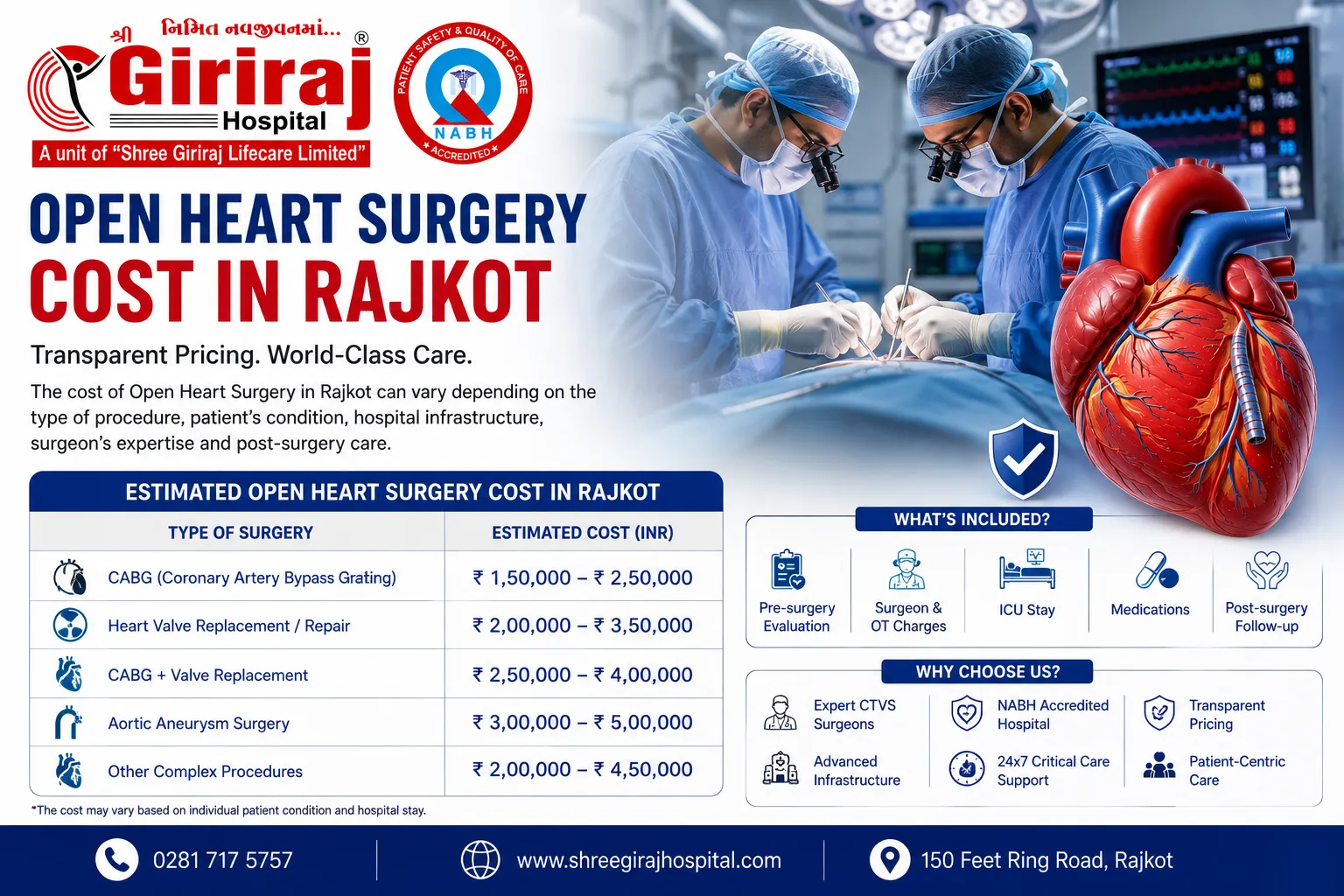
Ask your hospital’s insurance or billing desk for a written cost estimate once your specific procedure is confirmed. Costs vary by procedure complexity, ICU duration, and any complications, so a personalized estimate is always more useful than a general figure found online.
Understanding what’s typically covered
Insurance plans and government schemes vary in what they cover – surgeon’s fees, ICU days, implants (like a replacement heart valve), and medications may each be treated differently depending on your specific policy. Ask for a clear, itemized estimate rather than a single lump figure, so you understand exactly what’s included and what might fall outside coverage.
Budgeting for costs beyond the surgery itself
Beyond the hospital bill, plan for post-discharge costs too – follow-up consultations, medications, and if recommended, a structured cardiac rehabilitation program. Factoring these into your financial planning before surgery avoids unwelcome surprises during recovery, when the last thing a family needs is added financial stress.
Step 4: Preparing Your Home for the Return
The person coming home after open heart surgery won’t be able to lift, climb stairs easily, or manage many daily tasks independently for several weeks. Setting up the home in advance avoids scrambling during an already tiring recovery period.
- Arrange a bedroom and bathroom on the ground floor if possible, to reduce stair use in the early weeks
- Stock the kitchen with easy-to-prepare, heart-healthy meals or arrange help with cooking
- Move frequently used items to waist or chest height, avoiding the need to bend or reach overhead
- Set up a comfortable recovery chair with good back support, since sitting up is often more comfortable than lying flat in early recovery
- Arrange transportation for follow-up appointments, since driving is restricted for several weeks
- Consider a shower chair or grab bars if bathroom mobility might be a concern
Doing this groundwork before surgery, rather than after, means the patient comes home to a space that’s already set up for healing, not one the family is scrambling to rearrange.
Special Considerations for Elderly Patients
Preparing for open heart surgery looks a little different for older patients, who may be managing multiple existing conditions alongside their cardiac diagnosis. This doesn’t mean surgery is riskier by default, but it does mean preparation benefits from a few extra considerations.
- A more thorough pre-operative assessment of kidney function, cognitive baseline, and mobility, since these affect both surgical planning and recovery expectations
- Closer coordination between the cardiac surgical team and any other specialists already involved in the patient’s care – for diabetes, kidney disease, or similar conditions
- Extra attention to fall risk and mobility aids at home during recovery, given that balance and strength take longer to rebuild in older patients
- A frank family conversation about realistic recovery timelines, which may run somewhat longer than for a younger, otherwise healthy patient
None of this should be read as discouragement – age alone rarely rules out surgery – but a slightly more detailed preparation process for older patients generally leads to a smoother experience for everyone involved.
Talking to Children About a Parent’s or Grandparent’s Surgery
Families with young children at home often overlook this part of preparation, but children pick up on stress even when adults try to shield them from it. Age-appropriate honesty tends to work better than silence, which can leave children imagining something worse than reality.
- Explain simply that a doctor is going to fix a problem with a family member’s heart, using calm, reassuring language
- Avoid frightening detail, but don’t pretend nothing is happening – children usually sense when something is being hidden
- Reassure them about who will be taking care of them while the family is at the hospital
- Let them ask questions, even if some answers are simply “the doctors are going to take good care of them”
A short, honest conversation before surgery day is usually far easier for a child to process than an unexplained absence followed by a confusing hospital visit.
Step 5: What to Pack for the Hospital
A well-packed bag reduces one small source of stress on an already overwhelming day. Preparing for open heart surgery includes thinking through exactly what to bring – and, just as importantly, what to leave at home.
What to bring
- Photo ID, insurance card, and any pre-authorization or referral documents
- A list of current medications with dosages
- Loose, comfortable, front-opening clothing for discharge day
- Basic toiletries, a phone charger (a longer cable is genuinely useful for hospital beds), and reading material
- Any assistive devices you normally use – glasses, hearing aids, dentures – clearly labeled with your name
What to leave at home
- Jewelry, watches, and other valuables
- Large amounts of cash
- Any medications not specifically cleared by your surgical team
Coordinating With Your Employer and Work Obligations
For working patients, preparing for open heart surgery also means planning around time away from work – both for the patient and often for a family caregiver. Sorting this out early avoids added pressure during recovery, when the last thing anyone needs is job-related stress.
- Discuss medical leave policies with HR well before your admission date, including documentation the hospital can provide
- Ask your surgeon for a general estimate of when you might be cleared to return to work, understanding this is often revised based on how recovery actually progresses
- If you’re the primary family caregiver during someone else’s surgery, check whether your own employer offers caregiver leave
- Delegate or hand off ongoing work responsibilities in advance rather than trying to manage them remotely during the hospital stay
Employers are generally more accommodating than patients expect when given clear medical documentation and reasonable advance notice – but that accommodation depends on giving them that notice early.
Building a Support Network Beyond Immediate Family
Immediate family often carries the bulk of caregiving responsibility during recovery, but a broader support network – extended family, neighbors, friends, or community groups – can meaningfully lighten that load if organized in advance.
- Ask a trusted friend or neighbor to help with specific tasks, like grocery runs or driving to follow-up appointments, rather than a vague “let me know if you need anything”
- Consider a shared meal schedule among friends or extended family for the first couple of weeks after discharge, when cooking is genuinely difficult
- If a religious or community group is part of your life, many are well-practiced at organizing this kind of practical support during a health crisis
- Don’t hesitate to accept help when it’s offered – recovery goes more smoothly when the caregiving load isn’t carried by one or two people alone
Organizing this network before surgery, rather than scrambling for help once the patient is already home, makes a genuine difference in how sustainable the first few recovery weeks feel for everyone involved.
Anesthesia: What to Know Before Surgery
General anesthesia is a routine and heavily monitored part of open heart surgery, but it’s a common source of pre-surgery anxiety. Understanding the basics can ease some of that uncertainty.
What questions should I ask about anesthesia?
- Are there any risks specific to my health history I should know about?
- Will I be on a ventilator after surgery, and for roughly how long?
- What can I expect to feel like when I wake up?
- Are there any medications or supplements I need to avoid before anesthesia specifically?
Your anesthesiologist will typically meet with you before surgery specifically to review your history and answer these questions directly – this is a good opportunity to raise any anesthesia-specific concerns rather than waiting until the morning of surgery.
Considering a Second Opinion
For a decision as significant as open heart surgery, seeking a second opinion is a normal and reasonable step, not a sign of distrust in your first surgeon. A confident, experienced surgical team will rarely discourage this.
- Bring copies of all your test results and imaging to make the second consultation efficient
- Ask specifically whether the second opinion agrees on both the diagnosis and the recommended procedure
- If opinions differ, ask each surgeon to explain their reasoning directly – this often clarifies which factors are actually in question
- Don’t let the process drag on indefinitely if your condition requires timely treatment; balance thoroughness with the urgency your specific diagnosis calls for
Most patients who seek a second opinion find it either confirms their existing plan, which builds confidence, or surfaces a genuinely important consideration worth discussing further – both outcomes are useful.
Step 6: Choosing a Family Point Person
With multiple family members anxious for updates, communication can quickly become chaotic. Choosing one point person before surgery day – someone who speaks directly with the medical team and relays updates to everyone else – meaningfully reduces confusion and repeated questions during an already stressful wait.
Share this person’s name and contact number with the surgical team in advance. It also helps to agree, as a family, on how updates will be shared – a group message, a phone call after surgery, or a specific person visiting the waiting room periodically – so everyone knows what to expect rather than anxiously guessing.
Step 7: Emotional and Mental Preparation
Anxiety before major heart surgery is completely normal, for both patients and families. Preparing for open heart surgery emotionally is just as real a part of the process as any medical test, even though it’s often the part people talk about least.
- Ask your surgical team direct questions until you genuinely understand the plan – clarity reduces anxiety more than reassurance alone
- Talk openly with family about fears, rather than trying to “stay strong” silently
- Simple relaxation techniques – slow breathing, short walks, familiar routines – can meaningfully ease pre-surgery nerves
- If anxiety feels overwhelming or unmanageable, ask your care team about counselling support; many hospitals can connect patients with this before a major procedure
Family carers often experience significant anxiety of their own while waiting during surgery. Research on family support before cardiac procedures consistently shows that clear, proactive information from the care team measurably reduces this anxiety – so don’t hesitate to ask your surgical team what the waiting period will actually look like.
The Day Before Surgery: Final Checklist
- Confirm your admission time and location with the hospital
- Follow fasting instructions exactly as given – usually no food or water after a specific time
- Take a shower as instructed; some hospitals recommend an antiseptic wash the night before
- Remove nail polish and any body piercings
- Get a full night’s sleep if possible – anxiety often makes this harder, so consider discussing this with your care team if you’re worried about it
- Pack your bag and confirm your point person and support system are ready
- Take only the medications your surgical team has specifically approved for that morning
Understanding Recovery Before Surgery Even Happens
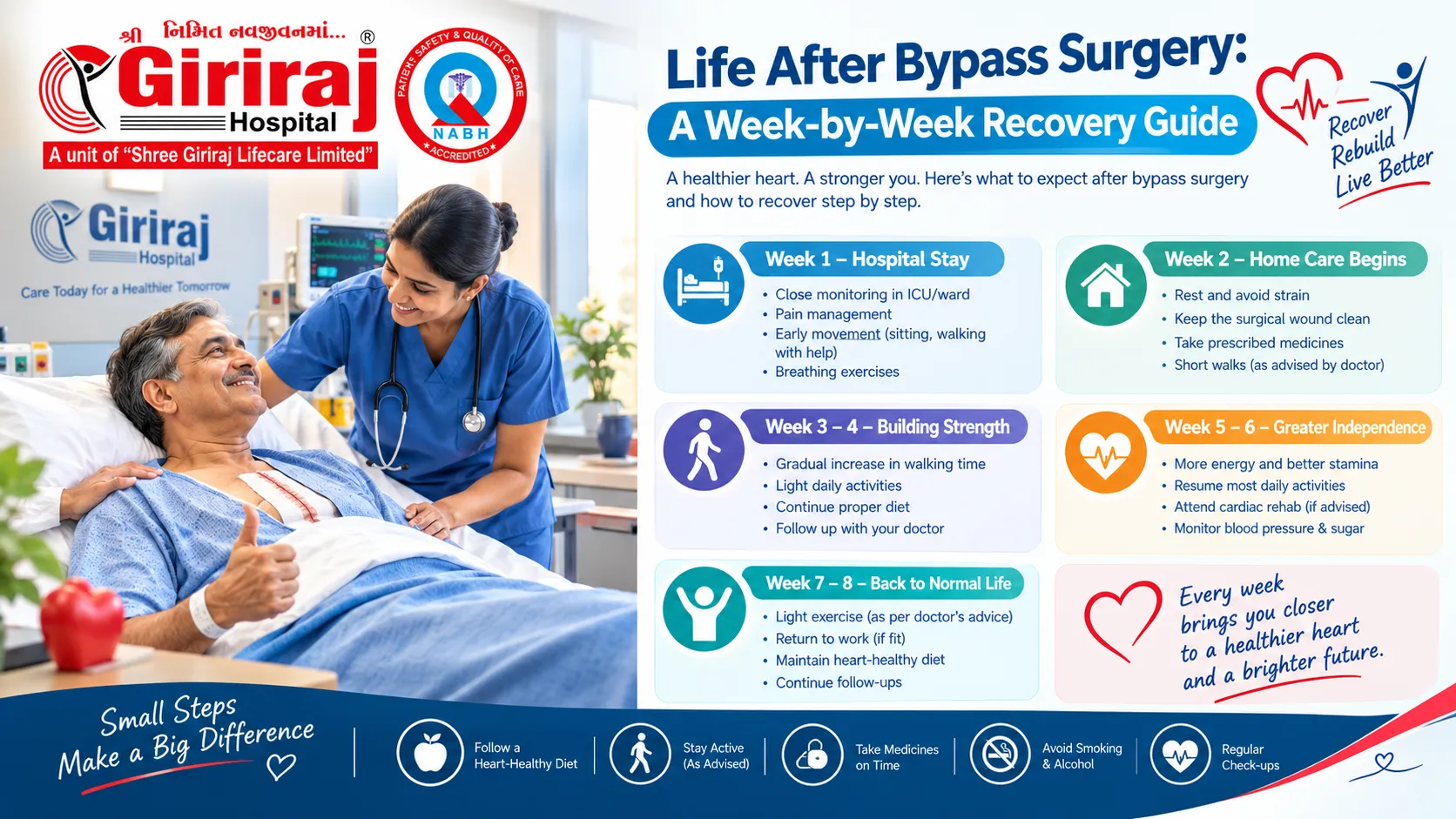
Part of genuinely preparing for open heart surgery is understanding, in advance, what recovery will realistically involve – not to cause worry, but because knowing what to expect makes the days after surgery far less disorienting for both patient and family.
- Expect an ICU stay of one to three days for close monitoring immediately after surgery
- A general ward stay typically follows for several more days before discharge
- Early movement – sitting up and short assisted walks – usually begins within a day or two, and is encouraged rather than avoided
- Full recovery, including sternal healing, generally takes six to eight weeks, with continued improvement over the following months
Setting this expectation before surgery, rather than discovering it in the confusing first days of recovery, helps families plan practically – time off work, help at home, and follow-up appointment scheduling – well in advance.
What Happens on the Day of Surgery
Knowing roughly what to expect on the day itself can meaningfully ease anxiety for both patients and families. While every hospital’s exact process varies slightly, the general flow is fairly consistent.
For the patient
You’ll typically arrive a few hours before your scheduled surgery time for final preparation – changing into a hospital gown, final vital sign checks, and a last conversation with your anesthesiologist and surgical team. An IV line is placed, and you’ll be taken to the operating room once everything is confirmed ready.
For the family
Open heart surgery typically takes three to six hours, depending on complexity. Families usually wait in a designated waiting area, and the surgical team will normally send updates at key points rather than leaving families with no information for the entire duration. Once surgery is complete, the surgeon typically meets with family directly to explain how it went before the patient is moved to intensive care for close monitoring.
Understanding what the ICU stay itself involves can also ease some of that waiting-room anxiety – see our detailed guide on what happens inside an ICU for a full walkthrough of what to expect in the hours after surgery.
Questions Worth Asking Your Surgeon Before Surgery
A short, specific list of questions ensures nothing important gets missed in a pre-surgery consultation that can otherwise feel rushed.
- What exactly does this procedure involve, and why is it recommended for my specific case?
- What are the risks specific to my age and health history?
- How long will the surgery take, and how long will I likely stay in the hospital?
- Which of my current medications need to be paused, and when?
- What will recovery look like in the first few weeks?
- What is your personal experience with this specific procedure?
- Who do I contact if I have questions or symptoms before the surgery date?
Writing these down and bringing them to your consultation, rather than relying on memory during an emotional conversation, ensures a more complete answer to each one.
How Giriraj Hospital Supports Patients Preparing for Open Heart Surgery
Giriraj Hospital’s cardiothoracic and vascular surgery team, including specialists such as Dr. Bahul Vekaria, is structured to walk patients through this entire preparation process rather than leaving families to piece it together alone.
- A dedicated pre-operative evaluation process covering all standard cardiac testing under one roof
- An on-site insurance and billing desk to help with cashless and PM-JAY paperwork before admission
- 24×7 ICU and critical care monitoring post-surgery, staffed for the close observation open heart procedures require
- A team that stays involved through pre-op, surgery, and follow-up, rather than a fragmented referral process
You can review the full scope of the department on the cardiothoracic and vascular surgery page, or explore available health check-up packages for a baseline evaluation on the
health check-up plans page if you’re just starting to investigate symptoms before a formal diagnosis.
Common Myths About Preparing for Open Heart Surgery
Myth: You should stop all medications a week before surgery, just to be safe
This is actually risky. Some medications, particularly for blood pressure or heart rhythm, need to continue right up until surgery, while others need to stop earlier. Never adjust medications without specific guidance from your surgical team – stopping the wrong one can be as dangerous as continuing the wrong one.
Myth: Older patients can’t safely have open heart surgery
Age alone isn’t disqualifying. Overall health, existing conditions, and how well a patient tolerates the physical demands of surgery matter far more than age on its own. Many patients well into their seventies and eighties undergo open heart surgery successfully every year.
Myth: There’s nothing you can do to influence how surgery goes
In reality, the weeks of preparation – quitting smoking, managing blood sugar, treating infections, arriving mentally prepared – measurably affect both surgical risk and recovery speed. Preparing for open heart surgery is genuinely one of the more controllable parts of the entire process.
A Realistic Preparation Timeline: Illustrative Example
To make this concrete, here’s an illustrative (not an individual patient’s actual case) example of how preparation typically unfolds. A 61-year-old patient diagnosed with triple-vessel coronary artery disease is scheduled for CABG three weeks out. In the first week, pre-operative testing – bloodwork, echocardiogram, angiography, and a dental check – is completed, and the family begins the insurance pre-authorization process.
In the second week, the patient begins tapering off a blood thinner under the surgical team’s specific guidance, starts daily short walks, and the family sets up a ground-floor recovery space at home. In the final week, the hospital bag is packed, a family point person is confirmed, and fasting instructions are reviewed the day before admission. By surgery day, both the patient and family arrive with a clear sense of what to expect – which, more than anything else, is what steady preparation over those three weeks was really building toward.
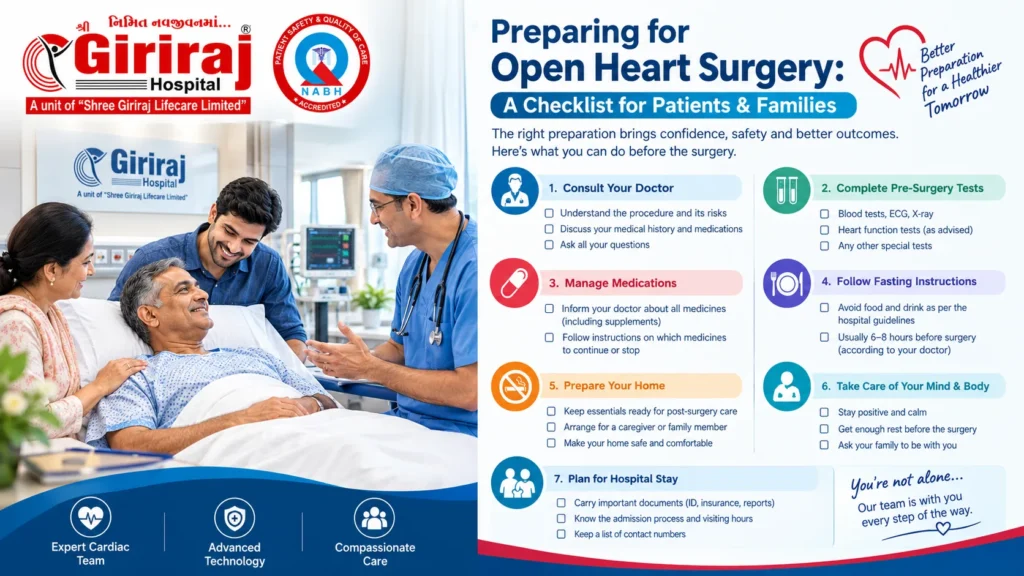
A Pre-Surgery Checklist You Can Print
For families who want a single, scannable reference in the final days before admission, here’s a condensed version of everything covered above, organized by timing.
2-4 weeks before surgery
- Complete all pre-operative tests and consultations
- Quit smoking, if applicable, and begin managing blood sugar tightly if diabetic
- Start insurance pre-authorization or PM-JAY paperwork
- Discuss medical leave with your employer
- Begin setting up a ground-floor recovery space at home
1 week before surgery
- Confirm which medications to pause and when, per your surgical team’s instructions
- Arrange your support network – meals, transportation, childcare if needed
- Choose and confirm your family point person
- Pack your hospital bag
The day before and day of surgery
- Follow fasting instructions exactly
- Shower as instructed and remove jewelry, nail polish, and piercings
- Bring your ID, insurance documents, and medication list
- Confirm your admission time and arrive with your support person
Keeping this list visible – on a fridge, a phone note, or shared with family – turns preparing for open heart surgery from an overwhelming mental list into a series of concrete, checkable steps.
Why Local Preparation Support Matters
Patients preparing for open heart surgery in Rajkot and the wider Saurashtra region benefit from having testing, consultation, insurance support, and surgery all coordinated through a single local team, rather than juggling referrals across multiple cities. This matters most in the weeks of preparation covered in this guide – fewer disconnected appointments, faster paperwork turnaround, and a care team that already has your full picture by the time surgery day arrives.
Frequently Asked Questions
How long before surgery should I start preparing?
Ideally, preparation begins two to four weeks before a planned surgery date – enough time for pre-operative testing, medication adjustments, and physical preparation like quitting smoking. Emergency cases obviously compress this timeline significantly, in which case the medical team manages preparation directly and quickly.
What should I not do before open heart surgery?
Avoid smoking, stopping or starting any medication without your surgical team’s approval, and skipping pre-operative appointments. Avoid alcohol in the days before surgery, and report any signs of illness – even a mild cold – to your care team rather than assuming it’s unrelated.
How long does open heart surgery take?
Most open heart procedures take between three and six hours, depending on complexity and whether multiple procedures are combined, such as a bypass alongside a valve repair.
What should family members do while waiting during surgery?
Stay in the designated waiting area, keep your phone charged and accessible, and confirm with the care team how and when updates will be shared. Bringing something to occupy your time – reading, a task, company from another family member – can help manage the wait, which typically runs several hours.
Is it normal to feel extremely anxious before open heart surgery?
Yes, this is a completely normal response to major surgery, for both patients and their families. Speaking openly with your surgical team, asking direct questions, and leaning on your support system all genuinely help. If anxiety feels unmanageable, ask your care team about additional support options before your surgery date.
Can I eat or drink before open heart surgery?
No – fasting instructions, usually no food or water for a set number of hours before surgery, must be followed exactly as given by your surgical team. Eating or drinking outside these instructions can force a delay or cancellation of your procedure for safety reasons.
Final Thoughts
Preparing for open heart surgery is rarely a single task – it’s a sequence of smaller, manageable steps spread across the weeks before admission: medical testing, physical readiness, financial planning, a well-packed bag, a clear family communication plan, and honest emotional preparation. None of these steps need to be done perfectly, but working through them steadily, rather than all at once the night before, makes a genuine difference in how prepared both patient and family feel on surgery day.
Every family’s version of preparing for open heart surgery looks a little different, shaped by the specific procedure, the patient’s health history, and how much lead time there is before the surgery date. What stays consistent is that steady, organized preparation – medical, financial, practical, and emotional – tends to lead to a calmer surgery day and a smoother start to recovery, regardless of which specific procedure is ahead.
If you or a family member is scheduled for or considering open heart surgery, you can book a consultation with Giriraj Hospital’s cardiothoracic and vascular surgery team to begin the evaluation and preparation process with guidance at every step.
Related reading: for more on choosing the right surgical team, see our guide on the best cardiothoracic and vascular surgery options in Rajkot, and for symptoms that can lead to a surgical recommendation in the first place, see our guide on the signs of a heart attack you shouldn’t ignore.