




If your cardiologist has just mentioned the words “bypass surgery” and you’re sitting in Rajkot trying to figure out what happens next, you are not alone. Every week, families across Saurashtra search for clear, honest answers about Heart Bypass Surgery (CABG) in Rajkot – what it costs, how safe it is, and which hospital to trust with a loved one’s heart. This guide walks you through all of it, in plain language, based on how the procedure is actually performed at hospitals here in the city.
We wrote this because most information available online is either too technical or too vague to be useful. Whether you’re a patient preparing for surgery, or a son or daughter researching options for a parent, this guide on Heart Bypass Surgery (CABG) in Rajkot is meant to be read start to finish, or skimmed section by section using the headings below.
Coronary artery disease remains one of the leading health concerns among adults in Gujarat, driven by a mix of genetics, diet, sedentary lifestyles, and rising rates of diabetes and hypertension. The good news is that cardiac care in Rajkot has advanced significantly over the past decade – patients no longer need to travel to Ahmedabad or Mumbai for a well-performed bypass operation. Local cardiac teams now offer the same surgical standards, monitoring protocols, and post-operative rehabilitation you’d expect from any major metro hospital, closer to home and at a more accessible cost.
What Is Heart Bypass Surgery (CABG)?
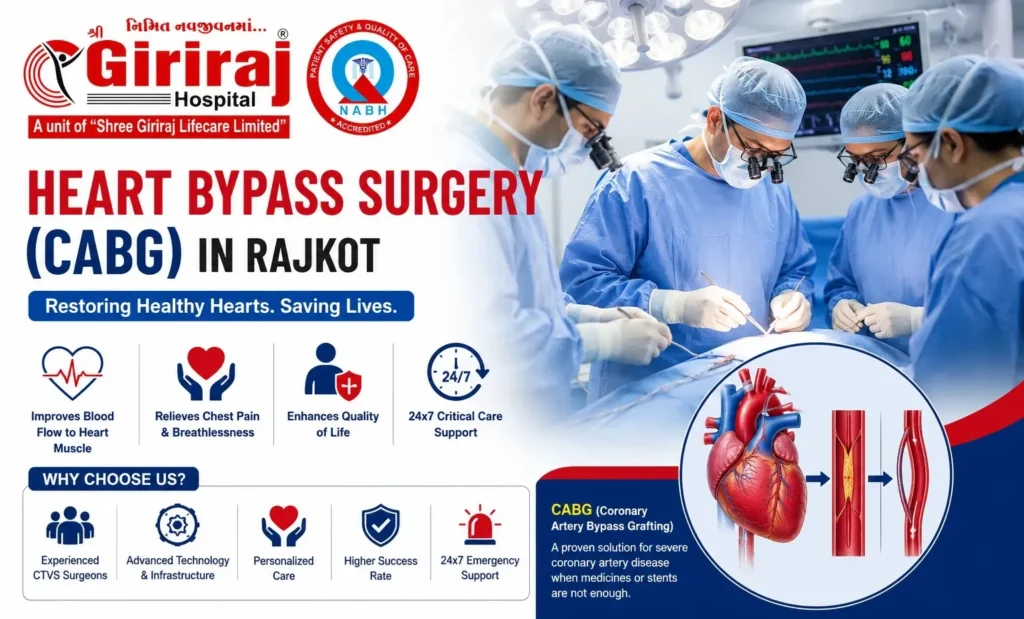
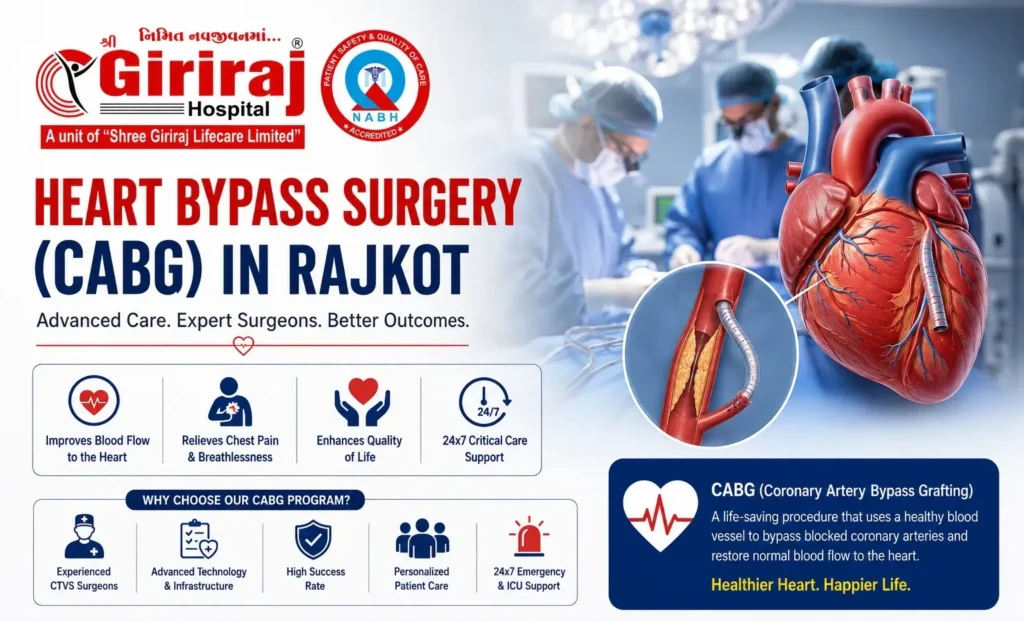
Heart Bypass Surgery, medically known as Coronary Artery Bypass Grafting (CABG), is an open-heart operation that restores blood flow to a heart muscle starved of oxygen because of blocked or narrowed coronary arteries. During the operation, a cardiac surgeon takes a healthy blood vessel – usually from the leg (saphenous vein), the chest wall (internal mammary artery), or the arm (radial artery) – and uses it to create a new route, or “bypass,” around the blockage.
In simple terms, imagine a traffic-jammed road (the blocked artery) and a new service lane built around it (the graft). Blood no longer has to fight through the narrowed section; it flows through the new lane instead, and the heart muscle gets the oxygen it needs again. This is the essence of every Heart Bypass Surgery (CABG) in Rajkot performed at a well-equipped cardiac centre.
CABG is generally recommended when:
- There is significant blockage (usually 70% or more) in one or more coronary arteries
- Multiple vessels are affected, including the left main coronary artery
- Angioplasty and stenting are not a suitable option due to the pattern of blockages
- A patient also has diabetes, which often makes bypass surgery the safer long-term choice over stenting
Who Needs Heart Bypass Surgery (CABG) in Rajkot?
Not every blocked artery needs open surgery – many patients do well with medication or angioplasty. But certain patients are specifically steered toward Heart Bypass Surgery (CABG) in Rajkot by their cardiologist after a coronary angiography confirms the extent of the disease. You are more likely to be advised bypass surgery if you have:
- Triple-vessel coronary artery disease
- Blockage in the left main artery, which supplies a large portion of the heart
- Reduced pumping capacity of the heart (low ejection fraction) along with blocked arteries
- Failed angioplasty or a stent that has re-narrowed
- Diabetes with extensive coronary artery disease
Signs You May Need Heart Bypass Surgery (CABG)
People often ask what symptoms actually lead to a bypass recommendation. While only an angiography can confirm the need for Heart Bypass Surgery (CABG) in Rajkot, the following warning signs usually prompt the cardiac work-up in the first place:
- Chest pain or tightness (angina) that occurs during exertion and eases with rest
- Breathlessness while climbing stairs or walking short distances
- Unexplained fatigue during everyday activities
- Pain that spreads to the jaw, neck, back, or left arm
- A previous heart attack with ongoing symptoms
- Abnormal findings on an ECG, TMT (treadmill test), or echocardiogram
If you notice any of these signs, don’t wait it out – book a cardiology consultation. Early diagnosis is what keeps a routine blockage from turning into an emergency.
Types of Heart Bypass Surgery Performed in Rajkot
Cardiac surgeons offering Heart Bypass Surgery (CABG) in Rajkot generally choose from three surgical approaches, depending on the patient’s anatomy, overall health, and the number of blockages involved.
- On-Pump CABG (Conventional Bypass)
The most common approach. The heart is temporarily stopped, and a heart-lung machine (cardiopulmonary bypass machine) takes over circulation while the surgeon works on a still, bloodless field. This method allows extremely precise grafting, especially for multiple blockages.
- Off-Pump CABG (Beating Heart Surgery)
Here, the surgery is performed while the heart continues to beat, using a stabilising device to keep the working area still. Off-pump Heart Bypass Surgery (CABG) in Rajkot is often preferred for older patients or those with additional risk factors, as it may reduce certain complications linked to the heart-lung machine.
- Minimally Invasive CABG
Performed through smaller incisions rather than a full sternotomy (chest bone split), this technique suits carefully selected patients with fewer blockages. It typically means less post-operative pain and a shorter hospital stay, though not every patient is a candidate.
Your surgeon will discuss which approach is right for you after reviewing your angiography report, echocardiogram, and overall fitness for surgery.
Heart Bypass Surgery (CABG) in Rajkot: The Complete Procedure, Step by Step
Understanding what actually happens on the operating table can ease a lot of anxiety. Here is how a typical Heart Bypass Surgery (CABG) in Rajkot unfolds, from admission to the recovery room.
Step 1: Pre-Operative Evaluation
Before scheduling surgery, the cardiac team runs a complete work-up – coronary angiography, blood tests, chest X-ray, echocardiogram, kidney function tests, and an anaesthesia fitness check. This helps the surgical team plan the exact number of grafts required and anticipate any risks specific to the patient.
Step 2: Anaesthesia and Preparation
On the day of surgery, the patient is given general anaesthesia, and the surgical team prepares the chest and the graft-harvesting site (leg, arm, or chest wall, depending on the vessel chosen).
Step 3: Harvesting the Graft
The surgeon removes a segment of healthy blood vessel to be used as the new “detour” around the blocked artery. The internal mammary artery (from inside the chest wall) is considered the gold standard graft because of its excellent long-term patency.
Step 4: Accessing the Heart
In conventional Heart Bypass Surgery (CABG) in Rajkot, the surgeon makes an incision along the breastbone (sternotomy) to access the heart directly. In off-pump or minimally invasive cases, smaller incisions are used instead.
Step 5: Creating the Bypass
The heart may be stopped and supported by a heart-lung machine (on-pump) or kept beating with stabilisation tools (off-pump). The surgeon attaches one end of the graft above the blockage and the other end below it, redirecting blood flow around the narrowed segment. Depending on the disease pattern, patients may need a single, double, triple, or even quadruple bypass – meaning that many grafts are placed in one operation.
Step 6: Closing Up
Once all grafts are in place and blood flow is confirmed, the heart is restarted (if it was stopped), the chest is closed with wires or sutures, and the patient is moved to the cardiac ICU for close monitoring.
The entire operation typically takes between three and six hours, depending on the number of grafts and the surgical approach used.
How to Prepare for Heart Bypass Surgery (CABG) in Rajkot
Preparation begins well before you’re wheeled into the operation theatre, and being organised in advance genuinely makes the whole experience smoother for both the patient and the family. If you’ve been scheduled for Heart Bypass Surgery (CABG) in Rajkot, here’s a practical checklist to work through in the days leading up to admission:
- Complete all pre-operative tests – angiography, blood work, chest X-ray, echocardiogram, and any dental or infection screening your surgeon requests
- List every medication you currently take, including over-the-counter drugs and supplements, and share it with your cardiac team; some blood thinners need to be stopped days in advance
- Arrange your finances – confirm your insurance pre-authorisation or Ayushman Bharat eligibility so admission isn’t delayed
- Pack for a 7-10 day hospital stay, including loose, front-opening clothing that’s easy to wear over healing incisions
- Arrange a caregiver who can stay with you during the initial recovery period, both in hospital and at home
- Ask questions upfront – write down anything you want to clarify with your surgeon about the number of grafts, anaesthesia, or expected recovery timeline
- Stop smoking immediately, since even a short smoke-free window before surgery meaningfully lowers respiratory complications
Hospitals experienced with Heart Bypass Surgery (CABG) in Rajkot typically walk patients through a pre-admission counselling session covering exactly what to expect, so don’t hesitate to ask for one if it isn’t offered automatically.
Diet and Lifestyle: Before and After Heart Bypass Surgery (CABG)
Nutrition plays a bigger role in surgical outcomes than most patients realise, both before and after Heart Bypass Surgery (CABG) in Rajkot.
Before Surgery:
- Eat a balanced, protein-rich diet to support healing and immune function
- Keep blood sugar under control if you’re diabetic, since uncontrolled sugar levels raise infection risk
- Stay well hydrated unless your doctor advises fluid restriction
- Avoid alcohol and tobacco completely in the run-up to surgery
After Surgery:
- Follow a low-sodium, low-saturated-fat diet to support heart health and manage blood pressure
- Increase fibre intake through fruits, vegetables, and whole grains to prevent constipation from pain medication
- Limit processed and fried foods, replacing them with grilled, steamed, or home-cooked options
- Space out meals into smaller, more frequent portions if appetite is reduced in the first few weeks
- Work with a hospital dietitian to build a sustainable, heart-healthy eating pattern for the months ahead
These lifestyle habits aren’t just recovery advice – they directly influence how long your bypass grafts stay open and functioning, which is why cardiac rehabilitation programmes place such heavy emphasis on diet alongside physical activity.
How to Choose the Right Hospital for Heart Bypass Surgery (CABG) in Rajkot
With several hospitals in the city offering cardiac care, it helps to know what actually separates a good outcome from an average one. When evaluating where to undergo Heart Bypass Surgery (CABG) in Rajkot, consider the following:
- Surgical volume and experience – ask how many CABG procedures the cardiac team performs each year
- ICU infrastructure – a dedicated cardiac ICU with 24/7 monitoring is non-negotiable for safe recovery
- Multidisciplinary team – cardiologists, cardiac surgeons, anaesthesiologists, and critical care specialists should work as one coordinated unit
- Transparency on cost – a trustworthy hospital gives you a detailed estimate before surgery, not a surprise bill after
- Insurance and scheme support – cashless tie-ups and Ayushman Bharat (PM-JAY) empanelment save families significant stress during an already difficult time
- Post-discharge follow-up – access to cardiac rehabilitation, physiotherapy, and regular check-ups after you go home
Asking these questions during your first consultation will tell you a great deal about how a hospital approaches Heart Bypass Surgery (CABG) in Rajkot, long before you ever reach the operating table.
Heart Bypass Surgery (CABG) Cost in Rajkot
This is usually the first question families ask, and it deserves a straight answer. The cost of Heart Bypass Surgery (CABG) in Rajkot typically ranges from approximately ₹2,25,000 to ₹5,00,000, with the average patient paying somewhere in the middle of that range. The exact figure depends on several factors specific to each case.
What Affects the Cost of Heart Bypass Surgery (CABG) in Rajkot:
| Factor | How It Affects Cost |
| Type of surgery | On-pump, off-pump, or minimally invasive CABG each carry different costs |
| Number of grafts | Single, double, triple, or quadruple bypass changes operating time and materials |
| Hospital room category | General ward vs. private room vs. deluxe room |
| Length of ICU stay | Longer monitoring due to complications adds to the bill |
| Pre-surgery diagnostics | Angiography, blood work, and imaging are usually billed separately or bundled |
| Surgeon’s experience | Highly experienced cardiac surgeons may have different consultation fees |
| Post-surgery medication | Blood thinners, antibiotics, and cardiac medicines during recovery |
| Insurance and government schemes | Cashless insurance or Ayushman Bharat (PM-JAY) can significantly reduce out-of-pocket cost |
It’s worth noting that Rajkot’s overall treatment costs remain considerably more affordable than metro cities like Mumbai, Delhi, or Bengaluru, without any compromise on surgical outcomes or the quality of cardiac care. Many patients from smaller towns across Saurashtra specifically travel to Rajkot for Heart Bypass Surgery (CABG) because of this balance between advanced cardiac infrastructure and reasonable pricing.
Ways to Reduce Out-of-Pocket Expense:
- Check whether your health insurance policy offers cashless treatment at the hospital
- Ask if you’re eligible for the Ayushman Bharat (PM-JAY) scheme, which can cover cardiac surgery for eligible families
- Request an itemised cost estimate in advance so there are no surprises at discharge
- Ask your hospital’s insurance desk to help with pre-authorisation for a smoother cashless process
For an accurate, personalised quote, it’s always best to get an in-person consultation and angiography review, since the final cost of Heart Bypass Surgery (CABG) in Rajkot can only be confirmed once your surgeon knows the exact number of grafts your case requires.
Why Choose Giriraj Hospital for Heart Bypass Surgery (CABG) in Rajkot
At Giriraj Hospital, cardiac care isn’t a side department – it’s one of our core specialities, backed by a dedicated Cardiothoracic and Vascular Surgery team, a modern cardiac ICU, and round-the-clock critical care support. When families choose Giriraj Hospital for Heart Bypass Surgery (CABG) in Rajkot, here’s what they can expect:
- Experienced Cardiothoracic Surgeons – Our cardiac surgery team has performed a wide range of CABG procedures, from routine single-vessel bypass to complex multi-vessel and re-do surgeries.
- Modern Operation Theatres – Equipped with advanced monitoring and surgical technology designed specifically for cardiac and vascular procedures.
- Dedicated Cardiac ICU – Post-operative monitoring is handled by a specialised critical care team trained in cardiac recovery protocols.
- Transparent Cost Estimates – Before any Heart Bypass Surgery (CABG) in Rajkot is scheduled at Giriraj Hospital, patients receive a clear breakdown of expected costs.
- Cashless Insurance & Ayushman Bharat (PM-JAY) Support – Giriraj Hospital works with major insurance providers and government health schemes to ease the financial burden on families.
- Complete Continuum of Care – From the first cardiology consultation to post-surgery physiotherapy and follow-up visits, patients are supported at every stage under one roof.
If you or a family member has been advised bypass surgery, our cardiac team at Giriraj Hospital is available for a detailed consultation to walk you through your specific case, review your angiography, and explain what Heart Bypass Surgery (CABG) in Rajkot would involve for you personally.
Recovery Timeline After Heart Bypass Surgery (CABG) in Rajkot
Recovery from CABG happens in stages, and knowing what to expect at each point makes the process far less overwhelming.
Hospital Stay (Day 1 to Day 7-10)
Immediately after surgery, patients spend one to two days in the cardiac ICU under close monitoring, followed by another five to seven days in a step-down or general ward. During this time, the medical team monitors heart rhythm, wound healing, and gradually reintroduces movement – usually starting with sitting up and short, supervised walks within a day or two of surgery.
First 4-6 Weeks at Home
Most patients undergoing Heart Bypass Surgery (CABG) in Rajkot are advised to avoid driving, lifting heavy objects, or strenuous activity for around six weeks, since the breastbone needs time to heal fully. Walking is encouraged and gradually increased, but always following the pace your surgical team recommends.
6 Weeks to 3 Months
Energy levels typically improve steadily during this window. Many patients begin a structured cardiac rehabilitation programme, involving supervised exercise, dietary counselling, and monitoring, which has been shown to meaningfully improve long-term outcomes after bypass surgery.
3 Months Onward
By this stage, most patients have returned to normal daily routines, and many resume work depending on the physical demands of their job. Regular follow-up visits, cardiac medication compliance, and lifestyle changes remain important for the years ahead.
Tips for a Smoother Recovery:
- Attend every follow-up appointment, even if you feel completely fine
- Take all prescribed medications exactly as directed, especially blood thinners
- Follow a heart-healthy, low-sodium, low-fat diet as advised by your dietitian
- Avoid smoking and limit alcohol completely
- Manage stress through light activity, rest, and family support
- Watch for warning signs like fever, wound discharge, or unusual breathlessness, and contact your hospital immediately if they occur
Success Rates of Heart Bypass Surgery (CABG) in Rajkot
One of the most reassuring facts about modern cardiac surgery is just how far outcomes have improved over the last two decades. At experienced centres, Heart Bypass Surgery (CABG) in Rajkot is associated with high success rates, comparable to those reported at major metro hospitals, thanks to better surgical techniques, improved anaesthesia protocols, and dedicated cardiac ICU monitoring. Success depends heavily on factors like the patient’s overall heart function before surgery, the number of blockages, the presence of other conditions such as diabetes or kidney disease, and how closely post-operative instructions are followed during recovery.
This is exactly why the pre-operative evaluation is taken so seriously – identifying and managing risk factors ahead of time is often what separates a routine recovery from a complicated one. Patients considering Heart Bypass Surgery (CABG) in Rajkot should feel confident asking their surgical team directly about expected outcomes for a case similar to their own.
Life After Heart Bypass Surgery (CABG): Long-Term Outlook
For most patients, life after Heart Bypass Surgery (CABG) in Rajkot looks considerably better than life before it. Many people report a noticeable reduction in chest pain, improved stamina, and the ability to return to daily activities – including work, travel, and light exercise – that had become difficult before surgery. Bypass grafts, particularly arterial grafts like the internal mammary artery, are known for excellent long-term durability, often lasting well over a decade with proper care.
That said, CABG treats the existing blockages – it doesn’t cure the underlying coronary artery disease. Continued attention to blood pressure, cholesterol, blood sugar, diet, and physical activity remains essential for years after surgery, in partnership with regular cardiology follow-up.
Risks and Possible Complications
Like any major surgery, Heart Bypass Surgery (CABG) carries some risk, though success rates at experienced cardiac centres are high. Possible complications can include infection at the incision site, irregular heart rhythms, bleeding, blood clots, or, rarely, a heart attack or stroke during recovery. This is precisely why the qualifications of the surgical team and the quality of post-operative ICU care matter so much when choosing where to undergo bypass surgery. A carefully monitored recovery, close attention to warning signs, and a disciplined follow-up schedule significantly lower these risks for most patients.
Questions to Ask Your Cardiac Surgeon Before Bypass Surgery
Walking into a consultation with the right questions helps you make an informed decision and builds confidence in your treatment plan. Before confirming your surgery date, consider asking:
- How many grafts do I need, and which vessels will be used?
- Will this be an on-pump, off-pump, or minimally invasive procedure, and why?
- What is your team’s experience with cases similar to mine?
- What specific risks apply to my situation given my age and existing health conditions?
- How long will I need to stay in the ICU and the general ward?
- What does the cardiac rehabilitation programme after surgery involve?
- What is the total estimated cost, and does it include pre-op tests and post-op medication?
- Is cashless insurance or Ayushman Bharat (PM-JAY) available at this hospital?
A surgical team confident in their outcomes will welcome these questions and answer them clearly, without rushing you toward a decision.
Heart Bypass Surgery (CABG) vs. Angioplasty: What’s the Difference?
Patients often confuse bypass surgery with angioplasty, so it helps to understand where they differ:
| Aspect | Angioplasty (Stenting) | Heart Bypass Surgery (CABG) |
| Invasiveness | Minimally invasive, catheter-based | Open-heart surgery |
| Best suited for | Single or limited blockages | Multiple or complex blockages, including left main disease |
| Recovery time | Days | Several weeks |
| Anaesthesia | Local, with sedation | General anaesthesia |
| Long-term durability | Very good, but re-narrowing is possible | Excellent, particularly with arterial grafts |
Your cardiologist will recommend one option over the other based on your angiography findings, overall health, and the pattern of your coronary artery disease. If you’re weighing both options, our detailed guide on angioplasty in Rajkot explains the stenting procedure in depth.
Insurance, PM-JAY & Cashless Options for Heart Bypass Surgery (CABG) in Rajkot
Cardiac surgery is a significant expense, which is why understanding your coverage options matters as much as choosing the right surgeon. Most private health insurance policies cover CABG, provided pre-authorisation is completed correctly, and many hospitals – including Giriraj Hospital – offer cashless treatment tie-ups with major insurers.
Patients from economically weaker sections may also be eligible for the Ayushman Bharat (PM-JAY) scheme, which covers a range of cardiac procedures, including bypass surgery, at empanelled hospitals. If you’re unsure of your eligibility, our hospital’s insurance help desk can guide you through the documentation and approval process before your surgery date is finalised.
Common Terms Explained: A Quick Glossary
If some of the medical vocabulary around Heart Bypass Surgery (CABG) in Rajkot feels overwhelming, here’s a plain-language glossary to keep handy:
- CABG – Coronary Artery Bypass Grafting, the medical name for bypass surgery
- Angiography – an imaging test using dye and X-rays to map blockages in the coronary arteries
- Graft – the healthy blood vessel used to create the new bypass route
- Ejection Fraction – a measure of how well the heart pumps blood with each beat
- Sternotomy – the surgical incision through the breastbone used in conventional CABG
- On-Pump / Off-Pump – whether the heart is stopped and supported by a heart-lung machine during surgery, or kept beating throughout
- Cardiac Rehabilitation – a structured, supervised recovery programme combining exercise, diet, and monitoring after heart surgery
- PM-JAY (Ayushman Bharat) – India’s government health insurance scheme that can cover eligible patients’ cardiac surgery costs
Understanding these terms makes conversations with your cardiac team far easier, and helps you ask sharper questions when planning Heart Bypass Surgery (CABG) in Rajkot for yourself or a family member.
Frequently Asked Questions About Heart Bypass Surgery (CABG) in Rajkot
What is the cost of Heart Bypass Surgery (CABG) in Rajkot?
The cost of Heart Bypass Surgery (CABG) in Rajkot generally ranges from around ₹2,25,000 to ₹5,00,000, depending on the type of surgery, number of grafts, room category, and any pre-existing complications. Insurance and Ayushman Bharat (PM-JAY) can significantly lower this out-of-pocket figure for eligible patients.
How long does recovery take after Heart Bypass Surgery (CABG)?
Most patients spend seven to ten days in the hospital and need around six to eight weeks at home before resuming regular activity. Full recovery, including cardiac rehabilitation, generally takes about three months.
Is Heart Bypass Surgery (CABG) safe?
Yes, when performed by an experienced cardiac surgical team with proper pre-operative evaluation and post-operative ICU monitoring, CABG has a high success rate. As with any major surgery, individual risk depends on age, overall heart function, and other health conditions.
How many bypasses can be done in a single Heart Bypass Surgery (CABG)?
Depending on how many arteries are blocked, surgeons may perform a single, double, triple, or quadruple bypass in one operation, using grafts from the leg, chest wall, or arm.
What is the difference between Heart Bypass Surgery (CABG) and angioplasty?
Angioplasty uses a catheter and stent to open a blocked artery from the inside and is typically used for simpler blockages, while CABG is an open-heart operation better suited to multiple or complex blockages. Recovery from angioplasty is faster, but bypass surgery often provides more durable, long-term results for extensive coronary artery disease.
Which hospital is best for Heart Bypass Surgery (CABG) in Rajkot?
Look for a hospital with an experienced cardiothoracic surgery team, a dedicated cardiac ICU, transparent cost estimates, and cashless insurance or Ayushman Bharat support. Giriraj Hospital offers all of these under one roof, with a cardiac team specifically trained in bypass and vascular surgery.
Can Ayushman Bharat (PM-JAY) cover Heart Bypass Surgery (CABG) in Rajkot?
Yes, eligible patients under the Ayushman Bharat scheme can have a significant portion of their bypass surgery costs covered at empanelled hospitals. Check with the hospital’s insurance desk to confirm eligibility and documentation requirements.
What lifestyle changes are needed after Heart Bypass Surgery (CABG)?
Patients are typically advised to quit smoking, follow a low-sodium and low-fat diet, manage weight and blood sugar, exercise as approved by their cardiac rehabilitation team, and attend all scheduled follow-up visits to protect the long-term success of their bypass grafts.
How do I prepare for Heart Bypass Surgery (CABG) in Rajkot?
Preparation typically includes completing all pre-operative tests, listing current medications for your cardiac team, confirming insurance or Ayushman Bharat pre-authorisation, arranging a caregiver, and stopping smoking well ahead of your admission date.
Can Heart Bypass Surgery (CABG) be done on an elderly patient?
Age alone doesn’t rule out bypass surgery. Many elderly patients safely undergo Heart Bypass Surgery (CABG) in Rajkot after a thorough fitness evaluation, with surgeons often choosing off-pump techniques when appropriate to reduce strain on the body.
What should I eat after Heart Bypass Surgery (CABG)?
A heart-healthy diet low in sodium and saturated fat, rich in fibre, fruits, and vegetables, and guided by a hospital dietitian supports faster healing and protects your bypass grafts over the long term.
Final Thoughts
Being told you need heart surgery is frightening, but Heart Bypass Surgery (CABG) in Rajkot today is performed with the same surgical standards, technology, and post-operative care protocols you’d expect in any major Indian city – at a fraction of the cost, and without having to travel far from family support. The most important step is simply getting a clear, honest evaluation from a cardiac team you trust.
If you or someone in your family has been advised bypass surgery, the cardiac team at Giriraj Hospital is here to answer your questions, review your angiography report, and walk you through exactly what Heart Bypass Surgery (CABG) in Rajkot would look like for your specific case. Book a consultation or contact us today to take the next step toward a healthier heart.