


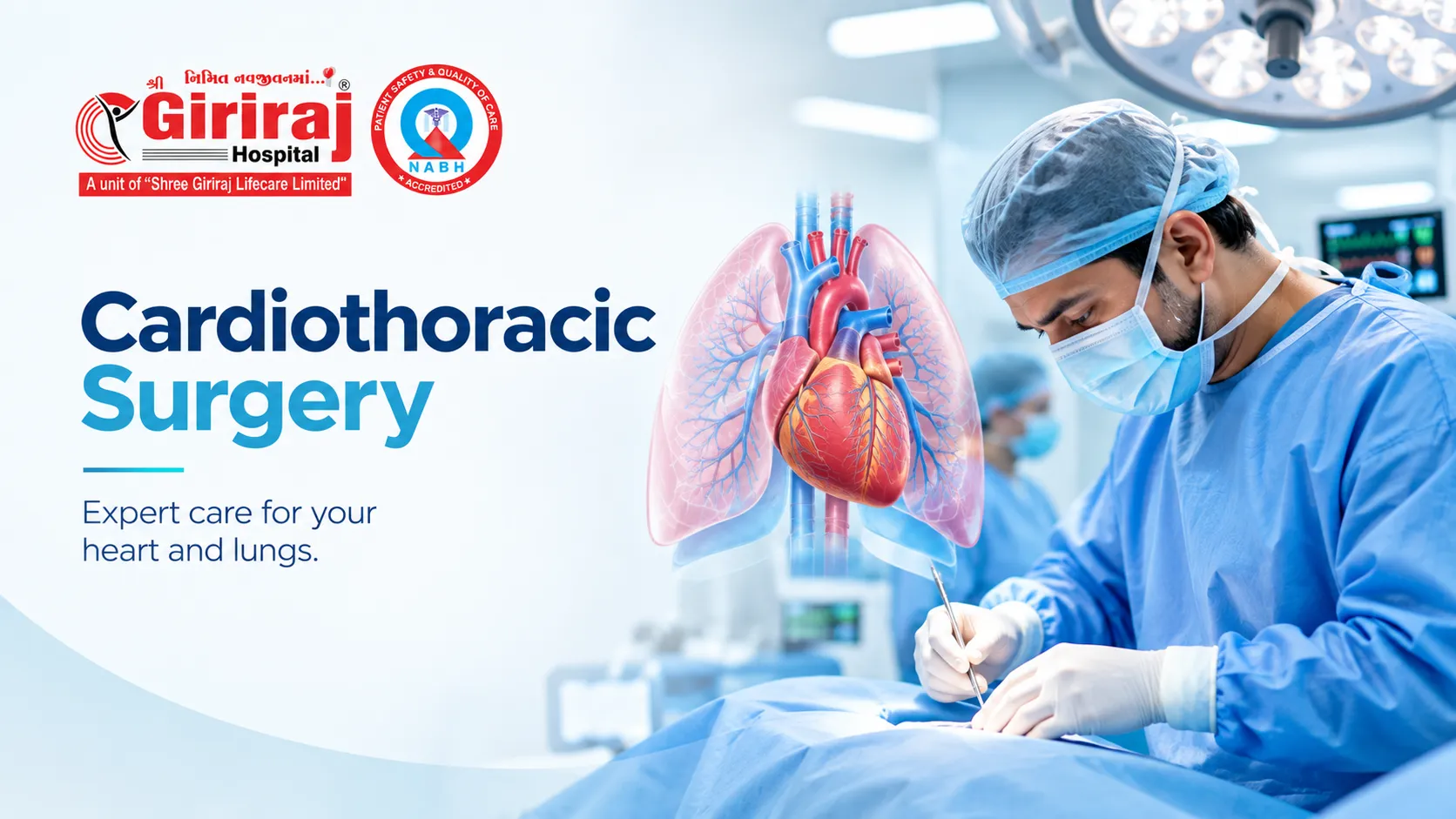
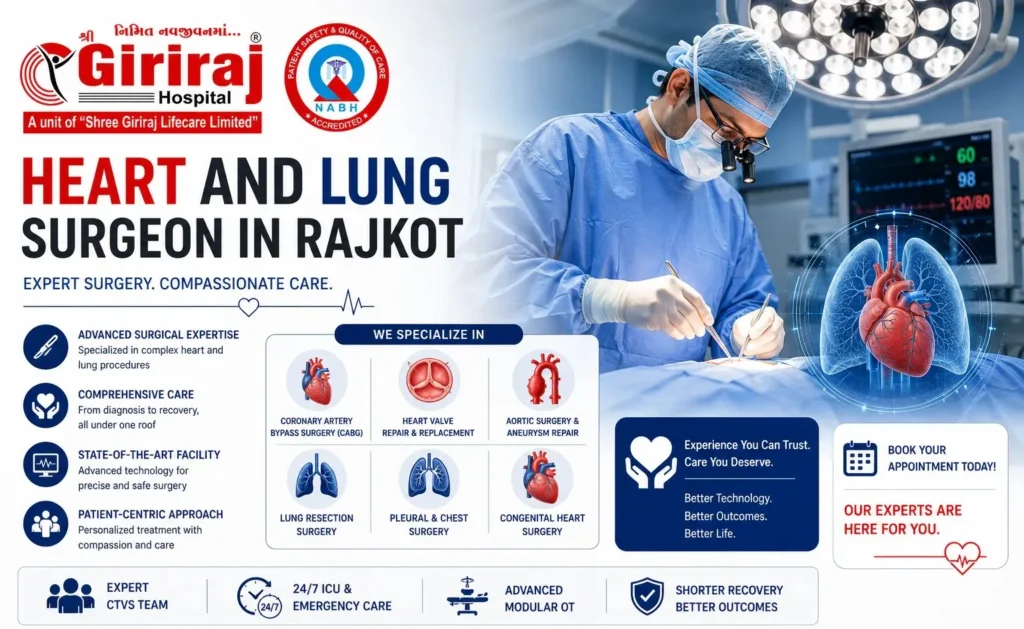
Chest pain that won’t go away. A cough that has lasted for months. A relative who has just been told they need heart surgery and lung surgery in the same breath. When something is wrong with the heart or the lungs – or both – patients in Saurashtra don’t want two separate opinions from two separate cities. They want one trustworthy heart and lung surgeon in Rajkot who can look at the whole picture and tell them, in plain language, what happens next.
This guide was written for exactly that moment. We’ll walk through what a heart and lung surgeon actually does, which conditions need one, what treatment and recovery really look like, and how Giriraj Hospital in Rajkot approaches cardiothoracic care for patients from the city and from the surrounding villages of Saurashtra.
What Is a Heart and Lung Surgeon, Exactly?
The formal medical term is cardiothoracic surgeon – a specialist trained to operate on organs inside the chest, which includes the heart, the lungs, the esophagus, and the major blood vessels close to the heart. In everyday conversation, people simply call this doctor a heart and lung surgeon, because that’s what the job actually involves.
This is different from a cardiologist, who diagnoses and manages heart disease with medicines, angioplasty, and monitoring, but does not perform open surgery. It’s also different from a pulmonologist, who treats lung and breathing conditions medically. A heart and lung surgeon in Rajkot is the specialist you’re referred to once a condition has progressed to the point where surgery is the safest path forward.
How is a cardiothoracic surgeon different from a cardiologist?
Think of it as diagnosis versus operation. A cardiologist finds the blockage, measures the damage, and decides whether medication or a stent will be enough. If the heart needs to be physically opened, repaired, or bypassed, that patient is handed over to a cardiothoracic surgeon. Many hospitals, including Giriraj Hospital, keep both specialists on the same team so the transition is seamless rather than a confusing referral to another city.
When Do You Actually Need a Heart and Lung Surgeon in Rajkot?
Most patients don’t wake up planning for surgery – they get there gradually, through worsening symptoms or a scan that shows something unexpected. Here are the situations that typically lead a patient to a heart and lung surgeon in Rajkot rather than a medicine-only approach.
Signs it may be time to see a cardiothoracic surgeon
- Chest pain or tightness that happens with exertion and doesn’t fully go away with rest or medicines
- Breathlessness that has been getting worse over weeks or months, especially while lying flat or climbing stairs
- A CT scan or X-ray showing a lung nodule, mass, or unexplained shadow
- Diagnosed coronary artery blockages that are too extensive or too risky for a stent alone
- A leaking or narrowed heart valve confirmed on echocardiography
- Recurrent chest infections or a collapsed lung (pneumothorax) that keeps coming back
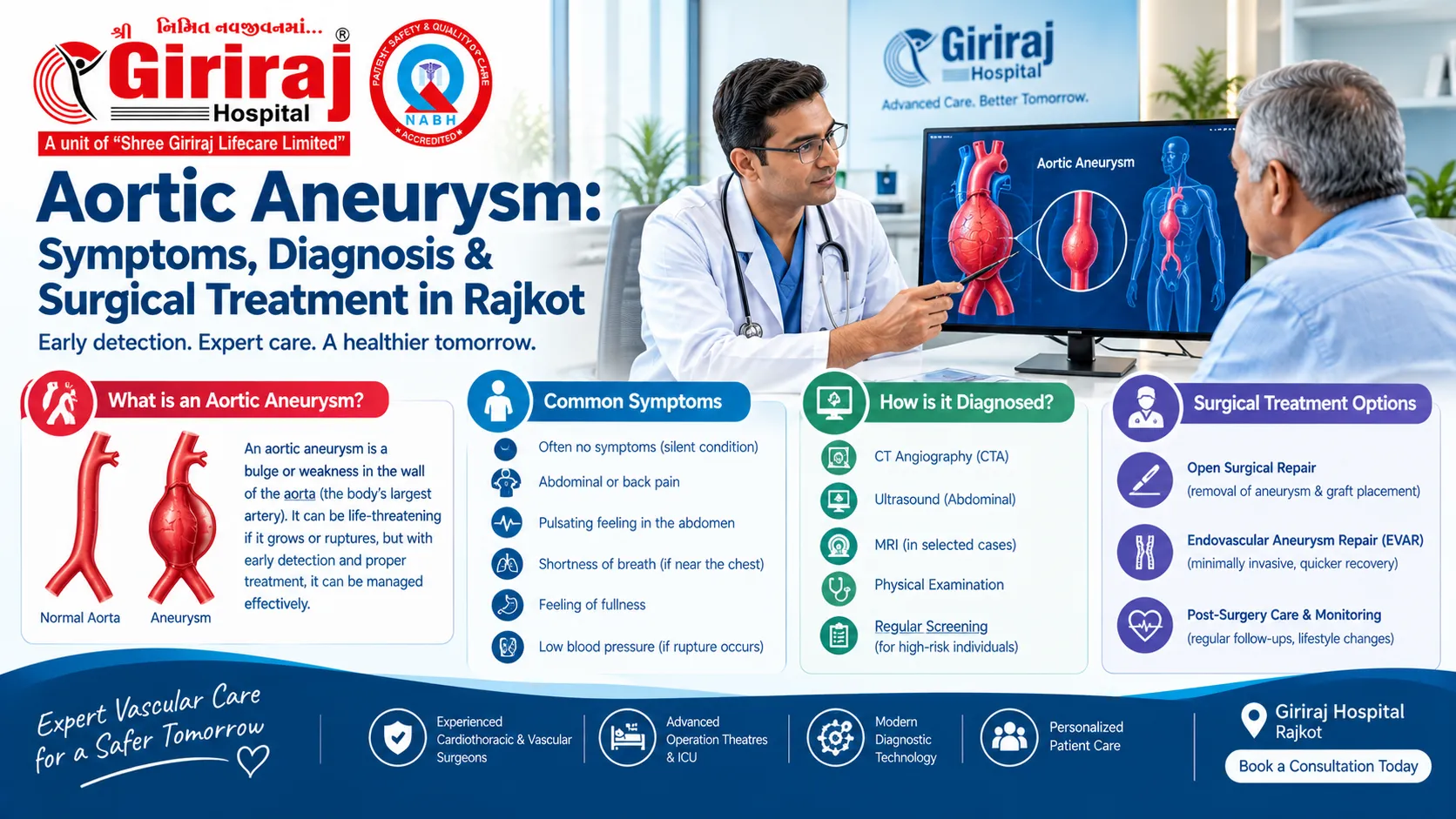
- A known aortic aneurysm or aortic dissection, which is a medical emergency
If any of the above sounds familiar, the next right step is usually a consultation and a set of imaging tests – not a decision made on symptoms alone. A qualified cardiothoracic specialist will always confirm findings with proper diagnostics before recommending an operation.
Heart Surgeries a Cardiothoracic Surgeon Performs
Cardiac surgery has changed enormously over the last two decades. Many procedures that once required a large incision and a long hospital stay can now be done with smaller cuts, shorter recovery, and lower risk – when performed by an experienced cardiothoracic surgeon using modern equipment.
Coronary Artery Bypass Grafting (CABG)
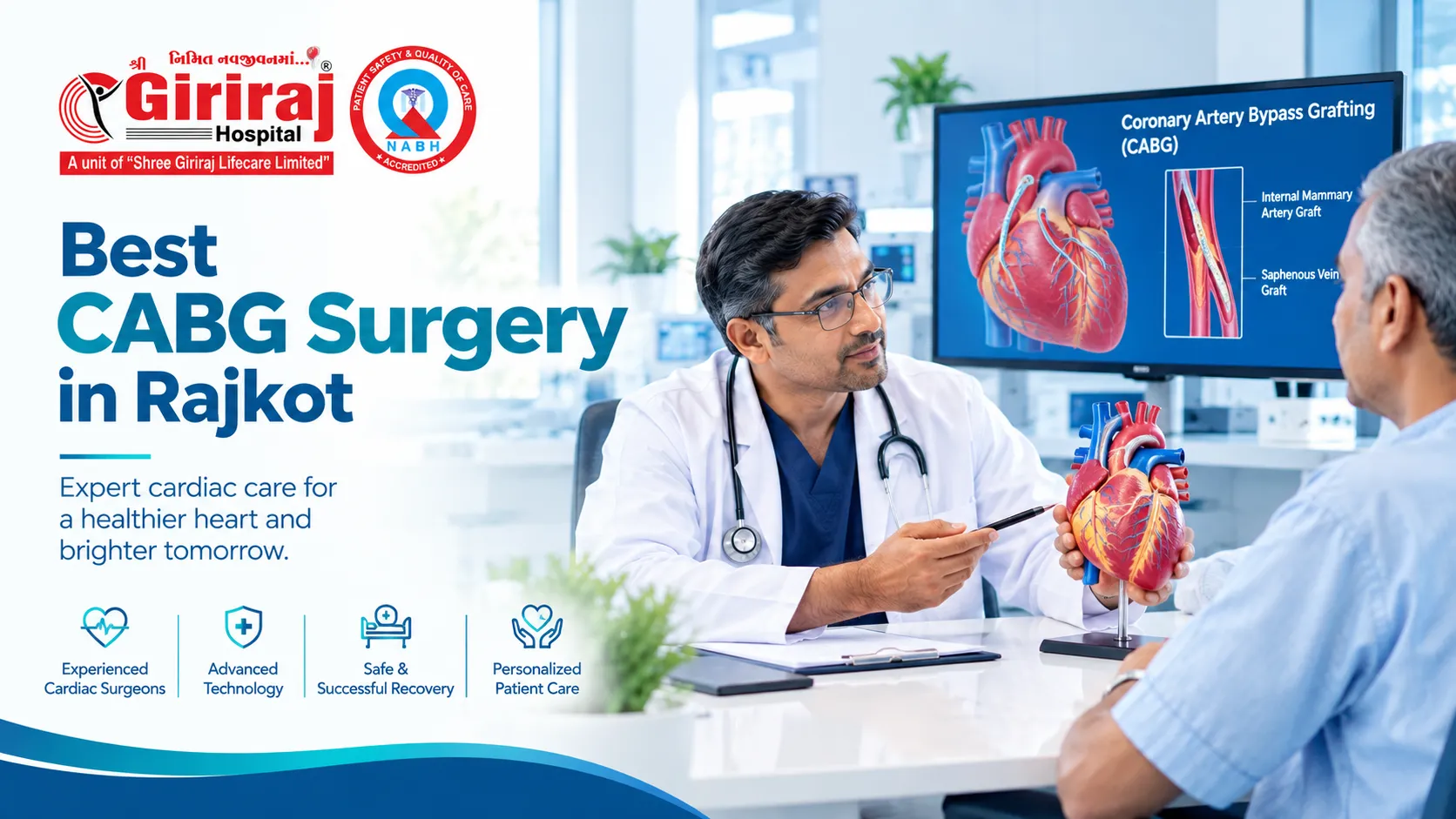
CABG is the classic “heart bypass surgery.” When one or more coronary arteries are severely blocked, the surgeon creates a new route for blood using a healthy vessel taken from elsewhere in the body, usually the chest wall or the leg. It remains one of the most common and most studied heart operations performed by any heart and lung surgeon in Rajkot and across India.
Off-pump (beating-heart) bypass surgery
In select patients, bypass surgery can be done without stopping the heart or using a heart-lung machine. This is called off-pump or beating-heart CABG. It can mean less risk for certain patients, particularly those with other health conditions, and is one of the techniques a skilled cardiothoracic surgeon will consider case by case.
Heart valve repair and replacement
The heart has four valves that keep blood flowing in the right direction. When a valve narrows (stenosis) or leaks (regurgitation), it can sometimes be repaired; in more damaged cases, it is replaced with a mechanical or tissue valve. Aortic and mitral valve procedures are among the more complex operations a cardiac surgeon performs, and outcomes depend heavily on surgical experience.
TAVR / TAVI – minimally invasive valve replacement
Transcatheter Aortic Valve Replacement (also called TAVI) allows a new valve to be placed through a small puncture, usually in the leg, without opening the chest at all. It’s typically offered to older or higher-risk patients who would not tolerate traditional open-heart surgery well.
Pacemaker and ICD implantation
For patients with dangerously slow or irregular heart rhythms, a pacemaker or implantable defibrillator can be placed through a minor procedure. While cardiologists often lead this, a cardiothoracic surgical team is typically involved for more complex device placements.
Lung and Chest (Thoracic) Surgeries Performed in Rajkot
The “lung” half of a cardiothoracic surgeon’s work covers everything from small diagnostic procedures to major lung removal. Here are the procedures patients most commonly ask about.
VATS – Video-Assisted Thoracoscopic Surgery
VATS is the minimally invasive standard for most modern chest surgery. Using small incisions and a camera, the surgeon can biopsy lung tissue, drain fluid, treat a collapsed lung, or remove part of a lung – often with less pain and a shorter hospital stay than traditional open surgery.
Lobectomy and pneumonectomy
A lobectomy removes one lobe of the lung, most often for early-stage lung cancer or a localized infection that hasn’t responded to treatment. A pneumonectomy, the removal of an entire lung, is reserved for more extensive disease. Both require careful pre-surgical lung function testing, which any responsible cardiothoracic surgeon in Rajkot will insist on before proceeding.
Pleural procedures
The pleura is the thin lining around the lungs. Conditions like recurrent pleural effusion (fluid buildup) or pneumothorax (collapsed lung) are treated with drainage procedures or, when they keep recurring, a pleurodesis surgery to prevent the problem from returning.
Airway and chest wall procedures
Some patients need airway stenting for a narrowed windpipe, or chest wall reconstruction after trauma or tumor removal. These are less common but fall squarely within a cardiothoracic surgeon’s scope.
Technology and Equipment Behind Modern Cardiothoracic Surgery
The techniques described above are only as good as the equipment and monitoring systems behind them. Modern cardiothoracic surgery depends on a chain of technology working together – imaging that catches problems early, equipment that keeps the patient stable during the procedure, and monitoring that catches complications before they become dangerous.
- 2D and 3D echocardiography for detailed, real-time views of heart structure and valve function
- CT angiography and coronary angiography for precise mapping of blockages before surgery
- Heart-lung bypass (cardiopulmonary bypass) machines for procedures that require the heart to be temporarily stopped
- High-definition thoracoscopic cameras for VATS and other minimally invasive chest procedures
- Continuous cardiac and respiratory monitoring in the ICU, tracking oxygen levels, heart rhythm, and blood pressure around the clock
- Pulmonary function testing equipment to assess how much lung capacity a patient can safely spare before a resection
A hospital that invests in this full chain – not just the operating table – is generally better positioned to handle both routine and unexpected situations during heart or lung surgery.
Common Myths About Heart and Lung Surgery
Fear often comes from misinformation more than from the surgery itself. A few myths worth clearing up before you meet your surgeon.
Myth: Heart surgery means a lifetime in bed afterward
In reality, early movement is encouraged within a day or two of most cardiac surgeries. Structured rehabilitation gets most patients back to normal daily activity within weeks, not months.
Myth: Losing a lobe or a whole lung means you can never breathe normally again
Most patients adapt remarkably well after a lobectomy, and even after a pneumonectomy, the remaining lung tissue compensates over time. Pre-surgical lung function testing exists precisely to make sure a patient can tolerate this adjustment.
Myth: Minimally invasive surgery is always the safer choice
VATS and catheter-based procedures reduce pain and recovery time, but they aren’t right for every case. Sometimes an open approach gives the surgeon better control and is the genuinely safer option – which is exactly why this decision should be made by an experienced heart and lung surgeon, not chosen by the patient in advance.
Myth: A young, otherwise healthy person doesn’t need to worry about cardiothoracic disease
Congenital heart defects, spontaneous pneumothorax, and trauma-related chest injuries affect people well outside the “typical” older-patient profile. Chest symptoms deserve evaluation at any age.
Why the Heart and Lungs Are Often Treated by the Same Specialist
It surprises many patients to learn that heart disease and lung disease frequently overlap, and that treating one without considering the other can be risky. Chronic lung disease strains the right side of the heart. Heart failure can cause fluid to build up in the lungs. Smokers often develop both coronary artery disease and lung damage at the same time. Because the heart and lungs sit in the same chest cavity and share major blood vessels, a combined evaluation by a cardiothoracic specialist in Rajkot often catches problems that a single-organ specialist might miss.
This is one of the strongest reasons patients are advised to choose a hospital with an integrated cardiothoracic and pulmonology team, rather than visiting separate clinics for each concern.
What Makes Giriraj Hospital’s Cardiothoracic Team Different
Giriraj Hospital has built its cardiothoracic and vascular surgery department around three principles: clinical depth, modern infrastructure, and care that doesn’t make patients feel like a number. For a decision as significant as heart or lung surgery, all three matter.
- A dedicated cardiothoracic and vascular surgery department covering CABG, valve surgery, and major thoracic procedures under one roof
- On-site ICU and critical care units for the close post-operative monitoring that heart and lung surgery patients need
- Full-scale operation theatre complex equipped for both open and minimally invasive procedures
- 24×7 emergency and ambulance services, critical for time-sensitive chest conditions like aortic dissection or a collapsed lung
- Cashless insurance tie-ups with major providers and PM-JAY / Ayushman Bharat empanelment, reducing the financial barrier that stops many families from seeking timely care
You can review the full range of services on the hospital’s cardiothoracic and vascular surgery page.
Meet the Cardiothoracic Surgical Team at Giriraj Hospital
Giriraj Hospital’s cardiothoracic and vascular surgery department is led by surgeons trained specifically in this superspeciality, working alongside a full-time team of cardiologists, pulmonologists, anesthesiologists, and critical care specialists. Dr. Bahul Vekaria, part of the hospital’s cardiothoracic and vascular surgery team, is among the specialists patients can consult for both cardiac and thoracic surgical concerns – you can view full profile details on the
Rather than treating each case as a single procedure, the team’s approach is built around continuity – the same specialists who evaluate you before surgery are involved in your operation and your post-operative recovery. For a family weighing where to go for a major decision like heart or lung surgery, this kind of continuity is worth asking about at any hospital you’re considering.
Life After Surgery: Diet, Lifestyle, and Long-Term Heart-Lung Health
Surgery treats the immediate problem, but what a patient does afterward largely determines how well that result holds up over the following years. This is true whether the operation was on the heart, the lungs, or both.
- A low-sodium, low-saturated-fat diet reduces strain on a recovering heart and helps control blood pressure
- Gradual, supervised return to physical activity – starting with short walks and building up – supports both cardiac and pulmonary recovery
- Complete smoking cessation is non-negotiable after any heart or lung procedure; continued smoking undoes much of the surgical benefit
- Consistent medication adherence, especially blood thinners after valve surgery, prevents serious complications
- Scheduled follow-up scans and check-ups catch recurrence or new issues early, when they’re easiest to treat
- Managing weight, blood sugar, and cholesterol keeps the underlying disease process from progressing again
Patients who take this phase seriously – not just the surgery itself – consistently report better long-term outcomes and fewer readmissions.
The Patient Journey: From First Consultation to Recovery
Most patients arrive anxious and unsure of what to expect. Here is a realistic, step-by-step picture of what happens when you see a cardiothoracic specialist in Rajkot for a suspected cardiac or thoracic condition.
Step 1: Initial consultation and history
The surgeon reviews your symptoms, medical history, prior test reports, and risk factors like smoking, diabetes, and family history. This conversation shapes which tests come next – nothing is ordered without reason.
Step 2: Diagnostic workup
Depending on the concern, this may include an ECG, echocardiography, CT angiography, pulmonary function tests, or a chest CT scan. For suspected lung tumors, a biopsy may be needed to confirm the diagnosis before any surgical plan is finalized.
Step 3: Multidisciplinary discussion
For complex cases, cardiologists, pulmonologists, anesthesiologists, and the surgical team discuss the findings together. This is where a hospital with an integrated department, rather than isolated specialists, genuinely benefits the patient.
Step 4: Pre-surgical preparation
Blood work, fitness-for-surgery evaluation, and a detailed conversation about risks, benefits, and alternatives happen before any date is fixed. A trustworthy cardiothoracic specialist will always explain non-surgical options too, where they genuinely exist.
Step 5: Surgery and ICU monitoring
Most cardiothoracic operations are followed by a period in the ICU, where breathing, heart rhythm, and vital signs are closely tracked. The length of this stay depends entirely on the procedure and the patient’s overall health.
Step 6: Ward recovery and discharge planning
Once stable, patients move to a general ward for continued recovery, pain management, and early physiotherapy before discharge. Clear discharge instructions – medications, activity limits, follow-up dates – are a mark of a well-run surgical program.
Step 7: Follow-up and rehabilitation
Recovery doesn’t end at discharge. Cardiac rehabilitation, breathing exercises for lung surgery patients, and scheduled follow-up visits are what turn a successful operation into a genuinely successful recovery.
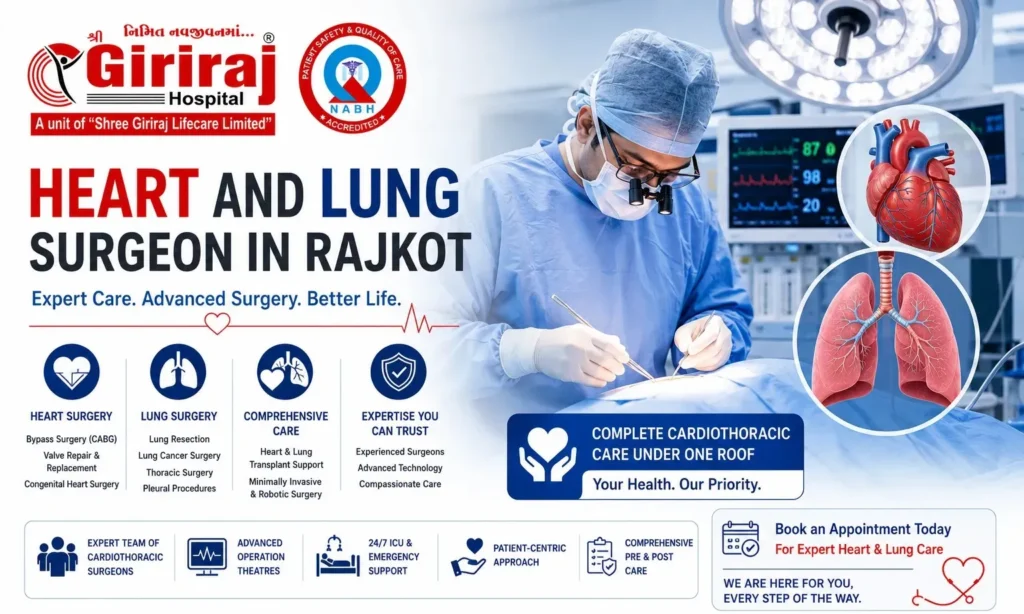
Heart and Lung Disease in Rajkot and Saurashtra: Why Local Access Matters
Cardiovascular disease remains one of the leading reasons for hospital admission across Gujarat, driven by a mix of rising diabetes rates, sedentary urban lifestyles, tobacco use, and genetic predisposition in some communities. Lung-related conditions, meanwhile, are increasingly linked to air quality, occupational dust exposure, and smoking – all relevant factors in a fast-growing industrial hub like Rajkot.
For decades, patients from Rajkot, Junagadh, Jamnagar, and the wider Saurashtra belt who needed complex cardiac or thoracic surgery often had to travel to Ahmedabad or Mumbai – adding cost, delay, and stress for families already dealing with a medical crisis. The growth of dedicated cardiothoracic departments within Rajkot itself, including at Giriraj Hospital, has meaningfully changed that picture. A patient who once faced a multi-day trip for a second opinion can now get a full cardiac and pulmonary workup, a surgical consultation, and post-operative rehabilitation without leaving the city.
This matters most in emergencies. A ruptured aneurysm or a sudden lung collapse doesn’t wait for a train or a flight to Ahmedabad. Having a qualified cardiothoracic surgeon in Rajkot, backed by 24×7 emergency infrastructure, is often the difference between a manageable crisis and a preventable tragedy.
Heart and Lung Surgery Cost in Rajkot: What Affects the Price
Cost is one of the first questions every family asks, and it’s a fair one – cardiothoracic surgery is a major expense. There is no single fixed number, because the price depends on the specific procedure, the complexity of the case, the length of ICU stay, and whether complications arise. That said, here are the factors that most affect the final bill for heart and lung surgery in Rajkot.
- Type of procedure – a stent-assisted or catheter-based procedure costs far less than open-heart bypass or lung resection
- ICU duration – extra days in intensive care are usually the single biggest cost driver
- Implants used – valve type, stent brand, or surgical mesh can shift the price significantly
- Pre-existing conditions – diabetes, kidney disease, or prior heart attacks can extend recovery and cost
- Insurance and government schemes – cashless insurance tie-ups and PM-JAY / Ayushman Bharat coverage can reduce out-of-pocket cost substantially for eligible patients
Because every case is different, the only reliable way to get an accurate figure is a consultation with actual reports in hand. Giriraj Hospital’s team can walk you through an estimate once your diagnosis is confirmed, and check your eligibility for cashless insurance and Ayushman Bharat coverage before your procedure is scheduled.
Understanding Insurance, Cashless Treatment, and PM-JAY Coverage
Financial anxiety often delays patients from seeking care until a condition has become an emergency – which is precisely the wrong time to be figuring out insurance paperwork. It helps to understand your options well before surgery is even confirmed.
Private and corporate health insurance
Most major insurers offer cashless treatment at empanelled hospitals, meaning the hospital settles the bill directly with the insurer rather than requiring you to pay upfront and claim reimbursement later. Confirming your insurer’s empanelment status with the hospital’s insurance desk before admission avoids last-minute surprises.
Ayushman Bharat / PM-JAY
The Pradhan Mantri Jan Arogya Yojana (PM-JAY) provides coverage for eligible low-income families, including for many cardiac and thoracic surgical procedures. Eligibility is based on the Socio-Economic Caste Census data, and empanelled hospitals like Giriraj can verify your card and coverage details directly.
Corporate and government employee schemes
Many salaried patients are covered under employer group insurance or state government health schemes. Bringing your policy documents and ID to your very first consultation lets the hospital’s insurance team start verification early, rather than after a surgery date is already fixed.
Whichever category applies to you, the practical advice is the same: raise the insurance conversation at your first visit, not the night before surgery. A hospital with an experienced insurance desk will guide you through this rather than leaving you to figure it out alone.
How to Choose the Right Heart and Lung Surgeon in Rajkot
Not every case needs the same level of complexity, but every case deserves the same level of caution when choosing a surgeon. Here’s a practical checklist.
- Qualifications – look for an MCh in Cardiothoracic Surgery or equivalent superspecialty training, not just an MS or MD
- Volume of experience – ask how many procedures similar to yours the surgeon has performed
- Hospital infrastructure – a dedicated cardiac ICU, modern operation theatres, and 24×7 emergency backup matter as much as the surgeon’s individual skill
- Willingness to explain – a good cardiothoracic surgeon in Rajkot will walk you through risks, alternatives, and expected recovery in language you actually understand
- Second-opinion friendliness – surgeons confident in their assessment rarely discourage a second opinion; be cautious of anyone who does
- Post-operative support – ask what rehabilitation, follow-up, and emergency contact support looks like after you’re discharged
Minimally Invasive vs. Open Surgery: How Surgeons Decide
Patients often assume minimally invasive surgery is automatically the better choice, but the decision is more nuanced than that. Surgeons weigh several factors before recommending one approach over the other.
- Extent of disease – widespread blockages or a large tumor may need the visibility and control that open surgery provides
- Prior surgeries – scar tissue from an earlier operation can make a minimally invasive approach technically difficult or unsafe
- Patient’s overall fitness – a frailer patient may tolerate a shorter, less invasive procedure better even if it’s technically more limited
- Emergency vs. planned setting – time-critical emergencies often require the fastest, most direct surgical access, which is sometimes the open approach
- Surgeon and hospital experience with the specific minimally invasive technique required
The right answer isn’t the same for every patient, which is exactly why this decision belongs to an experienced surgical team evaluating your specific scans and history – not a general preference stated in advance.
Recovery After Heart or Lung Surgery: What to Expect
Recovery timelines vary by procedure, but most patients want a general sense of what the weeks ahead look like.
The first week
Expect fatigue, discomfort at the incision site, and close monitoring of breathing and heart rhythm. Walking is usually encouraged early, even the day after surgery, because gentle movement helps prevent complications like blood clots and pneumonia.
Weeks two to six
Energy slowly returns. Light activity is typically allowed, but heavy lifting, driving, and strenuous exercise usually wait until your surgeon clears you, often around the six-week mark for open procedures.
Cardiac and pulmonary rehabilitation
Structured rehab programs – supervised exercise, breathing training, and lifestyle counselling – measurably improve long-term outcomes after both heart and lung surgery. If your hospital offers this, take it seriously; it is not an optional extra.
Warning signs during recovery
Fever, increasing redness or discharge at the incision, sudden breathlessness, or chest pain that returns should never be “waited out” at home. Contact your surgical team or head to the emergency department immediately.
Preventing Heart and Lung Disease: What Actually Helps
Surgery treats disease that has already progressed. Prevention is what keeps people out of that situation in the first place – and it’s worth taking seriously, especially in a city like Rajkot where lifestyle-related heart disease is common.
- Quit smoking and avoid secondhand smoke – the single biggest modifiable risk factor for both heart and lung disease
- Get blood pressure, cholesterol, and blood sugar checked regularly, not just when symptoms appear
- Stay physically active – even brisk walking most days meaningfully lowers cardiac risk
- Manage diabetes carefully, since it silently accelerates both coronary artery disease and lung complications
- Don’t ignore a cough, breathlessness, or chest discomfort that lasts more than two to three weeks
- Consider periodic health checkups, especially after age 40 or with a family history of heart disease
Frequently Asked Questions
What is a heart and lung surgeon called?
The medical term is cardiothoracic surgeon. In everyday language, patients and families often simply say heart and lung surgeon, since that’s exactly what the specialist treats – the heart, the lungs, and the structures inside the chest.
Is heart and lung surgery risky?
All surgery carries risk, but modern cardiothoracic techniques, ICU monitoring, and experienced surgical teams have made outcomes significantly safer than they were even a decade ago. Risk also varies by procedure – a minimally invasive VATS biopsy carries far less risk than an emergency open-heart operation. Your surgeon should give you a realistic, case-specific risk assessment, not a generic answer.
How much does heart and lung surgery cost in Rajkot?
Cost depends on the exact procedure, ICU duration, implants used, and insurance coverage. Rather than relying on a rough number, get a personalized estimate after your diagnostic workup – and check whether you qualify for cashless insurance or PM-JAY coverage, which can significantly reduce the amount you pay.
How long is recovery after heart and lung surgery?
Minimally invasive procedures like VATS or angioplasty-assisted approaches often allow return to light activity within one to two weeks. Open-heart surgery or major lung resection typically needs six to eight weeks before a full return to normal activity, with rehabilitation continuing well beyond that.
Which hospital has the best heart and lung surgeon in Rajkot?
“Best” depends on your specific condition, but the strongest indicators to look for are a dedicated cardiothoracic department, an on-site ICU, 24×7 emergency backup, and a surgical team with a proven case volume. Giriraj Hospital in Rajkot offers all four alongside insurance and government scheme support, which is why many patients from Rajkot and the wider Saurashtra region choose it for cardiac and thoracic care.
Can the same surgeon treat both heart and lung conditions?
Yes. A cardiothoracic surgeon is specifically trained to operate on both the heart and the lungs, since they share the same surgical space inside the chest. This is exactly why the term heart and lung surgeon exists – it describes one specialist’s combined scope, not two different doctors.
What is the success rate of cardiothoracic surgery in India?
Success rates vary by procedure and patient risk factors, but major cardiac surgeries like CABG have well-established, favorable success rates at experienced Indian centers when performed on appropriately selected patients. Ask your specific surgical team for outcome data relevant to your procedure rather than relying on a single national average.
Pediatric and Congenital Heart Conditions: A Special Category
Not every cardiothoracic case involves an older patient with lifestyle-related disease. Congenital heart defects – structural problems present from birth, such as a hole in the heart or an abnormally formed valve – require a different kind of surgical expertise, often needed in infancy or early childhood. Families dealing with a congenital diagnosis benefit enormously from a hospital team experienced in pediatric cardiac evaluation, since timing of surgery and long-term monitoring differ significantly from adult cardiac care.
If a pediatrician or cardiologist has flagged a possible congenital heart issue in your child, ask specifically about the surgical team’s experience with pediatric cases, not just adult volume, since the two require distinct skill sets.
A Typical Patient Journey: Illustrative Example
To make this concrete, here’s an illustrative (not an individual patient’s actual case) example of how a combined heart-lung evaluation plays out in practice. A 58-year-old with long-standing high blood pressure and a 20-year smoking history comes in with breathlessness and occasional chest tightness. Initial workup shows both a significant coronary blockage and reduced lung function. Because Giriraj Hospital’s cardiothoracic and pulmonology teams work together, both issues are assessed in the same visit rather than requiring two separate hospital trips.
The surgical team determines that an off-pump bypass is appropriate, with careful peri-operative lung support given the patient’s smoking history. Post-surgery, the patient spends time in the ICU, moves to the ward within a few days, and begins a structured rehabilitation program that addresses both cardiac fitness and breathing capacity. This kind of coordinated care – treating the heart and lungs as connected systems, not separate problems – is exactly what a dedicated heart and lung surgeon in Rajkot is trained to deliver.
When to Seek Emergency Care Immediately
Some symptoms should never wait for a scheduled appointment. Sudden, severe chest pain, chest pain radiating to the arm or jaw, sudden severe breathlessness, coughing up blood, or fainting alongside chest discomfort are medical emergencies. Head straight to the nearest emergency department or call for an ambulance – Giriraj Hospital runs a 24×7 emergency service in Rajkot specifically for situations like these, where minutes genuinely matter.
Questions Worth Asking at Your First Consultation
Walking into a surgical consultation can feel overwhelming, especially when you’re absorbing a new diagnosis at the same time. Having a short list of questions ready helps you leave with real answers instead of just more anxiety.
- What exactly is wrong, in plain terms, and how did you confirm it?
- What happens if I delay treatment or try medication first?
- What are the specific risks for someone with my age and health history?
- How many times have you personally performed this procedure?
- What does recovery look like week by week, realistically?
- What is the estimated cost, and what does my insurance or PM-JAY cover?
- Who do I contact if something feels wrong after I’m discharged?
A surgeon who answers these clearly, without rushing you, is generally a good sign you’re in the right hands.
Final Thoughts
Choosing a heart and lung surgeon in Rajkot is rarely a decision made in a hurry, and it shouldn’t be. What matters most is a team that treats the heart and lungs as connected, explains every step in plain language, and has the infrastructure to handle complications if they arise – not just the surgery itself. If you or a family member has been advised to consult a cardiothoracic surgeon, use the checklist in this guide, ask direct questions, and don’t hesitate to get a second opinion before committing to a surgical plan.
For a consultation with Giriraj Hospital’s cardiothoracic and vascular surgery team, you can
book an appointment online or visit the hospital’s cardiothoracic and vascular surgery department page for more details on the specific procedures covered.
Related reading: for a broader look at heart care in the city, see our guides on
the best cardiothoracic and vascular surgery options in Rajkot and
choosing a heart specialist in Rajkot.