


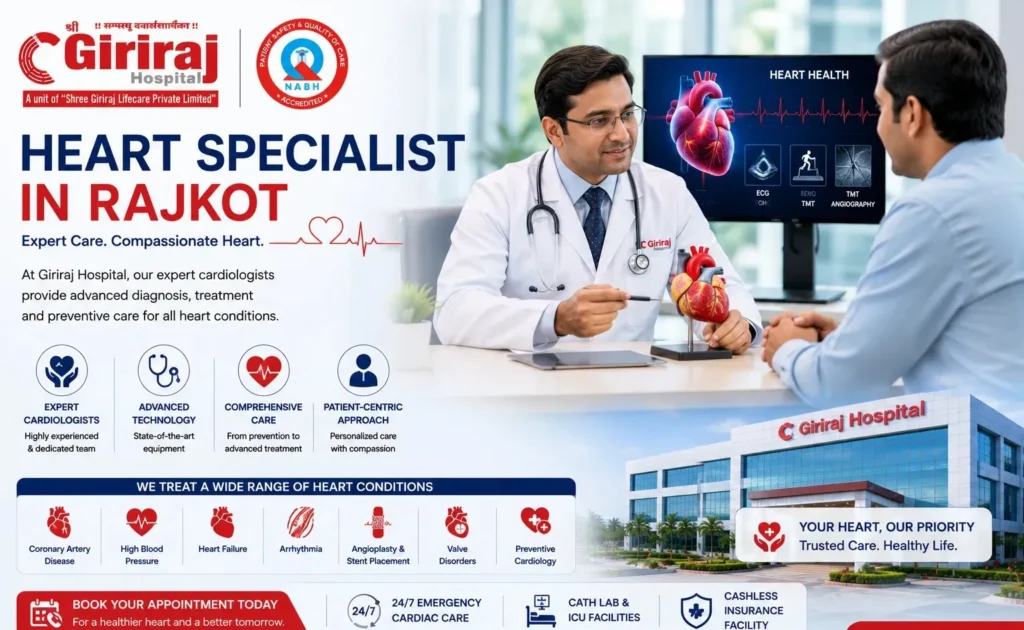
Chest discomfort, breathlessness, or a racing heartbeat can be frightening, and knowing when to see a heart specialist in Rajkot rather than wait it out can genuinely change the outcome. Cardiovascular disease accounts for an estimated 28% of all deaths in India, making it the single largest cause of mortality in the country (Indian Heart Association, 2023).
Rajkot’s rapidly growing urban lifestyle – long work hours, dietary shifts, and rising rates of diabetes – has pushed cardiac risk higher across Saurashtra, with heart disease now affecting patients at increasingly younger ages (Indian Council of Medical Research, 2022). At Shree Giriraj Hospital, the Cardiology department combines experienced specialists with modern diagnostic technology to manage everything from routine risk screening to emergency heart attack care. You can read more about the hospital’s approach to patient care on the About Us page.
This guide explains what a heart specialist actually does, the warning signs that need urgent attention, the causes and types of heart conditions, how doctors diagnose them, the treatments available, what recovery looks like, and how cost and insurance coverage works – so you know exactly what to expect before you ever need to ask.
What Is a Heart Specialist?
A heart specialist, or cardiologist, is a doctor trained to diagnose and treat conditions of the heart and blood vessels – including coronary artery disease, arrhythmias (irregular heartbeats), heart failure, and valve problems. Cardiologists don’t just treat heart attacks; much of their work is preventive, helping patients manage risk factors like high blood pressure and cholesterol before a crisis ever happens.
Some heart conditions are managed entirely with medication and lifestyle changes, while others need a procedure or surgery performed by a cardiac surgeon. At Shree Giriraj Hospital, the Cardiology team works closely with the Cardiothoracic and Vascular Surgery department, so patients move seamlessly from diagnosis to the right level of treatment without being sent elsewhere.
| Think of it this way Your heart works like the pump in a home water system – if a pipe narrows or the pump’s rhythm becomes irregular, the whole system suffers, even if only one part is at fault. A heart specialist’s job is to find exactly which part needs attention before the whole system is affected. |
Warning Signs You Should Never Ignore
Heart problems don’t always announce themselves with dramatic chest pain. Many patients experience subtler signs for weeks or months before a major cardiac event.
Early Warning Signs
- Unusual fatigue or breathlessness during everyday activities
- Mild chest discomfort, tightness, or heaviness that comes and goes
- Palpitations or a sense that your heart is racing or skipping beats
- Swelling in the ankles or feet by the end of the day
- Dizziness or light-headedness, especially on standing
- Difficulty sleeping flat without feeling breathless
- Reduced stamina compared to a few months ago
Advanced or Serious Warning Signs
- Severe chest pain or pressure lasting more than a few minutes
- Pain spreading to the arm, jaw, neck, or back
- Sudden, severe breathlessness at rest
- Cold sweats accompanied by nausea or vomiting
- Fainting or near-fainting episodes
- Bluish tinge to lips or fingertips
| When to Seek Emergency Care Immediately Severe chest pain, breathlessness at rest, or fainting can signal a heart attack in progress. Every minute matters – do not drive yourself. Call the hospital’s Ambulance Service immediately or reach the nearest emergency department without delay. |
Because early heart-disease symptoms are often mistaken for fatigue or stress, our related article on early signs of heart disease you should never ignore goes deeper into how to distinguish routine tiredness from a genuine cardiac warning sign.
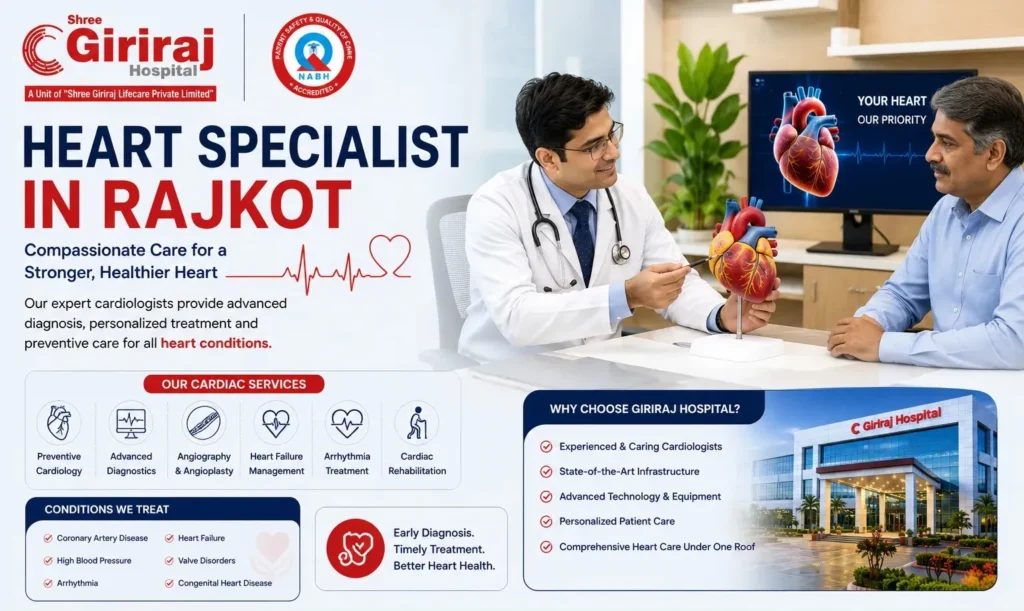
Causes and Risk Factors
Heart disease usually develops from a combination of factors built up over years, not a single cause. It is never helpful to blame yourself for years of habits shaped by work, family demands, or simply not knowing the risk – the goal now is understanding, not guilt.
Common Causes
- Coronary artery disease: cholesterol and fat build up in the arteries supplying the heart, gradually narrowing blood flow and raising the risk of a heart attack.
- High blood pressure: sustained high pressure forces the heart to work harder, weakening it over time if left uncontrolled.
- Diabetes: elevated blood sugar damages blood vessels and nerves, significantly raising cardiac risk even without other symptoms.
- Arrhythmias: electrical signalling problems in the heart can cause it to beat too fast, too slow, or irregularly.
- Valve disease: heart valves that don’t open or close properly can strain the heart and reduce its efficiency over time.
Who Is at Risk
- Adults over 40, as arterial wear increases with age
- People with diabetes, high blood pressure, or high cholesterol
- Individuals with a family history of heart disease
- Smokers and regular tobacco users
- People with sedentary, desk-based routines common in Rajkot’s growing service sector
- Individuals with high dietary fat intake, a pattern seen across much of Gujarat’s festive and daily cuisine
Because heart, kidney, and lung health are closely connected, doctors often coordinate cardiac evaluation with the Nephrology and Pulmonology departments, particularly for patients managing diabetes or chronic breathlessness alongside cardiac symptoms.
Types of Heart Conditions and Specialists
Not every heart concern needs the same kind of specialist. Understanding the type of condition helps set expectations for which doctor you’ll see through the Cardiology department.
| Condition Type | What It Means | Specialist Involved |
|---|---|---|
| Coronary artery disease | Narrowed arteries reduce blood flow to the heart muscle | Interventional cardiologist |
| Arrhythmia | Irregular heart rhythm affecting pumping efficiency | Cardiologist / electrophysiologist |
| Heart failure | Heart cannot pump blood as effectively as it should | Cardiologist, often with critical care support |
| Valvular heart disease | A heart valve doesn’t open or close properly | Cardiologist, cardiac surgeon for repair/replacement |
| Congenital heart disease | A structural heart problem present from birth | Paediatric or adult congenital cardiologist |
| Hypertensive heart disease | Long-term high blood pressure straining the heart | Cardiologist with internal medicine support |
When a Cardiac Surgeon Is Needed
Conditions like severe valve disease or multi-vessel blockages sometimes need surgical correction rather than a catheter-based procedure. The Cardiothoracic and Vascular Surgery team handles these cases in coordination with the cardiology department, so patients don’t have to navigate between separate hospitals.
| Clinical Insight The label on your diagnosis matters less than what your specific test results show. Two patients with “coronary artery disease” can need very different treatment – one may need only medication and lifestyle change, while another needs an urgent procedure. Always ask what your specific results mean for you. |
How Are Heart Conditions Diagnosed?
An accurate cardiac diagnosis relies on a combination of blood work, imaging, and functional tests rather than any single reading.
Blood Tests
- Lipid profile: measures cholesterol and triglyceride levels, key indicators of coronary artery risk.
- Cardiac troponin: a protein that rises sharply during a heart attack, used for urgent diagnosis.
- HbA1c and fasting blood sugar: checks for diabetes, a major driver of cardiac risk.
Imaging Tests
- ECG (electrocardiogram): records the heart’s electrical activity to detect rhythm problems.
- Echocardiogram: an ultrasound of the heart that shows how well it’s pumping and whether valves are working properly.
- Coronary angiography: an imaging procedure that shows exactly where an artery is blocked or narrowed.
Other Diagnostic Procedures
- Treadmill / stress test: monitors how your heart performs under physical exertion.
- Holter monitoring: a portable device worn for 24 hours to catch irregular heartbeats that a single ECG might miss.
Many of these tests are bundled into the Non-Invasive Cardiology & Radiology Package, or can be arranged as part of a broader Health Check-Up Plan for patients who want a general risk assessment rather than symptom-driven testing.
Treatment Options for Heart Conditions
Treatment always depends on the specific condition, its severity, and the patient’s overall health profile. Many patients are managed successfully without ever needing a procedure.
Non-Surgical / Medical Management
Medication to control blood pressure, cholesterol, or blood sugar is often the first line of treatment, paired with structured lifestyle guidance through the Cardiology department. Many patients see significant improvement with consistent medical management alone.
Surgical / Procedural Treatment
When blockages or structural issues need direct correction, procedures such as angioplasty with stenting, or open surgery through the Cardiothoracic and Vascular Surgery team, may be recommended. The choice depends on the location, severity, and number of blockages found during diagnosis.
Advanced or Emerging Treatments
Catheter-based techniques using advanced imaging allow doctors to treat complex blockages with smaller incisions and faster recovery than traditional open surgery, with continuous monitoring available through ICCU for higher-risk cases.
Where cardiac treatment is covered under government health insurance, our team helps patients navigate the process. Eligible patients can review coverage details in our Ayushman Bharat (PM-JAY) guide, and can confirm their specific eligibility by scheduling a visit through Book an Appointment.
A Cardiac Procedure – Step by Step
Preparing for a Cardiac Procedure
- Complete pre-procedure blood tests, ECG, and imaging as advised
- Inform your doctor of all current medications, especially blood thinners
- Fast for 6 to 8 hours before the procedure as instructed
- Arrange for a family member to be present and to assist with transport home
The Procedure
- Local anaesthesia and access: a small incision is made, typically in the wrist or groin, to access the blood vessel.
- Catheter guidance: a thin catheter is guided to the heart under live imaging to locate the blockage.
- Treatment: a balloon and stent are used to open the narrowed artery and restore blood flow.
- Monitoring: the care team monitors heart rhythm and vital signs throughout, typically for approximately 1 to 2 hours per procedure.
- Closure: the access site is closed and dressed, and the patient is moved to a monitored recovery area.
Immediately After – ICU and Recovery
Patients are typically observed in the ICCU for the first several hours after a cardiac procedure, before being shifted to a monitored ward. Most patients are encouraged to walk short distances within 24 hours to support circulation and recovery, all within the hospital’s Operation Theatre and recovery complex, designed specifically for cardiac safety.
In an emergency, the hospital’s ambulance team can transport a patient directly for urgent cardiac intervention. Rest assured, the entire cardiac team – from the interventional cardiologist to the ICCU nursing staff – works together at every step, so you are never navigating a procedure day alone.
Recovery and Life After Heart Treatment
Recovery from a cardiac event or procedure happens in stages, and following the right steps at each one meaningfully improves long-term heart health.
Week 1
- Do: rest as advised, take short supervised walks, and monitor for any new symptoms
- Don’t: lift heavy objects, drive, or resume strenuous activity without medical clearance
Most patients are shifted from the ICCU to the General Ward within a day or two, where the nursing team monitors recovery and medication response closely.
Weeks 2 to 4
- Gradually increase walking distance as advised by your cardiologist
- Follow a low-salt, low-fat diet to support ongoing heart health
- Attend all scheduled follow-up appointments, even if you feel completely well
Month 2 to 3
Many patients begin a structured cardiac rehabilitation and wellness routine during this period. The hospital’s Wellness Program can help translate medical advice into a sustainable daily habit around diet, activity, and stress management.
Long-Term
Long-term heart health depends on consistent medication adherence, regular follow-up, and lifestyle habits that support your cardiovascular system rather than strain it. Periodic testing helps your cardiologist confirm that treatment is working as intended.
| A Patient’s Story (Representative Example) A 54-year-old shopkeeper from Rajkot experienced mild chest discomfort he initially dismissed as acidity. A timely visit led to an angioplasty before a major event occurred. Within eight weeks of following his recovery plan, he was back to his daily routine – a reminder that early evaluation, not just emergency care, is often what protects the heart most. |
Some patients recovering from a cardiac event also experience neurological symptoms that need separate attention – our guide on stroke symptoms everyone should know explains how to recognise a neurological emergency distinct from cardiac recovery symptoms.
Cost and Insurance Coverage for Heart Treatment
Cardiac treatment costs in India vary widely depending on whether the case is managed with medication alone, a catheter-based procedure, or open-heart surgery, along with the type of stent or implant used and length of hospital stay. Rather than a fixed number, most hospitals provide a personalised estimate once diagnosis is confirmed.
Factors That Affect Total Cost
- Type of treatment – medical management, angioplasty, or surgery
- Number of blockages and type of stent or device required
- Length of ICCU stay and post-procedure monitoring needed
- Any additional complications requiring extended care
Many cardiac procedures are covered under PM-JAY (Ayushman Bharat) for eligible beneficiaries. Our detailed Ayushman Bharat / PM-JAY guide explains eligibility and the cashless-treatment process in full. Shree Giriraj Hospital’s insurance desk supports patients through document verification and claim coordination – to confirm your eligibility, reach our team through Contact Us before your visit.
Do’s and Don’ts for Heart Patients
| Do This | Don’t Do This |
|---|---|
| Take prescribed heart medication at the same time every day | Stop or skip medication because you’re feeling better |
| Choose steamed, grilled, or home-cooked meals over fried snacks | Rely on fried farsan and sweets as daily staples |
| Take short, regular walks as advised by your cardiologist | Resume intense exercise or gym workouts without medical clearance |
| Monitor blood pressure and blood sugar if advised | Ignore mild but recurring chest discomfort, hoping it will pass |
| Attend every scheduled follow-up, even when you feel fine | Skip follow-up visits once symptoms disappear |
| Manage stress through rest, hobbies, or light activity | Suppress ongoing stress without any outlet or support |
| Quit smoking and limit alcohol intake | Continue smoking after a cardiac diagnosis |
| Keep emergency contact numbers, including ambulance services, easily accessible | Assume a family member can always drive you in an emergency |
If you’re unsure where your current risk stands, a health check-up with cardiac screening can help clarify your baseline before symptoms appear.
Common Myths About Heart Disease and Treatment
| Myth | Fact |
|---|---|
| Heart disease only affects older people | Lifestyle-driven heart disease is increasingly diagnosed in people in their 30s and 40s across urban India |
| If I have no symptoms, my heart is fine | High blood pressure, high cholesterol, and early artery narrowing often cause no symptoms until a major event occurs |
| A stent means you’re cured of heart disease | A stent treats a specific blockage; ongoing medication and lifestyle management remain essential afterward |
| Heart surgery always means months of bed rest | Many patients resume light activity within 1 to 2 weeks, with full recovery guided by their cardiac team over 4 to 12 weeks |
| Young, fit-looking people don’t need heart checkups | Risk factors like high cholesterol can be present well before any visible change in fitness or body weight |
| Chest pain is the only warning sign of a heart problem | Breathlessness, fatigue, and jaw or arm discomfort are common warning signs that are often missed |
| For advanced heart treatment, you need to travel to a big city | Shree Giriraj Hospital provides cardiac care to the same clinical standard as top hospitals in larger cities – right here in Rajkot |
Why Choose Shree Giriraj Hospital for Heart Care?
Choosing a heart specialist is a decision that deserves specific, verifiable reasons rather than general reassurance. Here is what sets Shree Giriraj Hospital apart for patients evaluating cardiac care in Rajkot.
A Dedicated Cardiology Department
The Cardiology department manages the full spectrum of heart conditions, from routine risk assessment to complex interventional procedures, with specialists who coordinate directly with critical care and surgery for higher-risk cases.
Integrated Cardiac Surgery Access
When a condition needs surgical correction rather than a catheter-based procedure, the Cardiothoracic and Vascular Surgery team is available within the same hospital, avoiding the delay and disruption of a referral elsewhere.
Round-the-Clock Critical Care Backup
High-risk or post-procedure patients are supported by a dedicated Critical Care unit, ensuring continuous monitoring is available whenever a case demands it.
Modern Diagnostic Infrastructure
From ECG and echocardiography to advanced imaging, patients are assessed within a purpose-built Hospital Infrastructure designed for accurate, timely cardiac diagnosis.
A Trusted Name Across Rajkot and Saurashtra
Patients researching hospital options more broadly can read our overview of the best hospital in Rajkot for context on the hospital’s full range of services beyond cardiac care.
In an emergency, the hospital’s ambulance service ensures patients reach specialist cardiac care without delay. To take the next step, meet our specialist team by consulting the Doctors page, and book a consultation with our Cardiology team today through Book an Appointment.
Frequently Asked Questions
When should I see a heart specialist?
If you experience chest discomfort, breathlessness, palpitations, or have risk factors like diabetes, high blood pressure, or a family history of heart disease, it’s time to consult a cardiologist rather than wait for symptoms to worsen.
What is the difference between a cardiologist and a heart surgeon?
A cardiologist diagnoses and manages heart conditions, including catheter-based procedures like angioplasty, while a cardiac surgeon performs open surgical procedures such as bypass surgery or valve repair.
Is heart treatment covered under Ayushman Bharat (PM-JAY)?
Many cardiac procedures are covered under PM-JAY for eligible beneficiaries. Our Ayushman Bharat / PM-JAY guide explains eligibility and the cashless process in detail.
Can heart disease be treated without surgery?
Yes. Many patients manage heart conditions successfully with medication, monitoring, and lifestyle changes alone. Surgery or a procedure is recommended only when the condition’s severity requires it.
What tests does a cardiologist typically recommend?
Common tests include an ECG, echocardiogram, lipid profile, and sometimes a stress test or Holter monitor, depending on your symptoms and risk profile.
How urgent is chest pain?
Severe or persistent chest pain, especially with breathlessness, sweating, or pain spreading to the arm or jaw, should be treated as a medical emergency requiring immediate attention.
Does Shree Giriraj Hospital treat complex cardiac cases?
Yes, the Cardiology department manages a full range of heart conditions, supported by Critical Care and integrated Cardiothoracic and Vascular Surgery for complex presentations.
How do I book a consultation with a heart specialist?
You can schedule a consultation directly through the Book an Appointment page, or call the hospital’s contact numbers listed on the Contact Us page.
How much does a cardiologist consultation cost in Rajkot?
Consultation fees vary by hospital and specialist experience. Contact our team through Contact Us for current consultation details before your visit.
Who else in Rajkot is known for cardiac care?
Several hospitals in Rajkot offer cardiology services; our detailed comparison in Best Cardiologist in Rajkot covers what to look for when choosing a specialist.
Conclusion
Heart symptoms are easy to dismiss as stress or fatigue, but acting early – through screening, timely diagnosis, and the right specialist – is what actually protects long-term heart health, far more than emergency care alone.
If you’re experiencing any warning signs, or simply haven’t had your cardiac risk assessed in a while, don’t wait. Consult the Cardiology team at Shree Giriraj Hospital, Rajkot, and take the first step toward lasting heart health. You can book an appointment directly online, or reach our team through the Contact Us page for any questions before your visit.
Read More: Early Signs of Heart Disease You Should Never Ignore | Best Cardiologist in Rajkot | Ayushman Bharat / PM-JAY Guide – or explore more articles on our Blogs page.