

earching for the best CTVS surgeon in Rajkot often starts with an unfamiliar abbreviation and a stack of doctor profiles that all sound equally reassuring. Cardiovascular disease is responsible for over 27% of all deaths in India, and the country now has one of the highest burdens of heart disease globally, striking people nearly a decade earlier than in Western countries (Indian Council of Medical Research, 2024). When surgery becomes part of the conversation, knowing how to actually evaluate a surgeon, not just read a bio, makes a real difference.
At Shree Giriraj Hospital in Rajkot, our Cardiothoracic & Vascular Surgery department is led by Dr. Bhahul Vekariya, an MCh-qualified CTVS surgeon.
This article explains what a CTVS surgeon actually does, the qualifications and training worth checking, how to evaluate any surgeon you’re considering, and what to expect from a first consultation. For a deeper dive into specific procedures, conditions, and recovery timelines, our companion article on cardiothoracic and vascular surgery in Rajkot covers that ground in full.
What Is a CTVS Surgeon?
CTVS stands for Cardiothoracic and Vascular Surgery. A CTVS surgeon is a specialist trained to operate on the heart, lungs, chest, and blood vessels, performing procedures like bypass surgery, valve repair, and vascular reconstruction that go beyond what medication or catheter-based procedures can achieve.
This is different from a cardiologist, who diagnoses and manages heart conditions primarily through medication and non-surgical procedures. A CTVS surgeon is who a cardiologist refers a patient to once surgery becomes the right option, someone trained specifically to open, repair, and reconstruct the heart, chest, and vessels safely.
| Think of It Like This If your circulatory system is a city’s road network, a cardiologist is the traffic engineer who manages flow and clears minor obstructions. A CTVS surgeon is the construction specialist called in to physically rebuild a damaged section of road, work that needs years of specific surgical training beyond general medical or even general surgical qualification. |
For a full explanation of the conditions a CTVS surgeon treats, from coronary artery disease to aortic aneurysms, our detailed guide on cardiothoracic and vascular surgery in Rajkot covers each in depth. For ongoing, non-surgical heart care, our Cardiology department works closely alongside surgery here in Rajkot.
Warning Signs That May Mean You Need a CTVS Surgeon
Early Warning Signs
- Chest pain or pressure that comes on with exertion and eases with rest
- Shortness of breath during activities that never used to cause it
- An irregular or noticeably fast heartbeat
- Leg pain or heaviness while walking that eases with rest
- Swelling in the legs or ankles that doesn’t improve overnight
- Slow-healing wounds on the feet, often linked to poor circulation
Advanced or Serious Warning Signs
- Severe, crushing chest pain, especially spreading to the arm, jaw, or back
- Sudden, severe shortness of breath, even at rest
- A sudden, tearing pain in the chest or back
- Fainting or loss of consciousness
- A cold, pale, or painful limb
| When to Seek Emergency Care Immediately Severe chest pain, sudden tearing chest or back pain, or fainting are emergencies. Get to the nearest hospital’s emergency department right away rather than waiting for a scheduled consultation. |
Our Ambulance Services are equipped to respond quickly across Rajkot for exactly these situations, while our Cardiothoracic & Vascular Surgery team is on standby for surgical emergencies the moment a patient arrives. Our companion article covers the full range of causes and risk factors behind these symptoms in more detail.
Why You Might Be Referred to a CTVS Surgeon
Common Reasons for Referral
Coronary Artery Disease: When arteries supplying the heart are significantly blocked, a cardiologist typically refers patients to a CTVS surgeon for bypass evaluation.
Heart Valve Disease: Valves that have narrowed, leaked, or become damaged beyond what medication can manage need a surgeon’s assessment for repair or replacement.
Aortic Conditions: An aneurysm or dissection of the aorta is a serious condition that almost always needs surgical evaluation, sometimes urgently.
Peripheral Artery Disease: Advanced blockages in the leg arteries causing significant pain or non-healing wounds may need a vascular surgical opinion.
Who Typically Needs This Referral
- People with coronary blockages not manageable by medication or stenting alone
- Anyone diagnosed with significant valve disease
- Patients with a detected aortic aneurysm or dissection
- People with advanced peripheral artery disease affecting daily mobility
- Anyone with a congenital heart defect requiring surgical correction
Being referred to a surgeon isn’t a sign that anything has gone wrong in your prior care, it simply means the next right step needs a different kind of specialist. Our Internal Medicine department continues supporting overall risk-factor management throughout this process.
CTVS Surgeon Qualifications: What to Actually Look For
Not all “heart surgeons” hold the same training. Understanding the qualification pathway helps you evaluate any CTVS surgeon you’re considering, not just ours.
| Qualification | What It Means | Why It Matters |
|---|---|---|
| MBBS | Basic medical degree, the foundation for all doctors | Confirms core medical training, not surgical specialisation |
| MS (General Surgery) | Postgraduate surgical training, typically 3 years | Builds fundamental surgical skill before further specialisation |
| MCh (CTVS) | Super-specialty surgical training specifically in cardiothoracic and vascular surgery, typically 3 more years | The dedicated qualification for performing heart, chest, and vascular surgery independently |
| DNB (CTVS) | An equivalent super-specialty qualification awarded by the National Board of Examinations | Carries the same clinical weight as MCh CTVS, awarded through a different examining body |
| Fellowship / Additional Training | Focused training in a sub-area, such as endovascular or minimally invasive techniques | Signals additional expertise beyond the base qualification, valuable for complex cases |
Why This Sequence Matters
A genuine CTVS surgeon has completed the full pathway: a medical degree, general surgical training, then dedicated super-specialty training in cardiothoracic and vascular surgery specifically. Skipping straight from a general medical or general surgery background to performing heart surgery isn’t how the qualification system works in India, and it’s worth confirming this full pathway for anyone you’re considering.
| Clinical Insight When comparing surgeons, the specific qualification, MCh or DNB in CTVS, matters more than years of practice alone. A surgeon early in independent practice with the correct super-specialty qualification is still fully trained for these procedures; years of experience add refinement, not the core competency itself. |
Dr. Bhahul Vekariya, who leads our Cardiothoracic & Vascular Surgery department, holds the complete pathway: MBBS, MS (General Surgery), and MCh (Cardiothoracic & Vascular Surgery).
How a CTVS Surgeon Confirms You Need Surgery
Before the Surgical Opinion
- Echocardiogram: an ultrasound of the heart that checks valve function and pumping strength
- Coronary Angiography: shows exactly where arteries are blocked
- CT Angiography: detailed vessel imaging, often used for aortic or vascular planning
What the Surgeon Reviews at Consultation
- Your existing test results and imaging, brought from your referring doctor
- Your overall health and fitness for anaesthesia and surgery
- Which specific procedure, if any, best addresses your condition
A good CTVS surgeon doesn’t simply confirm what a referral letter says, they review the evidence themselves and explain their reasoning clearly. Our full guide on cardiothoracic and vascular surgery in Rajkot covers the complete diagnostic process, including blood tests and additional imaging, in more detail. Our Health Check-up Plans can also help catch these conditions during routine screening.
What a CTVS Surgeon at Shree Giriraj Hospital Offers
Once a surgical opinion confirms the right path, treatment options span a range of approaches depending on the specific condition.
Non-Surgical Consultation and Second Opinions
Not every referral ends in surgery. A thorough CTVS consultation sometimes confirms that continued medical management, coordinated with our Cardiology team, remains the right approach for now.
Surgical Procedures
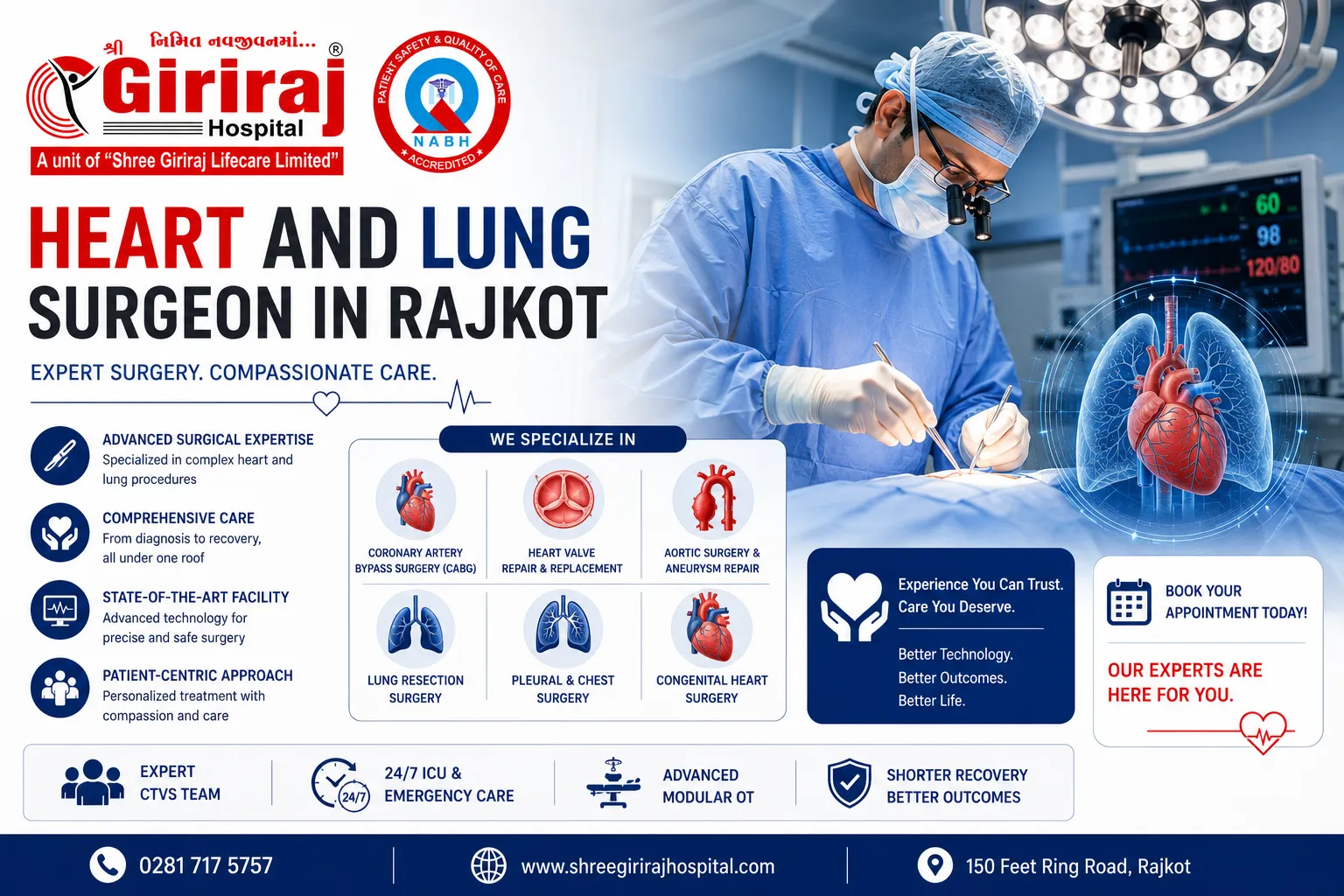
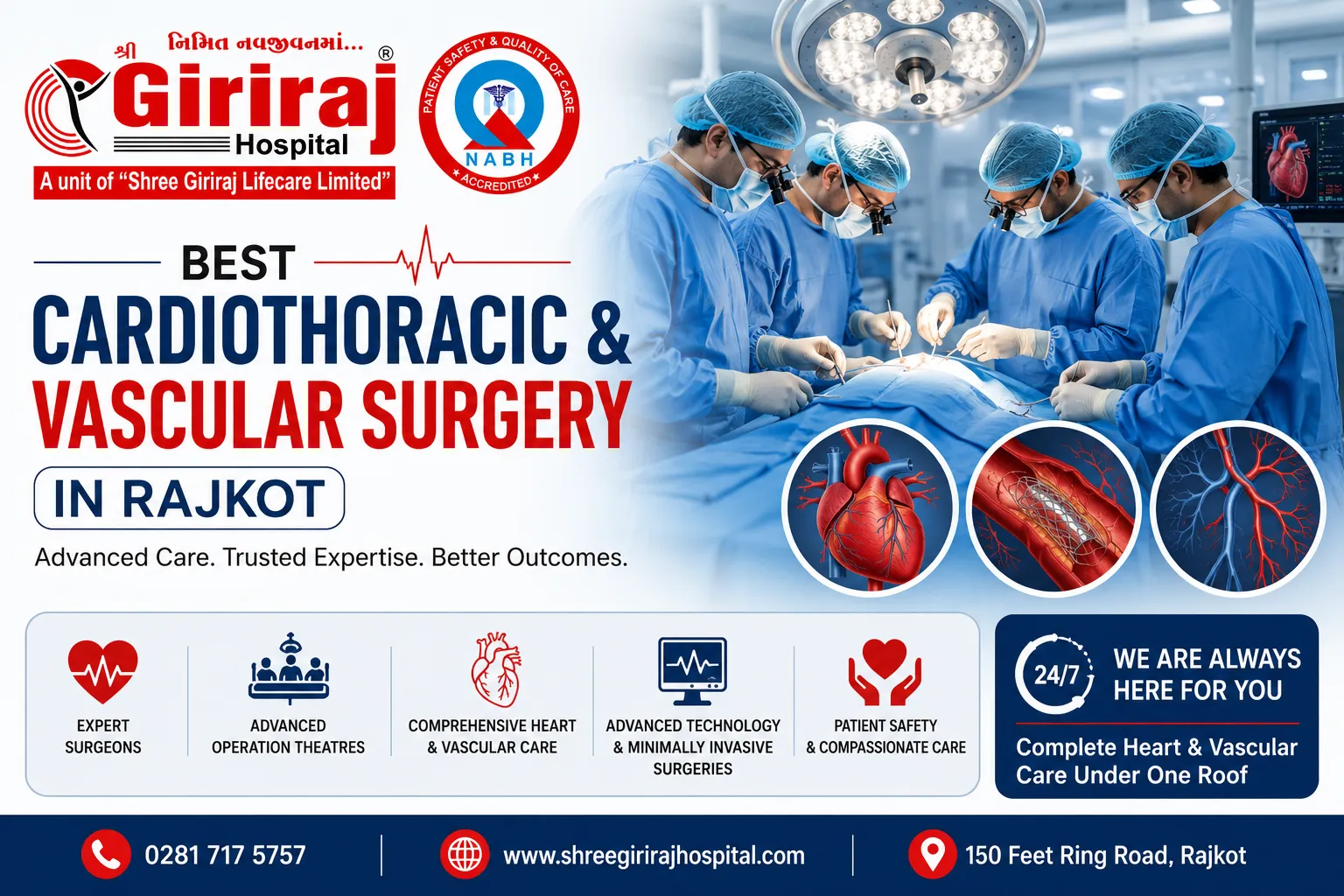
Dr. Bhahul Vekariya performs coronary bypass, valve repair and replacement, aortic surgery, and vascular procedures directly here in Rajkot, supported by our Operation Theatre and dedicated surgical team.
Post-Surgical Critical Care
Complex and high-risk cases are supported before and after surgery by our Critical Care team, ensuring continuous monitoring through the highest-risk period of recovery.
Cost is a genuine concern for any family facing potential heart or vascular surgery. Eligible CTVS procedures are covered under the Ayushman Bharat PM-JAY scheme; our detailed PM-JAY guide explains exactly how the cashless process works.
Your First Consultation with a CTVS Surgeon – What to Expect
Whether you’re seeing Dr. Vekariya or evaluating another surgeon, knowing what a genuinely thorough first consultation looks like helps you judge the quality of the advice you’re getting.
Preparing for the Consultation
- Bring all existing test results, scans, and referral letters
- Write down your symptoms, when they started, and what makes them better or worse
- List current medications and any previous cardiac or vascular procedures
What Should Happen During the Visit
- The surgeon reviews your existing tests and asks about your symptom history in detail.
- If needed, additional imaging or tests are ordered rather than proceeding on incomplete information.
- The surgeon explains, in plain language, whether surgery is recommended and why, including alternatives if they exist.
- You leave with a clear understanding of next steps, whether that’s scheduling surgery, further testing, or continued monitoring.
A Reasonable Expectation for Follow-Up
A consultation that ends with real clarity, not just a booking slip, is a strong sign you’re in the right hands. If surgery is recommended, our cardiothoracic and vascular surgery guide walks through exactly what the procedure itself, and the ICCU recovery period afterward, involves step by step.
Recovery: What Your Surgeon’s Team Should Support
Immediate Post-Surgical Care
Do expect close monitoring in a dedicated ICU setting for the first 24 to 48 hours after major surgery, backed by coordinated patient care. A good surgical team communicates clearly with family during this period rather than leaving them to guess.
The First Few Weeks
Weeks 2 to 4 typically involve a structured follow-up schedule, wound checks, and a gradual activity plan. Don’t accept vague guidance here, a proper CTVS team gives specific, individualised instructions.
Ongoing Follow-Up
Long-term recovery includes scheduled reviews, not just an open-ended “come back if there’s a problem” approach. Consistent follow-up is one of the clearest signs of a surgical team that stays invested beyond the operating theatre.
| A Patient’s Story One of our patients, a 58-year-old businessman from Rajkot, chose his surgeon after two consultations, one that felt rushed, and one where the surgeon walked him through his angiogram results personally and answered every question. He chose the latter and underwent bypass surgery with clear, structured follow-up throughout recovery. Every case is different, but his experience shows why the quality of the consultation itself is worth weighing carefully. |
For the complete week-by-week recovery timeline after major CTVS surgery, our companion article on cardiothoracic and vascular surgery in Rajkot covers this in full detail.
Cost and Insurance / Ayushman Card Coverage
The cost of CTVS surgery in India varies considerably depending on the procedure, complexity, and length of ICU stay. We do not publish fixed prices here, since every case is different; our billing desk can provide a written estimate once your treatment plan is confirmed.
Factors that affect total cost include the specific procedure, whether it’s planned or emergency surgery, and the length of post-operative ICU care needed.
Is CTVS surgery covered under PM-JAY? Yes, for eligible procedures. Several cardiothoracic and vascular procedures are covered under the Ayushman Bharat PM-JAY scheme for eligible families. Once eligibility is confirmed through the Ayushman card, the hospital coordinates directly with the scheme so covered treatment proceeds on a cashless basis.
Our on-site Ayushman Mitra desk assists families with the entire verification process, and our cashless health insurance facility covers a wide network of insurers and TPAs for eligible treatment.
For a full walkthrough of eligibility and the cashless process, read our Ayushman Bharat Health Card / PM-JAY guide. If you would like to discuss your specific situation, speak to our team and we will guide you through the next steps.
Do’s and Don’ts When Choosing a CTVS Surgeon
| Do This | Don’t Do This |
|---|---|
| Confirm the specific qualification: MCh or DNB in CTVS | Don’t assume “cardiac surgeon” alone confirms the right super-specialty training |
| Ask how many similar procedures the surgeon has personally performed | Don’t rely on a hospital’s general reputation alone without checking the surgeon |
| Bring all prior test results to the first consultation | Don’t attend without your existing imaging and referral notes |
| Ask what happens if complications arise during recovery | Don’t avoid asking about risk because it feels uncomfortable |
| Confirm ICU and critical care backup is available at the hospital | Don’t assume every hospital offering surgery has the same critical care depth |
| Ask about PM-JAY or insurance coverage before finalising a decision | Don’t delay asking about cost until after the procedure is scheduled |
| Get a second opinion for major, non-emergency procedures | Don’t feel pressured to decide on major surgery in a single visit |
| Ask how post-surgical follow-up is structured | Don’t accept a vague “come back if there’s a problem” as your only follow-up plan |
Building a relationship with a hospital through regular health check-ups before surgery is ever needed also gives you a head start on trust, rather than evaluating a surgeon for the first time during a crisis.
Common Myths About Choosing a CTVS Surgeon
| Myth | Fact |
|---|---|
| The surgeon with the most years of experience is always the best choice | Correct qualification (MCh or DNB CTVS) matters more than raw years; a well-trained newer surgeon is fully competent |
| Higher consultation fees mean better surgical outcomes | Fee levels reflect a hospital’s positioning, not a direct measure of surgical skill or outcomes |
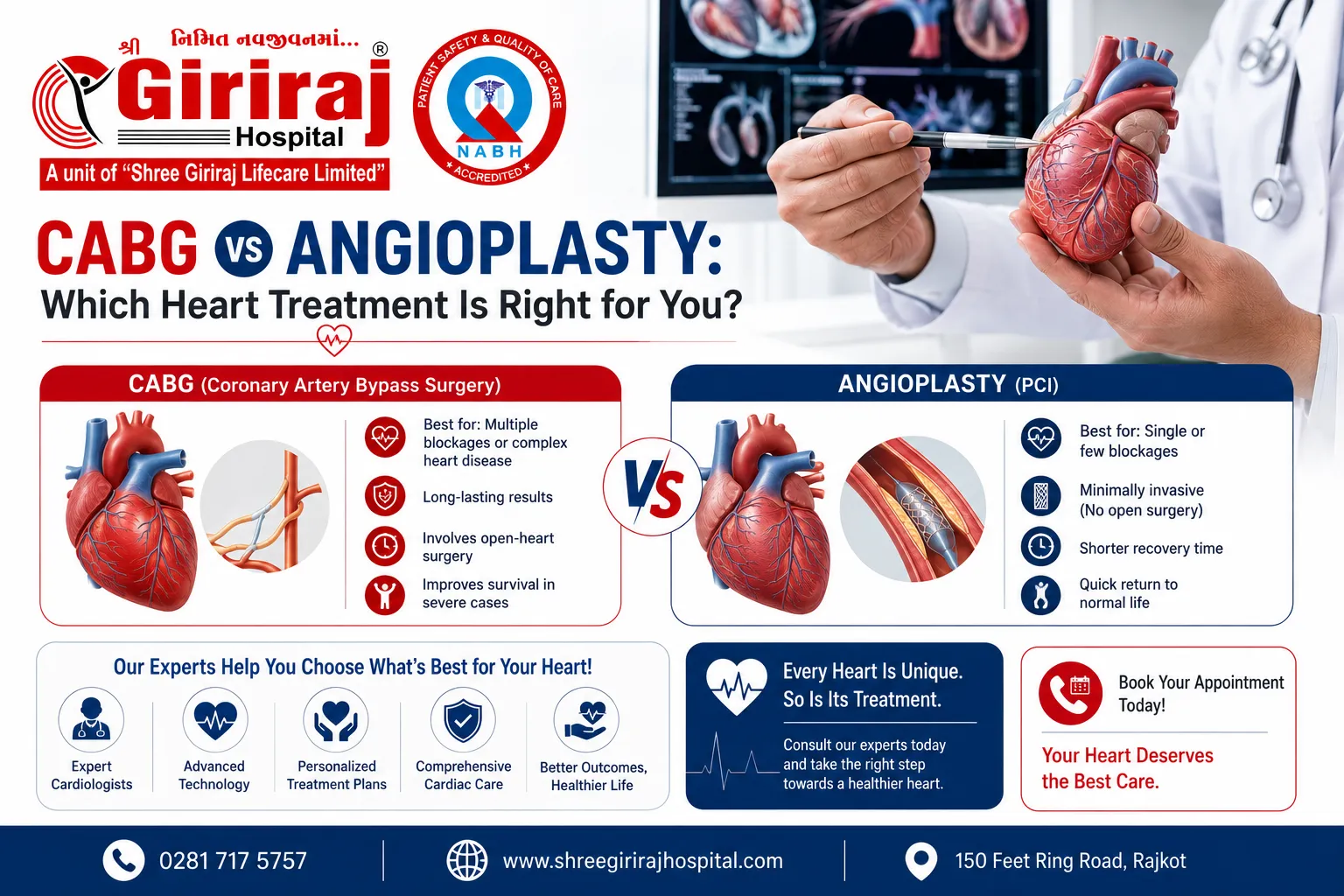
| Any surgeon who performs heart procedures is a CTVS surgeon | Interventional cardiologists perform catheter-based procedures like angioplasty; only a CTVS surgeon performs open surgical procedures like bypass |
| A rushed first consultation is normal for busy, in-demand surgeons | A thorough surgeon makes time to explain findings clearly, regardless of how busy their schedule is |
| You should always choose the surgeon closest to home | For time-sensitive but non-emergency surgery, a short additional travel distance for the right qualification is usually worth it |
| Second opinions offend surgeons and should be avoided | Reputable surgeons expect and welcome second opinions for major, non-emergency decisions |
| All hospitals offering CTVS surgery have equal ICU capability | Critical care depth varies significantly between hospitals and is worth confirming directly |
| For the best CTVS surgeon you need to travel to a big city | Shree Giriraj Hospital provides MCh-qualified CTVS surgical care to the same standard as top hospitals in larger cities, right here in Rajkot |
Why Choose Dr. Bhahul Vekariya at Shree Giriraj Hospital
Choosing a CTVS surgeon is one of the most significant medical decisions a patient can make. You can read more about our hospital here, but the points below focus on what matters most in this specific decision.
The Complete Qualification Pathway
Dr. Bhahul Vekariya holds MBBS, MS (General Surgery), and MCh (Cardiothoracic & Vascular Surgery), the full training sequence outlined earlier in this article, leading our Cardiothoracic & Vascular Surgery department directly here in Rajkot.
Coordinated Cardiology-to-Surgery Pathway
Our Cardiology and surgical teams work together from diagnosis through treatment planning, so patients move seamlessly between medical management and surgical opinion without starting over at each step.
Genuine Critical Care Depth
Complex and high-risk surgeries are supported by our Critical Care team and ICCU, exactly the kind of backup infrastructure worth confirming for any CTVS surgeon you’re evaluating.
Two Accessible Campus Locations
Our Rajkot Main and Kuvadava campuses both support cardiac and vascular consultation and follow-up, giving patients across the city genuinely convenient access.
Transparent, Cashless Ayushman Bharat / PM-JAY Coverage
Eligible CTVS procedures are covered under the PM-JAY scheme, and our Ayushman Mitra desk manages verification and cashless processing directly. Read more in our PM-JAY guide.
You don’t have to navigate this decision alone or rely on a directory listing to make it. Our experienced doctors are ready to give you the thorough, clear consultation described in this article. If you’d like a broader view of finding the right heart specialist generally, our guide on the best doctor in Rajkot for heart care covers additional factors worth considering.
Book a consultation with our Cardiothoracic & Vascular Surgery team today to get a clear, honest evaluation of your condition.
Frequently Asked Questions
What does CTVS stand for?
CTVS stands for Cardiothoracic and Vascular Surgery, the surgical specialty covering the heart, lungs, chest, and blood vessels.
What qualifications should a CTVS surgeon have?
Look for MBBS, followed by MS in General Surgery, followed by MCh or DNB specifically in Cardiothoracic and Vascular Surgery. This full pathway confirms genuine super-specialty surgical training.
What is the difference between a cardiologist and a CTVS surgeon?
A cardiologist diagnoses and manages heart conditions medically, including catheter-based procedures like angioplasty. A CTVS surgeon performs open surgical procedures like bypass, valve replacement, and vascular repair when surgery is the right option.
Is CTVS surgery covered under Ayushman Bharat?
Several CTVS procedures are covered under the PM-JAY scheme for eligible families, including cashless treatment. See our full Ayushman Bharat / PM-JAY guide for the step-by-step process.
Does Shree Giriraj Hospital have a qualified CTVS surgeon?
Yes. Dr. Bhahul Vekariya leads our Cardiothoracic & Vascular Surgery department, holding MBBS, MS (General Surgery), and MCh (CTVS) qualifications, and performs these procedures directly here in Rajkot.
How do I book a consultation with a CTVS surgeon?
You can book an appointment online for a consultation, or come directly to our emergency department if you’re experiencing severe or sudden symptoms right now.
Should I get a second opinion before CTVS surgery?
For major, non-emergency procedures, yes, this is a reasonable and common step. Our Second Opinion & Teleconsultation service is available if you’d like additional input before finalising a decision.
How many years of experience should a CTVS surgeon have?
There’s no fixed number that guarantees quality. The correct super-specialty qualification (MCh or DNB CTVS) confirms core competency; years of practice add refinement but don’t replace the need to verify the qualification itself first.
What procedures does a CTVS surgeon perform?
CTVS surgeons perform coronary bypass surgery, heart valve repair and replacement, aortic surgery, and vascular procedures like bypass grafts and varicose vein surgery. Our companion article on cardiothoracic and vascular surgery in Rajkot covers each procedure in detail.
Can a CTVS surgeon see me without a cardiologist referral?
In many cases, yes, particularly if you already have relevant test results or a specific vascular concern. However, an initial cardiology evaluation often helps ensure the full picture is understood before a surgical opinion.
Conclusion and Next Steps
Finding the best CTVS surgeon in Rajkot for your situation comes down to verifying real qualifications, asking direct questions, and paying attention to how clearly your consultation is handled, not simply picking a name off a list.
If you’ve been referred for a surgical opinion or are experiencing symptoms that concern you, don’t wait. Contact our Cardiothoracic & Vascular Surgery department in Rajkot for a thorough evaluation, or book an appointment for a consultation.
Get in touch with our team with any questions about symptoms, cost, or PM-JAY coverage. Our staff are ready to support you at every step.
Read More: