
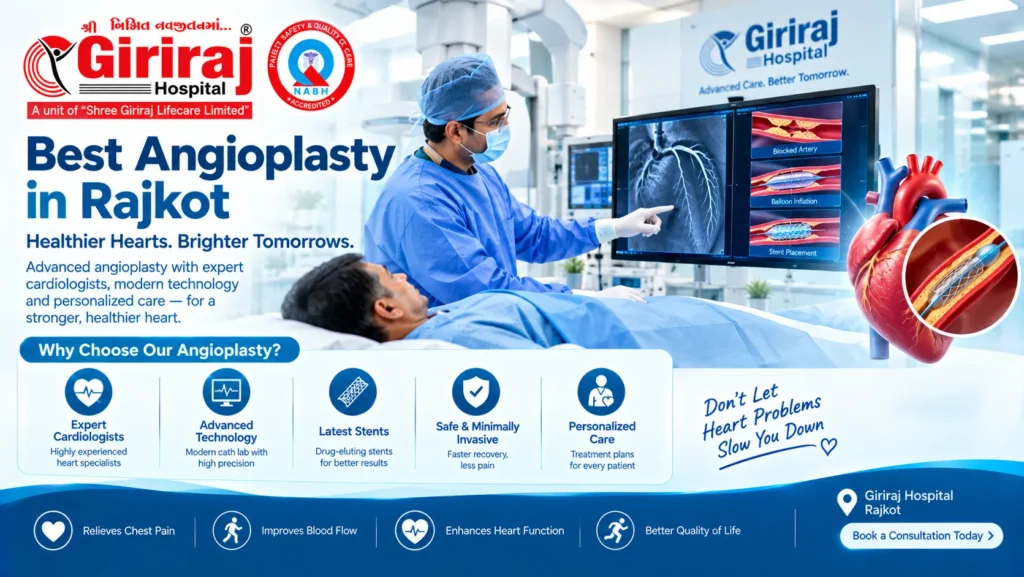
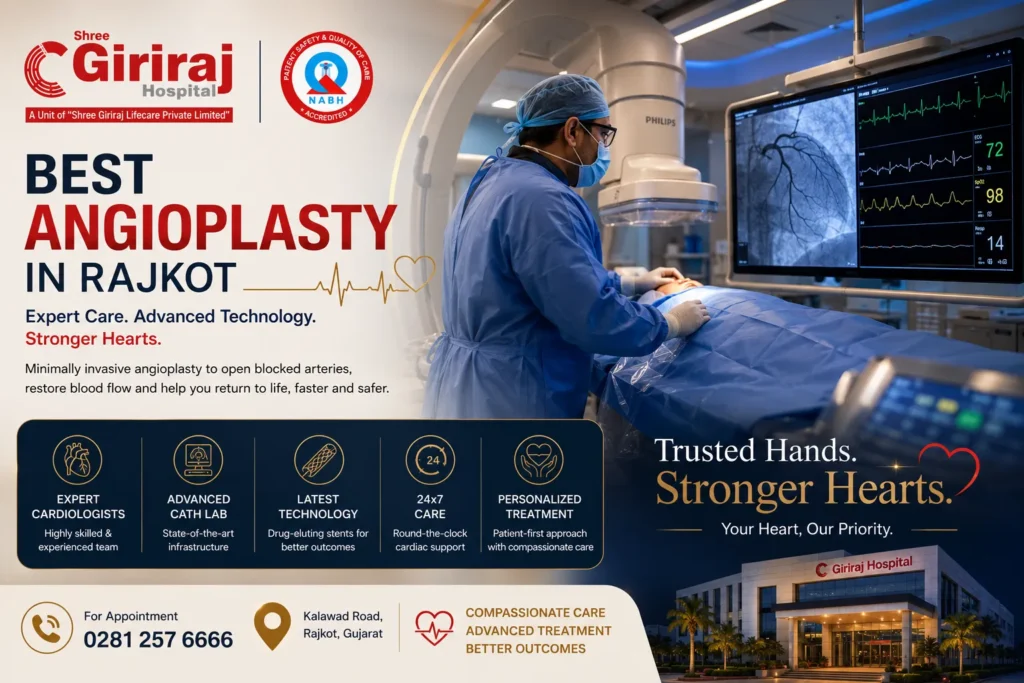
Angioplasty in Rajkot has become one of the most common procedures used to treat blocked heart arteries, offering patients a faster path to recovery compared to open-heart surgery in many cases. When a coronary artery narrows due to plaque buildup, blood flow to the heart muscle drops – and angioplasty restores that flow using a minimally invasive approach.
Heart disease remains one of the leading causes of death in India, and blocked coronary arteries are among its most treatable causes when identified early (Source: ICMR, 2024). At Shree Giriraj Hospital’s Cardiology and Cardiothoracic & Vascular Surgery departments in Rajkot, patients with blocked arteries are evaluated and treated using modern angioplasty techniques. This article explains what angioplasty is, when it’s needed, and what the procedure and recovery actually involve.
What Is Angioplasty?
Angioplasty is a procedure that opens narrowed or blocked coronary arteries to restore normal blood flow to the heart muscle. It is performed by threading a thin tube called a catheter through a blood vessel, usually from the wrist or groin, up to the blocked area near the heart. A small balloon at the tip of the catheter is inflated to widen the artery, and in most cases, a small mesh tube called a stent is placed to keep the artery open.
Think of a coronary artery like a water pipe that has narrowed due to years of mineral buildup along its inner walls. Angioplasty works much like clearing and reinforcing that pipe from the inside – widening the narrowed section and placing a support structure so it stays open, without needing to replace the entire pipe.
This matters to patients because blocked arteries reduce oxygen supply to the heart, which can cause chest pain and, if left untreated, a heart attack. Angioplasty offers a way to restore that blood flow without the longer recovery time associated with open-heart surgery.
Warning Signs That May Mean You Need an Angioplasty Evaluation
Recognising the symptoms of blocked arteries early allows treatment before a heart attack occurs. Many patients live with gradually worsening symptoms before seeking evaluation.
Signs to watch for:
- Chest pain or tightness, especially during physical activity
- Breathlessness with minimal exertion
- Pain spreading to the arm, jaw, neck, or back
- Unusual fatigue during everyday tasks
- Dizziness or a fluttering sensation in the chest
- Cold sweats accompanying chest discomfort
Early Signs
Mild chest discomfort during exertion that eases with rest, known as angina, is often an early sign that an artery may be narrowing.
Advanced or Serious Signs
Chest pain at rest, prolonged discomfort, or pain accompanied by sweating and breathlessness are more serious signs that may indicate a heart attack in progress.
When to see a doctor immediately: Chest pain lasting more than a few minutes, especially with sweating, breathlessness, or pain spreading to the arm or jaw, is a medical emergency. Call for emergency help immediately.
A commonly missed sign is breathlessness during routine activity, like climbing stairs – many patients attribute this to general fitness rather than an underlying blockage.
Common Causes and Risk Factors for Blocked Arteries
Understanding why arteries narrow helps patients take meaningful steps to protect their heart health.
Common Causes
- Cholesterol and fatty deposits building up along artery walls over time
- Chronic high blood pressure damaging artery linings
- Diabetes accelerating artery narrowing
- Smoking, which damages blood vessels directly
- Inflammation within the artery walls
Risk Factors
- Family history of heart disease
- High cholesterol or uncontrolled diabetes
- Sedentary lifestyle and poor diet
- Obesity, particularly abdominal weight
- Chronic stress and poor sleep patterns
Diabetes is a particularly significant risk factor across Gujarat, where its prevalence is notably high – and diabetes often accelerates artery blockages, making regular cardiac screening especially important for diabetic patients.
Types of Angioplasty and Related Procedures
This section establishes clarity on the different approaches, since patients often hear multiple related terms used interchangeably.
| Procedure Type | What It Involves | What It Means for You |
|---|---|---|
| Balloon Angioplasty | Balloon widens the artery without a permanent implant | Used in select cases, sometimes combined with stenting |
| Angioplasty with Stent | Balloon widens the artery, followed by a stent to keep it open | The most common approach, offering longer-term artery support |
| Drug-Eluting Stent | Stent coated with medication to reduce re-narrowing | Often preferred for lowering the chance of the artery narrowing again |
| Coronary Angiography | Diagnostic imaging of the arteries, without treatment | Performed first to confirm blockages before deciding on angioplasty |
| Bypass Surgery | Open surgery rerouting blood flow around a blockage | Considered for more complex or multiple blockages angioplasty cannot address |
Most patients undergo coronary angiography first to confirm the location and severity of a blockage, which then guides whether angioplasty, stenting, or bypass surgery is the most appropriate next step.
How Is a Blocked Artery Diagnosed?
A cardiologist uses a combination of tests to confirm whether an artery is blocked and how severely.
Blood Tests
Basic blood tests check cholesterol levels and markers that indicate strain on the heart, especially during a suspected acute event.
Imaging Tests
An ECG records the heart’s electrical activity, while an echocardiogram shows how well the heart is pumping. Coronary angiography, performed through a small catheter, gives a direct, detailed view of the arteries themselves.
What the Results Mean
A significant blockage – typically 70% or more narrowing – often indicates that angioplasty may be needed to restore adequate blood flow.
How quickly diagnosis happens depends on the situation – in an emergency, it can take place within the hour, while planned evaluations may be scheduled over a few days. Most diagnostic tests are painless or only mildly uncomfortable.
Treatment Options for Blocked Arteries
Treatment depends on the number, location, and severity of blockages, along with your overall heart health. Your doctor will recommend the best option based on your individual case.
Non-Surgical / Medical Management
For milder blockages, medications to control cholesterol, blood pressure, and blood clotting, combined with lifestyle changes, may be sufficient.
Procedural Treatment: Angioplasty
For significant blockages causing symptoms, angioplasty with stenting is often recommended to restore blood flow quickly with a relatively short recovery period.
When Bypass Surgery Is Considered
For patients with multiple or complex blockages, particularly involving several arteries, bypass surgery may offer better long-term results than angioplasty alone.
Shree Giriraj Hospital’s Cardiology and Cardiothoracic & Vascular Surgery teams work together to determine the most appropriate treatment, with PM-JAY / Ayushman Card coverage applicable for eligible cardiac procedures.
Angioplasty Procedure – Step by Step
Understanding what happens during the procedure can significantly ease anxiety for patients and families.
Pre-Procedure Preparation
Patients are typically asked to fast for a few hours beforehand, and blood tests are reviewed to confirm the procedure can proceed safely.
What happens during the procedure:
- A local anaesthetic numbs the site, usually at the wrist or groin
- A thin catheter is guided through the blood vessel to the blocked artery
- Contrast dye and X-ray imaging confirm the exact location of the blockage
- A small balloon is inflated to widen the narrowed artery
- A stent is placed, if needed, to keep the artery open
- The catheter is removed, and the access site is closed and bandaged
Post-Procedure / Recovery Monitoring
Patients are moved to a recovery area for a few hours of monitoring, where heart rhythm and the access site are checked closely.
Team Involved
An interventional cardiologist leads the procedure, supported by cardiac nurses and technicians throughout.
Expected Duration
The procedure itself typically takes approximately 1–2 hours, though total time including preparation and recovery monitoring is longer.
Throughout the procedure, a specialist team is with you at every step, and most patients remain awake but comfortable under local anaesthesia and mild sedation.
Recovery and Life After Angioplasty
Recovery after angioplasty is generally faster than after open-heart surgery, and most patients return to daily activities within a short period.
- Day 1: Rest is advised, with monitoring of the access site for any bleeding or swelling
- Week 1: Light activity can usually resume, avoiding heavy lifting or strain
- Weeks 2–4: Gradual return to normal activity, guided by your cardiologist
- 3 months and beyond: Cardiac rehabilitation and lifestyle changes support long-term heart health
Diet and lifestyle changes – reducing salt and fried food, staying active, and managing cholesterol – play a major role in preventing future blockages after angioplasty.
Patient story: A 58-year-old businessman from Rajkot experienced chest tightness while walking and was found to have a significant coronary blockage. After angioplasty with stenting at Shree Giriraj Hospital, he was back to his daily walks within a few weeks, with ongoing cardiology follow-up to protect his heart health.
Angioplasty significantly reduces the risk of a future heart attack in most patients, and consistent follow-up care helps maintain that benefit over the long term.
Cost and Ayushman Card Coverage for Angioplasty
We understand that cost of treatment is a major concern for most families considering a cardiac procedure.
The cost of angioplasty in India varies depending on the type of stent used, the number of blockages treated, and any additional complications. Factors affecting cost include hospital grade, stent type (standard versus drug-eluting), and the complexity of the procedure.
Ayushman Bharat (PM-JAY) covers angioplasty and stenting for eligible patients under the scheme, including cashless treatment where applicable. Shree Giriraj Hospital’s Ayushman Mitra desk assists patients through the eligibility check and cashless process for cardiac procedures.
Speak to our team for a personalised cost estimate based on your specific condition.
Do’s and Don’ts Before and After Angioplasty
| Do This | Don’t Do This |
|---|---|
| Follow your doctor’s fasting instructions before the procedure | Eat or drink close to the procedure time without checking |
| Take prescribed blood-thinning medication exactly as directed | Skip or stop medication without consulting your doctor |
| Rest the access site (wrist or groin) as advised after the procedure | Lift heavy objects or strain the access site too soon |
| Attend all follow-up cardiology appointments | Skip follow-up visits once you feel better |
| Adopt a heart-healthy diet and stay active as guided | Return to a high-salt, high-fat diet without changes |
| Report any chest pain or unusual symptoms promptly | Ignore new or returning chest discomfort after the procedure |
Following your cardiologist’s guidance closely in the weeks after angioplasty plays a major role in protecting the long-term success of the procedure.
Common Myths About Angioplasty
| Myth | Fact |
|---|---|
| Angioplasty is the same as open-heart surgery | Angioplasty is a minimally invasive procedure done through a small catheter, not open surgery, and typically involves a shorter recovery. |
| A stent means you’re completely cured of heart disease | A stent treats the blocked segment, but ongoing lifestyle changes and medication remain essential to prevent new blockages. |
| Angioplasty is only for older patients | Blocked arteries increasingly affect younger adults due to lifestyle factors, and angioplasty is used across a wide age range when clinically needed. |
| Patients from Rajkot or Saurashtra need to travel to Ahmedabad for angioplasty | Shree Giriraj Hospital’s Cardiology team in Rajkot performs angioplasty procedures locally, without the need to travel. |
| Angioplasty is always more dangerous than medication alone | For significant blockages, angioplasty often reduces the risk of a heart attack more effectively than medication alone. |
If you have heard something about angioplasty that concerns you, ask our specialist team – clearing up misinformation early helps you make a confident, informed decision.
Why Choose Shree Giriraj Hospital for Angioplasty in Rajkot?
Choosing where to have a cardiac procedure is a significant decision – and that is exactly what shapes how Shree Giriraj Hospital’s Cardiology team approaches every case.
Experienced Interventional Cardiology Team
Shree Giriraj Hospital’s Cardiology department brings specialist angioplasty and stenting expertise to Rajkot, so patients across Saurashtra do not need to travel to a bigger city for advanced cardiac care.
Advanced Cardiac Catheterisation Facilities
On-site catheterisation lab facilities allow diagnosis through coronary angiography and treatment through angioplasty to happen efficiently, often within the same visit for urgent cases.
Integrated Cardiac Surgery Backup
For patients whose condition may require bypass surgery instead of or alongside angioplasty, Shree Giriraj Hospital’s Cardiothoracic & Vascular Surgery team is available within the same hospital.
Critical Care Support
Shree Giriraj Hospital’s Critical Care unit ensures immediate support is available for any complex or emergency cardiac case.
Insurance and Ayushman Support
Shree Giriraj Hospital is empanelled under PM-JAY / Ayushman Bharat, and the hospital’s team assists with cashless processing for eligible cardiac procedures.
Our Cardiology team is ready to help – book a consultation today and get your heart health evaluated properly.
Frequently Asked Questions
What is the difference between angioplasty and bypass surgery?
Angioplasty is a minimally invasive procedure using a catheter to open a blocked artery, while bypass surgery is an open procedure that reroutes blood flow around blockages. Your cardiologist will recommend the best option based on your individual case.
How long does an angioplasty procedure take?
The procedure itself typically takes about 1–2 hours, though total time including preparation and recovery monitoring is longer.
Is angioplasty a painful procedure?
Most patients experience only mild discomfort at the access site, as the procedure is performed under local anaesthesia with sedation.
How soon can I go back to work after angioplasty?
Many patients return to light activity within a week, though your cardiologist will guide the exact timeline based on your recovery and job type.
Is angioplasty covered under Ayushman Card?
Yes, angioplasty and stenting are covered for eligible patients under PM-JAY, including cashless treatment where applicable. Our Ayushman Mitra desk can confirm your specific eligibility.
Will I need a stent after angioplasty?
In most cases, yes – a stent is placed after balloon angioplasty to help keep the artery open long-term, though this depends on the specific case.
Can I come to Shree Giriraj Hospital just for a cardiac evaluation?
Yes. Shree Giriraj Hospital’s Cardiology department in Rajkot welcomes patients for evaluation, coronary angiography, and treatment, including angioplasty when needed.
How long does a stent last after angioplasty?
Modern stents, particularly drug-eluting stents, are designed for long-term use, though ongoing medication and lifestyle changes remain important to protect their effectiveness.
Get Your Heart Health Evaluated Today
Blocked arteries develop gradually, but treatment options like angioplasty offer an effective, minimally invasive way to restore healthy blood flow when caught in time. Getting the right evaluation early can make all the difference to your long-term heart health.
Our Cardiology team at both our Rajkot Main and Kuvadva campuses is ready to help you understand your heart health and find the right treatment plan for you. Book an appointment with our Cardiology team today, or contact us to learn more.
Explore more: High Blood Pressure Symptoms | Best Cardiologist in Rajkot