




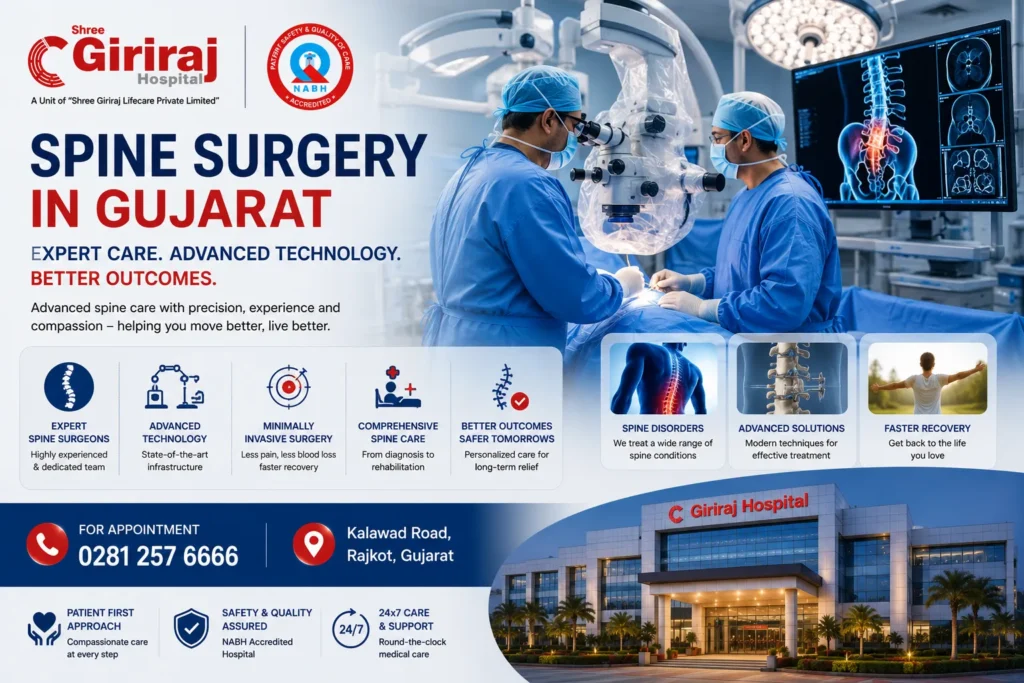
Spine surgery in Gujarat has advanced significantly in recent years, with modern minimally invasive techniques now offering shorter hospital stays and faster recovery for many patients. For those living with persistent back or neck pain that has not improved with conservative treatment, understanding when surgery becomes necessary – and what it actually involves – helps remove much of the uncertainty around this decision.
Spinal conditions such as disc prolapse and cervical spondylosis are among the leading causes of chronic pain and reduced mobility across India, and a significant share of these cases eventually require surgical evaluation (Source: ICMR, 2023).At Shree Giriraj Hospital’s Neurosurgery and Spine Surgery department in Rajkot, led by expert neurosurgeon and spine specialist Dr. Sagar Ghodasara, patients receive a thorough evaluation before surgery is ever recommended. . This article explains the types of spine surgery available, when they’re needed, and what recovery looks like.
What Is Spine Surgery?
Spine surgery refers to a range of procedures used to treat structural problems in the spine – such as a herniated disc, spinal stenosis, or nerve compression – that have not responded to non-surgical treatment. It aims to relieve pain, restore mobility, and in some cases, prevent further nerve damage.
Think of the spine as a stack of building blocks, cushioned by discs and connected by muscles and ligaments that allow flexibility. When one part of this structure shifts, wears down, or presses on a nearby nerve, it disrupts the balance of the whole stack. Spine surgery works to correct that specific problem area – removing pressure on a nerve or stabilising a section of the spine – without disturbing the rest of the structure.
Spine surgery matters to patients whose quality of life has been significantly affected by pain, numbness, or weakness that has not improved with physiotherapy and medication. For most people, surgery is considered only after conservative treatment has been tried and has not provided sufficient relief.
Warning Signs That May Indicate You Need Spine Surgery
Recognising which symptoms suggest a more serious spinal problem helps patients seek the right evaluation at the right time.
Signs to watch for:
- Pain radiating from the back or neck into the arms or legs
- Numbness, tingling, or weakness that is worsening over time
- Difficulty walking, gripping objects, or maintaining balance
- Pain that persists despite weeks of physiotherapy and medication
- Loss of bladder or bowel control
- Visible changes in posture or spinal alignment
Early Signs
Occasional stiffness or mild radiating discomfort that responds to rest and physiotherapy is usually an early sign and does not necessarily indicate a need for surgery.
Advanced or Serious Signs
Progressive weakness, numbness that is spreading, or pain that has not improved after a full course of conservative treatment are signs that a spine specialist should evaluate whether surgery is appropriate.
When to see a doctor immediately: Sudden loss of bladder or bowel control, rapidly worsening leg weakness, or severe pain following an injury are emergency warning signs. Visit the nearest emergency department without delay.
A commonly missed sign is gradual weakness in the hands or legs – patients often attribute this to general fatigue rather than recognising it as a sign of nerve compression that needs evaluation.
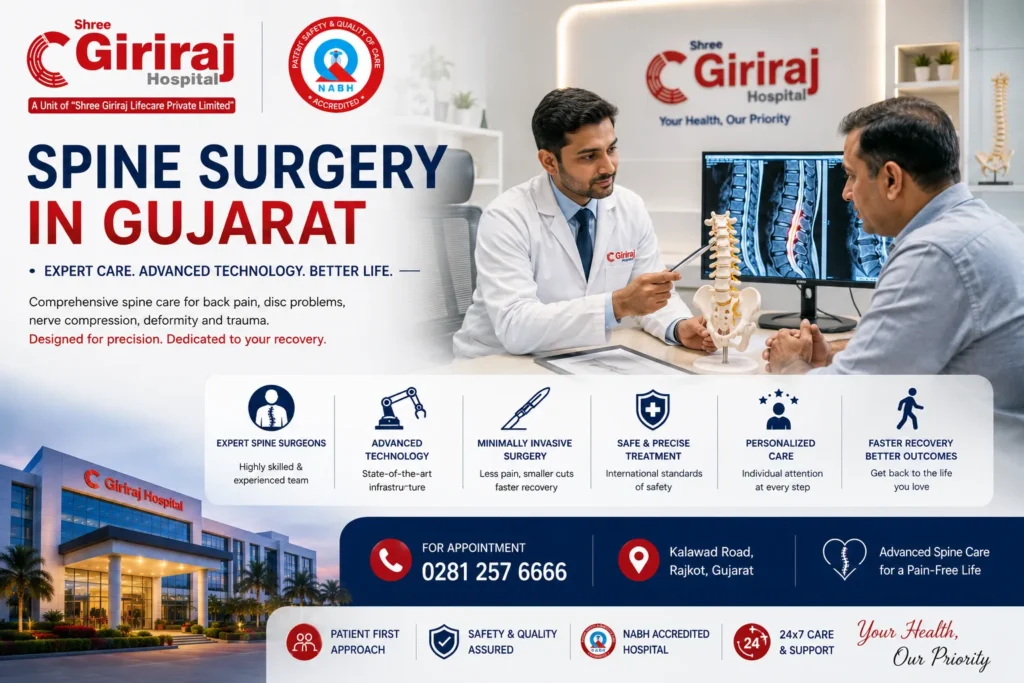
Common Causes and Risk Factors Leading to Spine Surgery
Understanding what leads to spinal conditions requiring surgery helps patients recognise their own risk factors early.
Common Causes
- Herniated or slipped disc pressing on a spinal nerve
- Spinal stenosis, a narrowing of the space around the spinal cord
- Degenerative disc disease from age-related wear
- Spinal instability following injury or long-term strain
- Cervical spondylosis affecting the neck’s spinal discs and joints
Risk Factors
- Jobs involving heavy lifting or repetitive strain
- Long-term poor posture, especially with desk-based work
- Obesity, which adds pressure to spinal discs
- Smoking, which reduces blood flow to spinal tissue
- Family history of spinal conditions
Occupational strain is a notable factor across Gujarat, where many patients in farming, transport, and manual labour roles experience earlier spinal wear due to repeated heavy lifting and prolonged physical strain.
Types of Spine Surgery
Spine surgery is not a single procedure – the right approach depends on the specific condition and its location in the spine.
| Type of Surgery | What It Treats | What It Means for You |
|---|---|---|
| Microdiscectomy | Removes part of a herniated disc pressing on a nerve | Minimally invasive, often used for disc-related leg pain |
| Spinal Decompression (Laminectomy) | Relieves pressure on the spinal cord or nerves | Used for spinal stenosis and nerve compression |
| Spinal Fusion | Joins two vertebrae together for stability | Considered for spinal instability or severe degeneration |
| Cervical Spine Surgery | Treats disc or nerve issues in the neck | Addresses arm pain, numbness, or neck-related nerve compression |
| Minimally Invasive Spine Surgery | Smaller incisions using specialised instruments | Often means shorter hospital stay and faster recovery |
Most patients requiring surgery undergo either a microdiscectomy or spinal decompression, as these address the most common causes of nerve-related back and leg pain. Your surgeon will explain which type best matches your specific condition based on imaging findings.
How Is the Need for Spine Surgery Diagnosed?
A neurosurgeon or spine specialist uses a thorough evaluation to confirm whether surgery is the right course of treatment.
Imaging Tests
An MRI provides a detailed view of the discs, nerves, and spinal cord, helping identify exactly where the problem is located. An X-ray may also be used to assess bone alignment and stability.
Physical Examination
Testing reflexes, muscle strength, and sensation helps the doctor understand how much a nerve may be affected, often before imaging confirms the exact cause.
What the Results Mean
Significant nerve compression seen on imaging, especially when matched with worsening symptoms, is what typically guides the decision toward surgical treatment.
Diagnosis is thorough but generally painless, and it leads directly into a detailed discussion about whether conservative treatment, surgery, or a combination is the right path forward.
Treatment Options: Surgical and Non-Surgical
Treatment depends on the severity of your condition, how it is affecting your daily life, and how you have responded to prior treatment. Your doctor will recommend the best option based on your individual case.
Non-Surgical / Medical Management
Most spinal conditions are first treated with physiotherapy, targeted exercises, and pain management, often providing significant relief without the need for surgery.
Surgical Treatment
When conservative treatment does not relieve symptoms, or when there is significant nerve compression causing weakness, surgery such as microdiscectomy or spinal decompression may be recommended to relieve pressure and restore function.
When Surgery Is Considered
Surgery is typically considered after a genuine trial of conservative treatment, or sooner in cases involving significant or worsening neurological symptoms.
Shree Giriraj Hospital’s Neurosurgery and Spine Surgery team offers both physiotherapy-led conservative care and advanced surgical options, ensuring patients are guided toward the least invasive effective treatment for their condition.
Spine Surgery Procedure – Step by Step
Understanding what happens during spine surgery can significantly reduce anxiety for patients and their families.
Pre-Operative Preparation
Patients typically undergo pre-surgical blood tests and imaging review, along with guidance on fasting and any medication adjustments before the procedure.
What happens on the day of surgery:
- Anaesthesia is administered by the anaesthesiology team
- The surgeon accesses the affected area of the spine, often through a small, precise incision
- The damaged disc material is removed, or the compressed area is decompressed, depending on the procedure
- In cases requiring fusion, the vertebrae are stabilised using appropriate techniques
- The incision is closed, and the patient is moved to recovery for monitoring
Post-Procedure / Recovery Monitoring
Most patients are monitored for several hours after surgery before being moved to a regular ward, with early guided movement encouraged as part of recovery.
Team Involved
Spine surgery is a collaborative effort led by Dr. Sagar Ghodasara alongside a skilled team of anaesthesiologists, specialised surgical nurses, and physiotherapists who care for you throughout the process.
Expected Duration
Procedure duration varies depending on complexity, typically ranging from about 1 to 3 hours for common procedures like microdiscectomy.
Throughout the procedure, a specialist team is with you at every step, and many spine surgeries at Shree Giriraj Hospital use minimally invasive techniques that support a shorter hospital stay.
Recovery and Life After Spine Surgery
Recovery after spine surgery follows a fairly structured path when patients closely follow their care team’s guidance.
- Week 1: Focus on rest, short guided walks, and avoiding heavy lifting
- Weeks 2–4: Gradual increase in activity, with physiotherapy support
- Month 2–3: Most patients resume normal daily routines, including light exercise
- 6 months and beyond: Continued core-strengthening exercises help protect long-term spinal health
Physiotherapy plays a central role in recovery after spine surgery, helping patients rebuild strength and flexibility safely. Patients who follow their prescribed exercise plan consistently tend to see better long-term outcomes.
Patient story: A 48-year-old farmer from Kuvadva had lived with worsening leg pain and numbness for months before seeking evaluation. Following a microdiscectomy at Shree Giriraj Hospital, he returned to his daily work within weeks, with continued physiotherapy to support his recovery.
Returning to an active, pain-free life after spine surgery is achievable for most patients, and consistent follow-up care makes a meaningful difference to the long-term outcome.
Cost and Ayushman Card Coverage for Spine Surgery
We understand that cost of treatment is a major concern for most families considering spine surgery.
The cost of spine surgery in India varies depending on the type of procedure, whether minimally invasive techniques are used, and whether spinal fusion or implants are required. Factors affecting cost include hospital grade, procedure complexity, and length of hospital stay.
Ayushman Bharat (PM-JAY) covers eligible spine surgeries and related hospitalisation for patients under the scheme, depending on the specific procedure and eligibility category. Shree Giriraj Hospital’s Ayushman Mitra desk can guide you through the cashless process for eligible spine treatments.
Speak to our team for a personalised cost estimate based on your specific condition.
Do’s and Don’ts Before and After Spine Surgery
| Do This | Don’t Do This |
|---|---|
| Complete pre-surgical tests and follow fasting instructions | Skip pre-operative instructions given by your surgical team |
| Start gentle, guided movement as soon as advised after surgery | Stay completely immobile for extended periods post-surgery |
| Attend all follow-up and physiotherapy appointments | Skip physiotherapy once initial pain improves |
| Use proper posture and body mechanics during recovery | Bend, twist, or lift heavy objects too soon after surgery |
| Maintain a healthy weight to reduce strain on your spine | Return to heavy manual work without medical clearance |
| Report any new numbness, weakness, or fever promptly | Ignore new symptoms appearing after surgery |
Following your surgeon’s specific recovery guidance closely in the weeks after surgery plays a major role in achieving the best possible outcome.
Common Myths About Spine Surgery
| Myth | Fact |
|---|---|
| Spine surgery always requires a long hospital stay | Many modern spine procedures use minimally invasive techniques, often allowing a significantly shorter hospital stay than traditional open surgery. |
| Spine surgery guarantees complete, permanent pain relief | Spine surgery significantly reduces pain and nerve-related symptoms in most patients, though ongoing core strength and posture care remain important for long-term results. |
| Only elderly patients need spine surgery | Disc-related spine problems increasingly affect younger adults due to lifestyle and occupational strain, and surgery is considered across a wide age range when clinically needed. |
| Patients from Rajkot or Saurashtra need to travel to Ahmedabad for spine surgery | Shree Giriraj Hospital’s Neurosurgery and Spine Surgery team in Rajkot performs a full range of spine procedures locally, without the need to travel. |
| All back pain eventually requires surgery | Most back pain resolves with physiotherapy and conservative treatment. Surgery is recommended only for a smaller share of cases with significant nerve involvement. |
If you have heard something about spine surgery that concerns you, ask our specialist team – clearing up misinformation early helps you make a confident, informed decision.
Why Choose Shree Giriraj Hospital for Spine Surgery in Rajkot?
Choosing where to have spine surgery is a significant decision – and that is exactly what shapes how Shree Giriraj Hospital’s Spine team approaches every case.
Specialist Neurosurgery and Spine Team Close to Home
Under the expert leadership of Dr. Sagar Ghodasara, Shree Giriraj Hospital’s Neurosurgery and Spine Surgery department brings advanced spine care to Rajkot, ensuring patients across Saurashtra receive top-tier surgical evaluation without having to travel to bigger cities for reliable surgical treatment.
Minimally Invasive Surgical Techniques
Where clinically appropriate, minimally invasive spine surgery techniques help reduce hospital stay and support faster recovery for eligible patients.
Comprehensive Diagnostic Support
On-site MRI and X-ray facilities allow thorough evaluation before any surgical decision, ensuring the right procedure is recommended for each patient’s specific condition.
Integrated Physiotherapy Care
Recovery-focused physiotherapy is available alongside surgical treatment, supporting patients through every stage of rehabilitation.
Insurance and Ayushman Support
Shree Giriraj Hospital is empanelled under PM-JAY / Ayushman Bharat, and the hospital’s team assists with cashless processing for eligible spine surgeries.
Our Spine team is ready to help – book a consultation today and take the first step toward lasting relief.
Frequently Asked Questions
When is spine surgery actually necessary?
Spine surgery is generally considered when conservative treatments like physiotherapy and medication have not relieved symptoms, or when there is significant nerve compression causing worsening weakness or numbness.
Is spine surgery safe?
Spine surgery is a well-established treatment with generally good outcomes when performed by an experienced team, though your surgeon will discuss the specific risks and benefits for your case.
How long does recovery take after spine surgery?
Recovery varies by procedure type, but many patients using minimally invasive techniques return to light activity within a few weeks, with continued improvement over the following months.
What is the difference between a microdiscectomy and spinal fusion?
A microdiscectomy removes disc material pressing on a nerve, while spinal fusion joins two vertebrae together for stability. Your surgeon will recommend the appropriate procedure based on your specific condition.
Is spine surgery covered under Ayushman Card?
Eligible spine surgeries and related hospitalisation may be covered under PM-JAY depending on the specific procedure and eligibility category. Our Ayushman Mitra desk can confirm your specific eligibility.
Can I come to Shree Giriraj Hospital just for a spine evaluation?
Yes. Shree Giriraj Hospital’s Neurosurgery and Spine Surgery department in Rajkot welcomes patients for both initial evaluations and complete surgical treatment plans.
Will I need physiotherapy after spine surgery?
Yes, physiotherapy is typically an important part of recovery after spine surgery, helping restore strength, flexibility, and mobility safely.
Does spine surgery always involve a large incision?
Not necessarily. Many modern spine procedures use minimally invasive techniques with smaller incisions, where clinically appropriate for the specific condition.
Take the Next Step Toward Spine Health
Living with persistent back or neck pain can significantly affect daily life, but modern spine surgery – when genuinely needed – offers an effective path to relief and restored mobility. Getting the right evaluation early helps ensure you receive the most appropriate treatment for your specific condition.
Our Neurosurgery and Spine Surgery team at both our Rajkot Main and Kuvadva campuses is ready to help you understand your condition and find the right treatment plan for you. Book an appointment with our Spine team today, or contact us to learn more.
Explore more: Back Pain Causes and Treatment: When Is It Serious Enough for Surgery? | Knee Replacement Surgery: When Do You Actually Need It?