





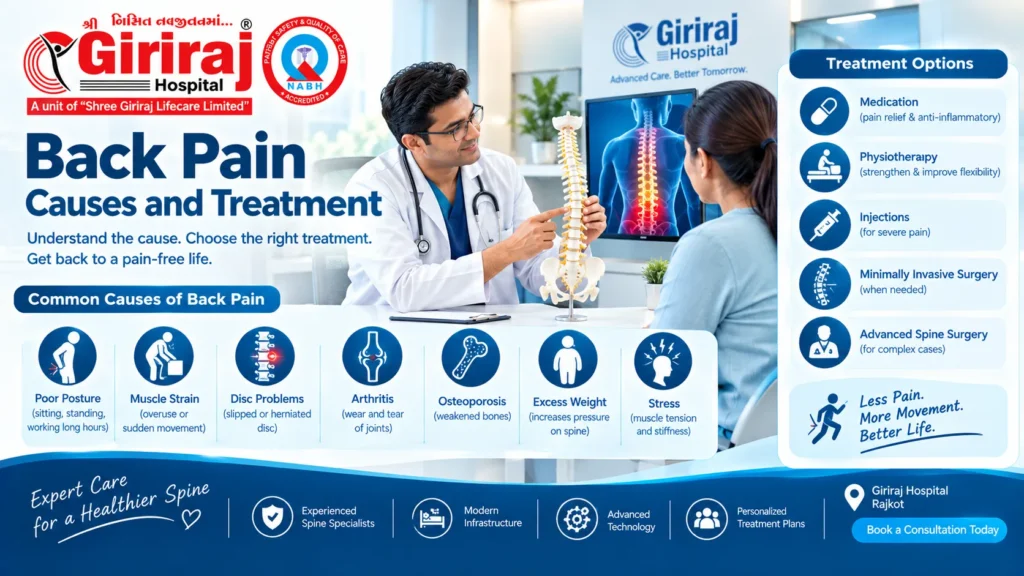
Back pain causes and treatment options vary widely – from a pulled muscle that heals in days to a slipped disc that needs specialist care. Nearly everyone experiences back pain at some point, and for most people it improves with rest and simple care. But persistent or worsening back pain is one of the most common reasons patients visit an orthopaedic or spine specialist, and knowing when to seek help can prevent months of unnecessary discomfort.
Back pain is one of the leading causes of missed work and reduced mobility worldwide, affecting up to 80% of adults at some point in their lives (Source: WHO, 2023). At Shree Giriraj Hospital’s Neurosurgery and Spine Surgery department in Rajkot, doctors regularly help patients understand whether their back pain is a minor strain or a sign of something that needs closer attention. This article covers the common causes, warning signs, diagnosis, and treatment options available.
What Is Back Pain?
Back pain refers to discomfort felt anywhere along the spine, from the base of the neck to the lower back, and it can range from a dull, constant ache to a sharp, shooting sensation. It affects people of every age, though it becomes more common after 30 as spinal discs and muscles naturally lose some flexibility.
Think of your spine like the central pillar of a building, supported by discs that act as cushions between each bone. When those discs wear down, shift out of place, or the surrounding muscles become strained, the whole structure feels the strain – much like a building settling unevenly on a weak foundation. This is why back pain can sometimes be felt in the legs or hips, not just the back itself.
Back pain matters to almost everyone because it directly affects daily movement – sitting, standing, lifting, and even sleeping comfortably. Most cases are manageable with the right approach, but understanding the underlying cause is the first step to lasting relief.
Warning Signs of Back Pain You Should Never Ignore
Recognising which symptoms need medical attention helps you avoid a minor issue turning into a long-term problem. Most everyday back pain improves within a few weeks with rest and basic care, but certain signs point to something more serious.
Signs to watch for:
- Pain that spreads down one or both legs
- Numbness, tingling, or weakness in the legs or feet
- Pain that worsens at night or does not improve with rest
- Difficulty standing straight or a noticeable change in posture
- Back pain following a fall, accident, or heavy lifting injury
- Loss of bladder or bowel control alongside back pain
Early Signs
Mild stiffness, a dull ache after long sitting, or soreness after physical activity are usually early, manageable signs that respond well to rest and gentle movement.
Advanced or Serious Signs
Pain radiating into the legs (commonly known as sciatica), numbness, or muscle weakness suggest the nerves in the spine may be affected and need proper evaluation.
When to see a doctor immediately: Sudden loss of bladder or bowel control, severe leg weakness, or back pain following a serious injury are emergency warning signs. Visit the nearest emergency department without delay.
A commonly missed sign is persistent lower back stiffness in the morning that improves through the day – patients often dismiss this as normal ageing when it may indicate an underlying spinal issue worth checking.
Common Causes and Risk Factors for Back Pain
Understanding why back pain develops helps patients take practical steps toward both treatment and prevention.
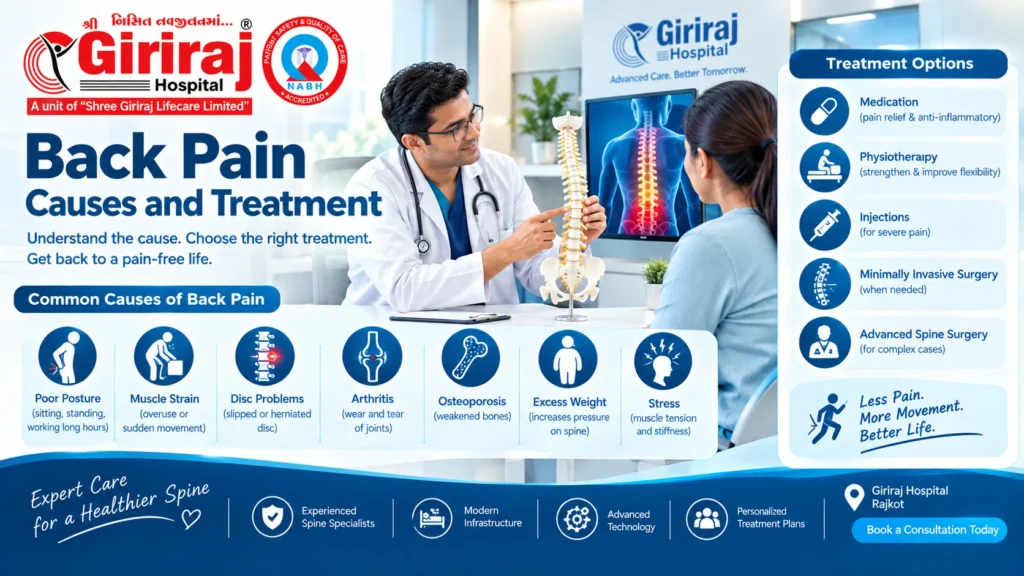
Common Causes
- Muscle or ligament strain from lifting, twisting, or sudden movement
- Bulging or slipped (herniated) disc pressing on nearby nerves
- Age-related wear of spinal discs and joints
- Poor posture, especially during long hours of desk work
- Osteoporosis leading to weaker, more fragile bones
- Underlying spinal conditions present from birth or developed over time
Risk Factors
- Sedentary lifestyle with little regular movement
- Jobs involving heavy lifting or repeated bending
- Excess body weight, which adds strain to the lower spine
- Smoking, which reduces blood flow to spinal discs
- Family history of spine-related conditions
Occupational risk is especially relevant across Saurashtra, where many patients work in farming, transport, or manual labour roles that involve repeated heavy lifting – a major contributor to early spine wear in this region.
Types and Stages of Back Pain
Doctors classify back pain based on how long it lasts and where it originates, which helps guide the right treatment approach.
| Type | Duration / Origin | What It Means for You |
|---|---|---|
| Acute Back Pain | Lasts under 6 weeks, often from strain or minor injury | Usually resolves with rest, physiotherapy, and pain relief |
| Subacute Back Pain | Lasts 6–12 weeks | May need imaging and a more structured treatment plan |
| Chronic Back Pain | Lasts more than 12 weeks | Requires thorough evaluation to identify the root cause |
| Radicular Pain (Sciatica) | Pain radiating from spine into the leg | Suggests nerve involvement, often from a slipped disc |
| Mechanical Back Pain | Related to movement, posture, or structural strain | Often improves significantly with physiotherapy and posture correction |
Most patients who visit a spine specialist fall into the chronic or radicular category, since acute pain often resolves on its own before a hospital visit is needed. Identifying which type you have shapes whether treatment starts with physiotherapy or requires further investigation.
How Is Back Pain Diagnosed?
A spine specialist or orthopaedic doctor uses a combination of physical examination and imaging to identify the exact cause of back pain.
Imaging Tests
An X-ray shows the alignment and structure of the spine, while an MRI gives a detailed view of discs, nerves, and soft tissue – useful when pain radiates into the legs.
Other Procedures
A physical examination checking reflexes, muscle strength, and flexibility often gives the doctor valuable clues even before imaging is done.
What Results Mean
Findings such as a mildly bulging disc are common and do not always require surgery, while a significantly herniated disc pressing on a nerve may need more active treatment.
Most tests are quick and painless. Diagnosis typically leads directly into a tailored treatment plan based on the severity and cause identified.
Treatment Options for Back Pain
Treatment depends on the cause, severity, and how the pain affects your daily life. Your doctor will recommend the best option based on your individual case.
Non-Surgical / Medical Management
Most back pain responds well to physiotherapy, targeted exercises, posture correction, and short-term pain relief medication. Heat or cold therapy and activity modification often help significantly in the early weeks.
Surgical / Procedural Treatment
When pain persists despite conservative treatment, or when there is nerve compression causing weakness, procedures such as microdiscectomy or spinal decompression may be recommended. These are generally considered only after non-surgical options have been tried.
When Each Option Is Chosen
Your doctor will recommend the best option based on your individual case, weighing symptom severity, imaging findings, and how much the pain is affecting daily function.
Shree Giriraj Hospital’s Neurosurgery and Spine Surgery team offers both physiotherapy-led conservative care and advanced surgical treatment for patients who need it, all coordinated within the same department.
Spine Procedure – Step by Step
For patients who do need a spinal procedure, understanding what happens can significantly ease anxiety.
Pre-Operative Preparation
Patients typically undergo pre-surgical blood tests and imaging review, and are guided on fasting and medication adjustments before the procedure.
What happens on the day of the procedure:
- Anaesthesia is administered by the anaesthesiology team
- The surgeon accesses the affected area of the spine through a small, precise incision
- The damaged or protruding disc material is carefully removed or repositioned
- The incision is closed, and the patient is moved to recovery for monitoring
Post-Procedure / ICU Stay
Most patients are monitored for a few hours after the procedure before being moved to a regular ward. Many spine procedures at Shree Giriraj Hospital are done using minimally invasive techniques, which typically means a shorter hospital stay.
Throughout the procedure, a specialist team is with you at every step – from the surgeon and anaesthesiologist to the nursing and physiotherapy staff who support early recovery.
Recovery and Life After Treatment
Recovering from back pain treatment, whether conservative or surgical, follows a fairly predictable path when patients follow their care plan closely.
- Week 1: Focus on rest, gentle movement, and avoiding heavy lifting
- Weeks 2–4: Gradual return to daily activities with guided physiotherapy
- Month 2–3: Most patients resume normal routines, including light exercise
- 6 months and beyond: Long-term posture habits and core-strengthening exercises help prevent recurrence
Physiotherapy plays a central role in recovery, whether or not surgery was needed. Patients who consistently follow their exercise plan generally see better long-term outcomes than those who stop once the pain eases.
Patient story: A 45-year-old truck driver from Rajkot came in with persistent lower back pain radiating into his leg after years of long driving hours. Following a course of physiotherapy and targeted treatment at Shree Giriraj Hospital, he returned to work within weeks, with ongoing exercises to protect his spine going forward.
Getting back to normal life after back pain is entirely achievable for most patients – consistency with recovery guidance makes the biggest difference.
Cost and Ayushman Card Coverage for Back Pain Treatment
We understand that cost of treatment is a major concern for most families, and back pain care can range from a simple physiotherapy course to a spinal procedure.
Physiotherapy and non-surgical treatment are generally affordable and among the more accessible forms of spine care. Costs for surgical treatment vary based on the type of procedure, whether minimally invasive techniques are used, and any additional implants required.
Ayushman Bharat (PM-JAY) covers eligible spine surgeries and hospitalisation for patients under the scheme, depending on the specific procedure and eligibility category. Shree Giriraj Hospital’s Ayushman Mitra desk can guide you through the cashless process for eligible treatments.
Speak to our team for a personalised cost estimate based on your specific condition.
Do’s and Don’ts for Managing Back Pain
| Do This | Don’t Do This |
|---|---|
| Maintain good posture while sitting and standing | Slouch for long hours at a desk or while driving |
| Lift heavy objects by bending your knees, not your back | Bend from the waist to lift heavy items |
| Stay gently active with walking or light stretching | Stay in bed for prolonged periods during mild pain |
| Use a supportive mattress and chair | Sleep on very soft or sagging surfaces |
| Strengthen core muscles through guided exercise | Ignore pain that lasts beyond a few weeks |
| See a specialist if pain radiates into the leg | Self-medicate with painkillers for months without evaluation |
Building simple daily habits – better posture, regular movement, and safe lifting technique – prevents a large share of future back pain episodes.
Common Myths About Back Pain
| Myth | Fact |
|---|---|
| Back pain always means you need surgery | Most back pain resolves with physiotherapy and conservative treatment. Surgery is only recommended in specific cases. |
| Complete bed rest is the best cure for back pain | Prolonged bed rest can actually slow recovery. Gentle movement, as guided by a doctor, usually helps more. |
| Back pain only affects older people | Back pain increasingly affects younger adults due to desk jobs, poor posture, and reduced physical activity. |
| Patients from Rajkot or Saurashtra need to travel to Ahmedabad for spine surgery | Shree Giriraj Hospital’s Neurosurgery and Spine Surgery team in Rajkot offers full diagnostic and surgical care, without the need to travel. |
| Cracking your back is harmful | Occasional cracking sounds from joints are generally harmless and not a sign of damage. |
If you have heard something about back pain or spine surgery that concerns you, ask our specialist team – clearing up misinformation early helps you make confident decisions about your care.
Why Choose Shree Giriraj Hospital for Back Pain Treatment in Rajkot?
Managing back pain well depends on accurate diagnosis and a treatment plan matched to your specific condition – and that is exactly what shapes how Shree Giriraj Hospital’s Spine team works with patients.
Specialist Neurosurgery and Spine Team Close to Home
Shree Giriraj Hospital’s Neurosurgery and Spine Surgery department brings specialist spine care to Rajkot, so patients from across Saurashtra do not need to travel to a bigger city for reliable diagnosis and treatment.
Comprehensive Diagnostic Support
On-site X-ray and MRI facilities help your doctor quickly identify the exact cause of your back pain, without delays between appointments.
Minimally Invasive Surgical Options
For patients who do need surgery, minimally invasive spine techniques help reduce hospital stay and support faster recovery where clinically appropriate.
Integrated Physiotherapy Support
Recovery-focused physiotherapy is available alongside surgical and non-surgical treatment, supporting patients through every stage of their care.
Insurance and Ayushman Support
Shree Giriraj Hospital is empanelled under PM-JAY / Ayushman Bharat, and the hospital’s team assists with cashless processing for eligible spine treatments.
Our Spine team is ready to help – book a consultation today and take the first step toward lasting relief.
Frequently Asked Questions
What are the most common causes of back pain?
Muscle strain, poor posture, and disc-related issues are among the most common causes. A proper evaluation helps identify the exact cause in your case.
When should I see a doctor for back pain?
If pain lasts more than a few weeks, radiates into your legs, or comes with numbness or weakness, it’s time to see a specialist rather than waiting it out.
Can back pain be treated without surgery?
Yes. Most cases of back pain improve with physiotherapy, posture correction, and conservative treatment. Surgery is considered only when these options do not provide relief.
How long does recovery take after spine surgery?
Recovery varies by procedure, but many patients return to light activity within a few weeks with minimally invasive techniques, and full recovery typically continues over a few months with physiotherapy.
Is back pain treatment covered under Ayushman Card?
Eligible spine surgeries and related hospitalisation may be covered under PM-JAY depending on the specific procedure and eligibility category. Our Ayushman Mitra desk can confirm your specific eligibility.
Can I come to Shree Giriraj Hospital just for a back pain evaluation?
Yes. Shree Giriraj Hospital’s Neurosurgery and Spine Surgery department in Rajkot welcomes patients for both initial evaluations and complete treatment plans.
Is back pain a sign of a serious spine problem?
Not always. Most back pain is mechanical and improves with simple care, but persistent or radiating pain should be evaluated to rule out disc or nerve involvement.
Does sitting for long hours cause back pain?
Yes, prolonged sitting with poor posture is one of the most common contributors to back pain, especially among people with desk-based jobs.
Start Your Back Pain Treatment Journey Today
Back pain is one of the most common health complaints, but persistent or radiating pain deserves proper evaluation rather than being pushed aside. Getting the right diagnosis early often means a faster, simpler path to relief.
Our Neurosurgery and Spine Surgery team at both our Rajkot Main and Kuvadva campuses is ready to help you understand your condition and find the right treatment plan for you. Book an appointment with our Spine team today, or contact us to learn more.
Explore more: Knee Replacement Surgery: When Do You Actually Need It? | High Blood Pressure Symptoms