

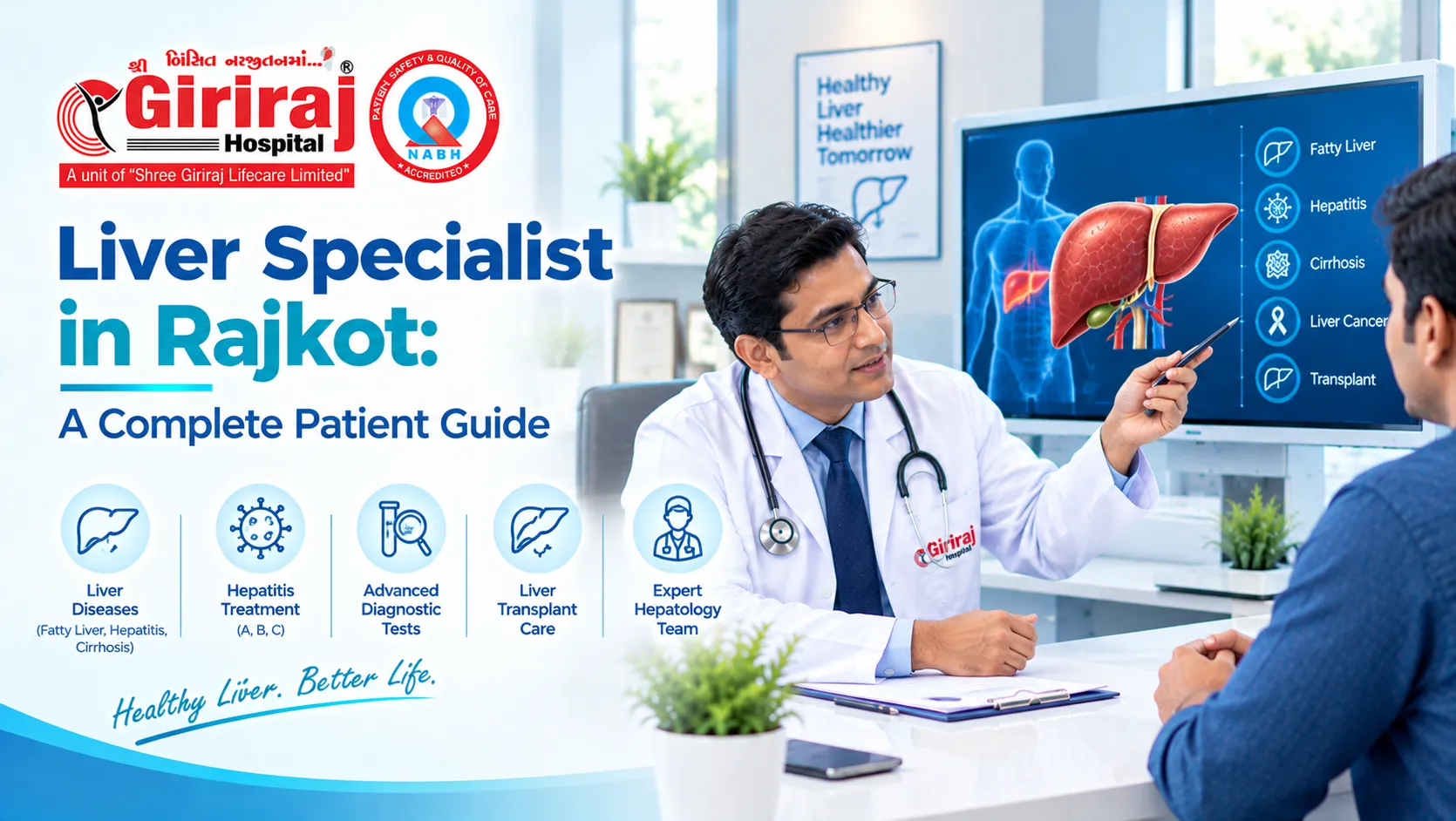

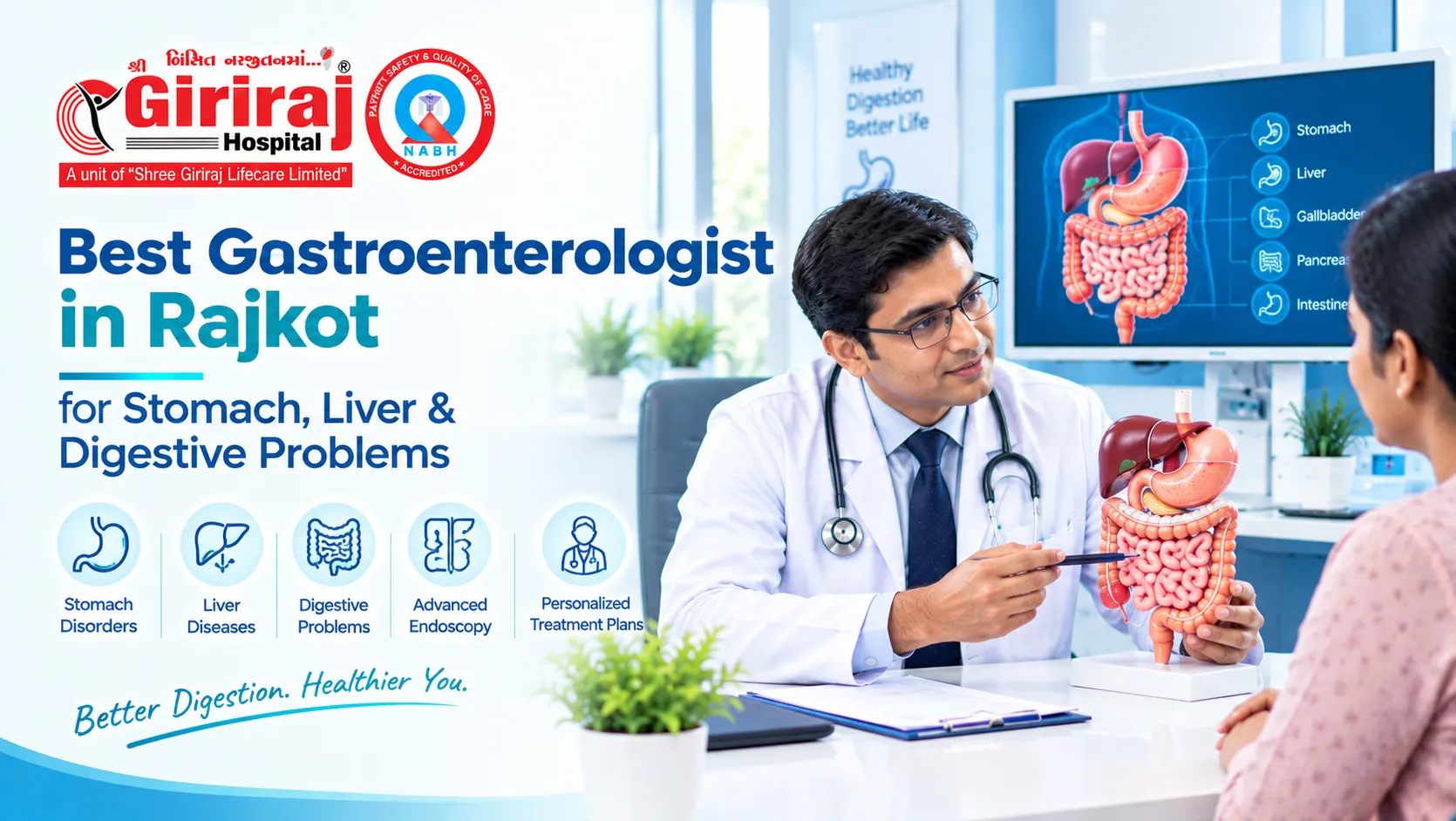

Persistent acidity, bloating or irregular bowel habits are often brushed off as “just how my stomach is”. Symptoms that keep coming back, or that come with warning signs, are worth discussing with a doctor rather than treating repeatedly on your own.
Digestive problems are common. They range from mild acid reflux to conditions such as inflammatory bowel disease and liver disease. Diet, body weight, infections, alcohol and stress can all play a part. The Gastroenterology department at Shree Giriraj Hospital, Rajkot evaluates and treats conditions of the digestive system and liver. You can read more about the hospital on the About Us page.
This guide explains what a gastroenterologist treats, the warning signs to watch for, common causes, how digestive conditions are diagnosed, the treatment options, what a consultation and an endoscopy involve, recovery and diet, and how cost and insurance work. It is general information and does not replace a consultation with a doctor.
What Does a Gastroenterologist Treat?
A gastroenterologist is a doctor who diagnoses and manages conditions of the digestive system, including the food pipe, stomach, intestines, liver, pancreas and gallbladder. This covers conditions from acid reflux and irritable bowel syndrome to liver disease, gallstones and gastrointestinal bleeding.
Many people are not sure whether their symptoms need a general physician or a specialist. Occasional digestive discomfort can often be assessed by a general physician. Symptoms that are recurring, severe or unexplained should be evaluated by a gastroenterologist. At Shree Giriraj Hospital, the Gastroenterology department works with Internal Medicine where a patient’s symptoms need broader evaluation.
| Think of it this way Your digestive system works like a long, connected pathway, from the food pipe to the intestines. Each part has to work for the next to work properly. A gastroenterologist’s task is to find where in that pathway the problem lies, whether in the stomach, liver or intestines. |
Warning Signs You Should Not Ignore
Occasional acidity or an upset stomach is common and rarely serious. Certain symptoms, especially if they persist or worsen, need prompt evaluation.
Early warning signs
- Frequent acidity or heartburn, for example more than twice a week
- Persistent bloating or excessive gas
- Irregular bowel habits, such as alternating constipation and loose motions
- Mild but recurring abdominal discomfort
- Unexplained loss of appetite
- Nausea that comes and goes without a clear cause
- Tiredness along with digestive discomfort
Serious warning signs
- Blood in vomit or stool, or black, tarry stools
- Unexplained, significant weight loss
- Difficulty or pain while swallowing
- Vomiting that does not settle
- Yellowing of the skin or eyes (jaundice)
- Severe abdominal pain that does not improve
| When to seek emergency care immediately Blood in vomit or stool, severe abdominal pain or sudden jaundice can signal a serious digestive emergency. Do not wait. Call the hospital’s emergency line on +91 99099 71130 or use the Ambulance Services page, or go to the nearest emergency department. |
Liver-related symptoms can develop quietly over time. Our related article on fatty liver disease explains early signs of liver changes.

Causes and Risk Factors
Digestive conditions develop from a mix of diet, lifestyle, infection and, sometimes, genetics. There is no benefit in feeling guilty about eating habits shaped by work, family meals or convenience. Understanding the cause and getting the right evaluation is what matters.
Common causes
- Dietary patterns: a diet high in fried, spicy or oily food can contribute to acidity, gastritis and long-term digestive strain.
- Irregular eating habits: skipping meals, eating late at night or eating very quickly can disturb normal digestion over time.
- Infections: certain bacterial infections, including H. pylori, are a common cause of chronic gastritis and ulcers.
- Alcohol and tobacco: both can affect liver and digestive health over time.
- Stress: chronic stress is linked with irritable bowel syndrome and can make acid reflux symptoms worse.
Who should consider a gastroenterology consultation
- Anyone with digestive symptoms that persist for more than a few weeks
- People with a family history of digestive cancers or inflammatory bowel disease
- People with diagnosed or suspected fatty liver disease
- People who are overweight, which is a known risk factor for several digestive conditions
- Regular alcohol users and long-term users of certain medicines, such as some pain relievers
- Adults over 45 with digestive symptoms or a family history, who want to ask a doctor about screening
Digestive and metabolic health are closely connected. For weight-related concerns, the hospital also has Bariatric and Obesity Clinic pages describing those services.
Types of Digestive Conditions
Not every digestive complaint is the same. The table below gives a general overview of common conditions and how they are typically approached. Your doctor will decide what applies to you.
| Condition | What it means | Typical approach |
|---|---|---|
| Acid reflux (GERD) | Stomach acid regularly flows back into the food pipe and causes heartburn | Lifestyle changes and medicine to reduce acid |
| Gastritis and peptic ulcers | Inflammation or sores in the stomach lining, often from infection or irritants | Medicine and, if present, treatment for infection |
| Irritable bowel syndrome (IBS) | A functional disorder causing bloating, cramping and irregular bowel habits | Dietary changes, stress management and symptom-directed medicine |
| Inflammatory bowel disease (IBD) | Long-term inflammation of the digestive tract, including Crohn’s disease and ulcerative colitis | Long-term medicine and monitoring; surgery in some cases |
| Liver disease | Conditions such as fatty liver or hepatitis that affect liver function | Lifestyle changes, medicine and monitoring, depending on the cause |
| Gallstones | Hardened deposits in the gallbladder that sometimes cause pain | Monitoring or surgical removal, depending on symptoms |
When surgery becomes part of the picture
Conditions such as symptomatic gallstones or certain complications of IBD may need surgery. The Laparoscopic & General Surgery department is part of the same hospital, and the teams coordinate care where both are involved.
| Clinical note Not all bloating is IBS, and not all stomach pain is gastritis. Several digestive conditions share similar symptoms. This is why a proper evaluation, rather than repeated self-medication with antacids, matters when symptoms persist. |
How Are Digestive Conditions Diagnosed?
Doctors rely on a detailed history, examination, blood tests and, often, direct visualisation of the digestive tract. Symptoms alone are not enough to make a diagnosis.
Blood tests
- Complete blood count (CBC): checks for anaemia or infection that may be linked to digestive symptoms.
- Liver function test (LFT): assesses how the liver is working and helps screen for liver disease.
- H. pylori testing: checks for a bacterial infection linked to gastritis and ulcers.
Imaging tests
- Abdominal ultrasound: looks at the liver, gallbladder and pancreas for structural changes or gallstones.
- CT scan (when needed): gives more detailed images for complex abdominal conditions.
Endoscopic procedures
- Upper GI endoscopy (gastroscopy): a thin, flexible camera is used to examine the food pipe, stomach and upper intestine.
- Colonoscopy: examines the large intestine and is used to investigate bleeding or persistent bowel changes.
Some baseline blood and liver tests are included in health check-up packages. The Health Check-Up Plan page lists what each package contains. A check-up does not replace evaluation of symptoms you already have.
Treatment Options for Digestive Conditions
Treatment depends on the specific condition, its severity and how it affects daily life. Many digestive conditions are managed without surgery, but this varies from person to person.
Non-surgical (medical) management
Medicine, dietary changes and lifestyle guidance form the basis of treatment for conditions such as acid reflux, gastritis and IBS. The Gastroenterology department can advise on the plan that suits your condition. How well a person responds differs from one patient to another.
Surgical and procedural treatment
When conditions such as gallstones, certain hernias or complications of IBD need surgery, the Laparoscopic & General Surgery department performs laparoscopic (keyhole) procedures where they are clinically suitable, in coordination with gastroenterology.
Government health insurance
PM-JAY covers certain procedures for eligible beneficiaries, as per the scheme’s package list. To understand eligibility and how cashless treatment works, read our Ayushman Bharat (PM-JAY) guide. You can also ask about eligibility when you visit; the Book an Appointment page has the booking options.
A Gastroenterology Consultation and Endoscopy: Step by Step
Preparing for your visit
- Note your symptom pattern, including when it happens, possible triggers and how long it has lasted
- Bring previous reports, scans and a list of the medicines you take
- If an endoscopy is planned, follow the fasting instructions given by your care team
- If sedation is planned, arrange for someone to accompany you
The process
- Consultation: the gastroenterologist reviews your symptoms and history and examines your abdomen.
- Tests: blood tests, imaging or endoscopy may be advised, depending on the initial findings.
- Endoscopy (if advised): a thin, flexible camera examines the relevant part of the digestive tract. The care team will tell you how long the procedure is expected to take.
- Diagnosis and plan: once results are available, your doctor explains the findings and the proposed treatment.
- After an endoscopy: recovery from sedation varies. Your care team will tell you when you can go home and what to watch for.
If admission is needed
Some conditions, such as significant gastrointestinal bleeding or acute pancreatitis, need close monitoring. Depending on the condition, patients may be admitted to the ICCU and later moved to the General Ward. Where sedation is needed for a procedure, the Anesthesiology department is involved in pre-procedure evaluation.
Recovery and Dietary Management
Recovery from a digestive condition depends on dietary and lifestyle habits as well as on medicine. The timeline below is only a general guide. Your doctor’s instructions come first.
First week
- Do: follow the prescribed medicine schedule exactly, and take bland, easily digestible food if advised
- Do not: go back to spicy, oily or heavy meals straight after a flare-up or a procedure
Weeks 2 to 4
- Reintroduce a balanced diet gradually as symptoms improve
- Keep a simple food diary if certain foods seem to trigger symptoms
- Attend follow-up appointments so your doctor can review how you are doing
Months 2 to 3 and after
For long-term conditions such as IBS or fatty liver, sustainable dietary and lifestyle habits matter most. The hospital’s Wellness Program page describes the wellness services available. Some patients are advised periodic monitoring; the Health Vital Plus Package page lists what that package includes.
Related reading: bariatric surgery for long-term weight loss, which explains how digestive and metabolic health can be connected.
Cost and Insurance for Digestive Treatment
The cost of digestive care depends on whether treatment involves medicine and diet alone, a diagnostic endoscopy or a surgical procedure. Costs depend on the individual diagnosis and treatment plan, so an estimate is usually given after evaluation.
Factors that affect the total cost
- Type of treatment: medical management, endoscopy or surgery
- Whether sedation and monitoring are needed for a procedure
- Diagnostic tests needed, including imaging and endoscopy
- Any hospital stay needed for acute complications
For patients eligible under PM-JAY, coverage depends on the scheme’s package list. Our Ayushman Bharat (PM-JAY) guide explains eligibility and the cashless process. The hospital’s insurance desk helps with document verification and claim coordination. To check eligibility before your visit, use the Contact Us page.
Do’s and Don’ts for Digestive Health
| Do | Do not |
|---|---|
| Eat meals at regular times each day | Skip meals regularly or eat very late at night |
| Choose home-cooked, moderately spiced meals most days | Rely heavily on fried snacks, street food and very spicy dishes every day |
| Chew slowly and avoid eating in a rush | Eat quickly while distracted, which can worsen bloating and reflux |
| Drink plain water through the day | Rely on excessive tea, coffee or carbonated drinks |
| See a doctor if you need antacids frequently | Rely on long-term self-medication with over-the-counter antacids |
| Manage stress through rest, activity or hobbies | Ignore chronic stress, which can worsen IBS and reflux symptoms |
| Limit alcohol, which can affect liver and digestive health | Continue heavy alcohol use after a digestive or liver diagnosis |
| Ask your doctor how often you should have a liver and digestive check-up | Wait for symptoms to become severe before seeking evaluation |
If you are unsure about your digestive or liver health, ask your doctor whether a health check-up that includes liver function tests is appropriate.
Common Myths About Digestive Health
| Myth | Fact |
|---|---|
| Acidity is always harmless and never needs a doctor | Frequent acidity can have an underlying cause. If it persists, it should be evaluated. |
| Antacids can safely replace a doctor’s evaluation in the long term | Antacids relieve symptoms but do not address the cause. A persistent need for them calls for evaluation. |
| Endoscopy is always painful and best avoided | Endoscopy is usually done with sedation or throat numbing, as decided by the doctor. How it feels varies from person to person. |
| IBS is “just stress” and not a real medical condition | IBS is a recognised digestive disorder with real physical symptoms, although stress can affect its severity. |
| Fatty liver only affects people who drink alcohol | Non-alcoholic fatty liver disease is common and is linked to diet, weight and metabolic health, not only to alcohol. |
| Spicy food is the only cause of stomach problems | Infections, stress, irregular eating habits and underlying conditions can all contribute to digestive symptoms. |
| Anyone with a digestive problem must travel to another city | Many digestive conditions can be evaluated at a local multispeciality hospital. Whether a particular case needs referral depends on the condition, and your doctor will advise. |
Gastroenterology Services at Shree Giriraj Hospital
The points below describe services at the hospital. Please confirm current availability by calling the hospital or visiting the Contact Us page.
- Gastroenterology department: evaluation and treatment of digestive and liver conditions, with referral to other departments where needed. See the Gastroenterology page.
- Surgical department: Laparoscopic & General Surgery is part of the hospital.
- Critical care: the Critical Care department looks after patients who need close monitoring.
- Doctors: the Doctors page lists consultants with qualifications, registration numbers and OPD timings.
- Appointments: use the Book an Appointment page, or call the numbers listed on the Contact Us page.
Frequently Asked Questions
When should I see a gastroenterologist?
Consider a consultation if you have frequent acidity, unexplained weight loss, blood in stool, persistent abdominal pain, or digestive symptoms lasting more than a few weeks. Do not rely only on self-medication.
What is the difference between a gastroenterologist and a general physician?
A general physician can assess mild, occasional digestive symptoms. A gastroenterologist specialises in diagnosing and treating digestive, liver and bowel conditions that are more complex or persistent, and may perform endoscopic procedures.
Is endoscopy covered under Ayushman Bharat (PM-JAY)?
Coverage depends on the scheme’s package list and the patient’s eligibility. Our Ayushman Bharat (PM-JAY) guide explains eligibility and the cashless process.
Is fasting required before an endoscopy?
Usually yes. Your care team will give exact fasting instructions when the procedure is scheduled. Tell them about all medicines you take so they can advise you.
What tests does a gastroenterologist typically recommend?
Common tests include blood tests, a liver function test and an abdominal ultrasound. An upper GI endoscopy or colonoscopy may be advised depending on symptoms.
How urgent is blood in stool or vomit?
Blood in stool or vomit needs prompt medical evaluation. It can point to a serious underlying condition and should not be delayed.
Does the hospital treat liver disease?
The Gastroenterology department evaluates liver conditions, including fatty liver disease, with support from Internal Medicine.
How do I book a consultation?
Use the Book an Appointment page, or call the numbers listed on the Contact Us page.
How much does an endoscopy cost?
The cost depends on the type of procedure and whether sedation is needed. The hospital can give details after evaluation; contact the team through Contact Us.
Can I get a second opinion before starting treatment?
Yes. The Second Opinion & Teleconsultation page explains how to discuss a diagnosis or earlier report with a specialist remotely.
Conclusion
Digestive symptoms are easy to dismiss, but symptoms that persist or come with warning signs deserve proper evaluation, not just another antacid.
If you have persistent or unusual digestive symptoms, speak to a doctor. Information on the Gastroenterology department at Shree Giriraj Hospital, Rajkot is on its department page. For appointments, see Book an Appointment, or use Contact Us for questions before your visit.
Related articles: Fatty Liver Disease | Bariatric Surgery | Ayushman Bharat / PM-JAY Guide | All articles
| Disclaimer This article is for patient information only. It is not a substitute for consultation with a registered medical practitioner and does not constitute diagnosis or treatment advice. Shree Giriraj Lifecare Private Limited, Rajkot. |