





Persistent acidity that antacids barely touch. Bloating that’s become a daily, not occasional, occurrence. A liver enzyme flagged as “slightly high” on a routine blood test that nobody’s fully explained. These are the moments that send people searching for the best gastro doctor in Rajkot – often after weeks or months of trying to manage symptoms alone.
This guide covers what a gastroenterologist actually treats, which symptoms genuinely warrant a visit, and what to look for when choosing the best gastro doctor in Rajkot for your specific situation – whether that’s a straightforward acidity problem or something that needs a closer look at your liver, pancreas, or intestines.
Why Rajkot Patients Are Increasingly Searching for Local Gastro Care
For years, patients in Rajkot with complex digestive or liver conditions often felt they needed to travel to Ahmedabad or Mumbai for specialized gastroenterology care. That’s changed meaningfully as local hospitals have built out dedicated departments with both diagnostic and surgical capability under one roof.
This matters most for conditions requiring ongoing management – chronic liver disease, inflammatory bowel disease, or post-surgical follow-up – where repeated long-distance travel for routine visits becomes a genuine burden. Finding the best gastro doctor in Rajkot, rather than defaulting to a metro city referral, increasingly means getting comparable expertise without that added logistical and financial strain.
What Does a Gastroenterologist Actually Treat?
A gastroenterologist is a doctor specializing in the digestive system – the esophagus, stomach, liver, pancreas, gallbladder, and intestines. This covers an enormous range, from common everyday complaints like acidity to more serious conditions like liver disease, inflammatory bowel disease, and gastrointestinal cancers.
Medical vs. surgical gastroenterologists
A medical gastroenterologist diagnoses and manages digestive conditions primarily through medication, lifestyle changes, and procedures like endoscopy. A surgical gastroenterologist (also called a GI surgeon) performs operations when a condition requires surgical intervention – gallbladder removal, hernia repair, or GI cancer surgery, for example. Many patients benefit from a hospital where both specialties work together, since some conditions move between medical management and surgical treatment as they progress.
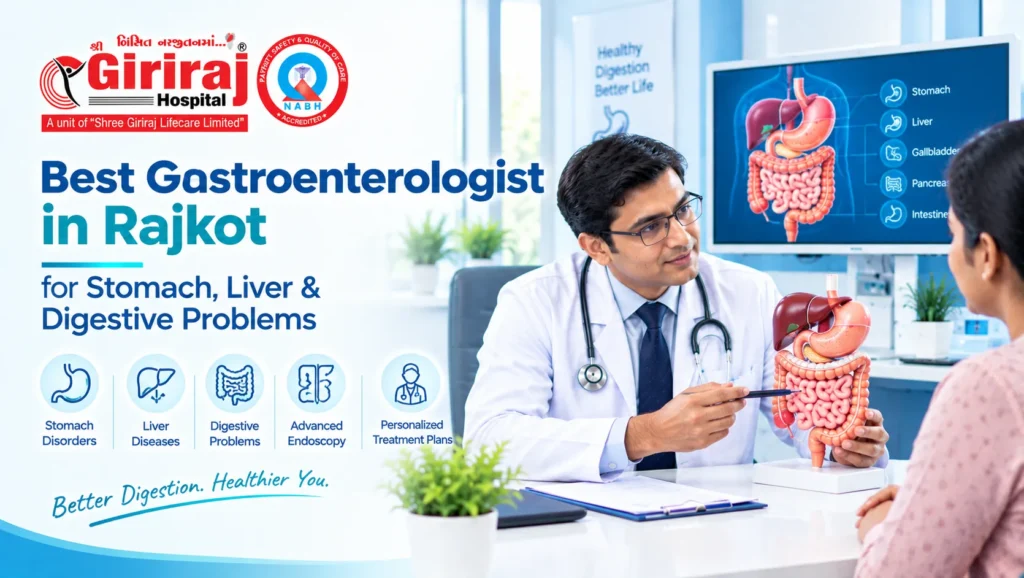
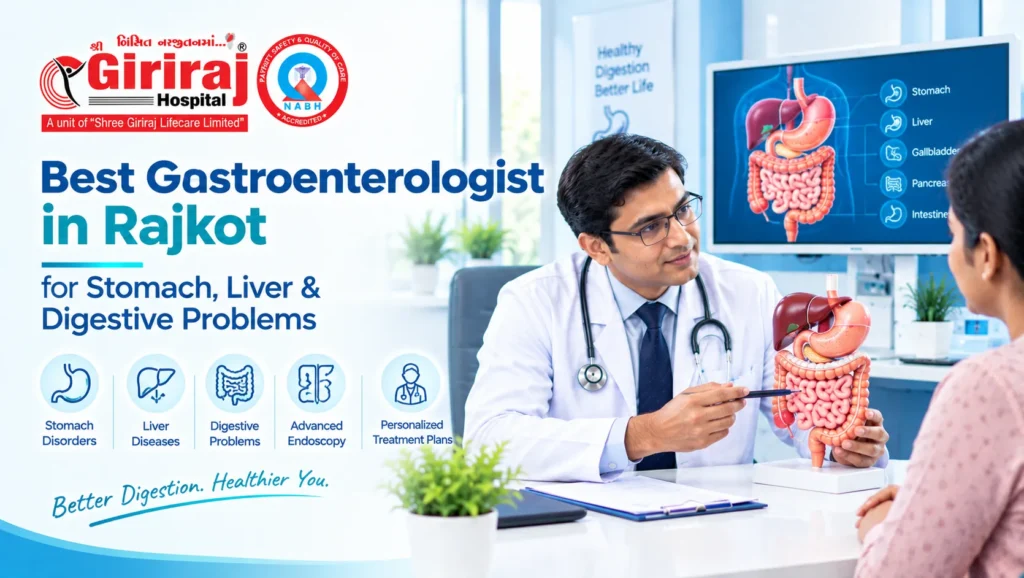
Giriraj Hospital’s gastroenterology department includes both – Dr. Devang Tank as a medical gastroenterologist, hepatologist, and interventional endoscopist, and Dr. Nikunj Patel as a surgical gastroenterologist and laparoscopic surgeon – so patients don’t need to be redirected elsewhere if their condition needs surgical treatment.
Signs You Should See a Gastroenterologist
What symptoms mean I should see a gastro doctor?
- Persistent heartburn or acidity that doesn’t improve with over-the-counter antacids
- Difficulty or pain when swallowing
- Unexplained abdominal pain lasting more than a few days
- Chronic constipation or diarrhea
- Blood in the stool, or unusually dark or tarry stools
- Persistent bloating or excessive gas
- Unexplained weight loss
- Yellowing of the skin or eyes (jaundice)
- Vomiting blood
Any of these, especially if persistent or worsening, is a reasonable trigger to book a consultation rather than waiting for symptoms to resolve on their own. Some, like vomiting blood or dark tarry stools, warrant urgent same-day evaluation.
Why symptoms are easy to dismiss
Digestive symptoms are often dismissed as “just something I ate” or attributed to stress, especially when they come and go. This delay is common, but it’s also why many patients who eventually see a gastroenterologist have been managing symptoms informally for months, sometimes years, before seeking proper evaluation. Catching patterns early – rather than waiting for symptoms to become severe or constant – generally leads to simpler, more effective treatment.
Common Conditions Treated by a Gastroenterologist
Acidity, GERD, and acid peptic disorders
Gastroesophageal reflux disease (GERD) and related acid peptic disorders are among the most common reasons people search for the best gastro doctor in Rajkot. While occasional acidity is normal, frequent or severe reflux can damage the esophagus over time if left untreated, which is why persistent symptoms deserve proper evaluation rather than ongoing self-medication.
Peptic ulcers
Ulcers in the stomach or upper intestine, often caused by H. pylori infection or long-term use of certain pain medications, can cause burning pain, bloating, and in more serious cases, bleeding. Proper diagnosis, often through endoscopy, guides effective treatment.
Irritable bowel syndrome (IBS)
IBS causes recurring abdominal pain along with altered bowel habits – diarrhea, constipation, or both – without visible structural damage to the intestines. It’s a genuine, often frustrating condition that benefits significantly from a gastroenterologist’s guidance on diet, triggers, and, where needed, medication.
Inflammatory bowel disease (IBD)
Crohn’s disease and ulcerative colitis are chronic inflammatory conditions of the digestive tract that require ongoing specialist management, often including specific medications to control inflammation and prevent complications over time.
Liver disease
This is where a hepatologist’s expertise matters specifically. Fatty liver disease, viral hepatitis (B and C), alcohol-related liver damage, and cirrhosis all fall under this category, and early detection significantly changes long-term outcomes.
Fatty liver disease in particular is closely linked to excess weight – see our detailed guide on obesity related health risks for more on this connection.
Gallstones and gallbladder disease
Gallstones can cause sudden, severe pain, particularly after fatty meals, and sometimes require surgical removal of the gallbladder – a procedure a surgical gastroenterologist handles, often laparoscopically for faster recovery.
Pancreatic disorders
Acute or chronic pancreatitis, along with pancreatic cysts or tumors, are managed by gastroenterologists, often in coordination with imaging specialists and, when needed, surgeons.
Gastrointestinal cancers
Cancers of the esophagus, stomach, colon, and pancreas fall within gastroenterology’s scope for diagnosis, and often surgical gastroenterology for treatment. Screening – particularly colonoscopy for colorectal cancer – plays a major role in catching these early, when treatment is most effective.
Celiac disease and food intolerances
Celiac disease – an autoimmune reaction to gluten – along with lactose intolerance and other food sensitivities, can cause chronic bloating, diarrhea, and nutrient deficiencies if undiagnosed. A gastroenterologist can properly test for these rather than relying on trial-and-error elimination diets alone, which often leave the underlying cause unconfirmed.
Diverticular disease
Small pouches that form in the wall of the colon, particularly common with age, can become inflamed or infected (diverticulitis), causing significant abdominal pain. Management ranges from dietary changes to, in more severe or recurrent cases, surgical treatment.
Hemorrhoids and anorectal conditions
While often considered separately, hemorrhoids and related anorectal conditions frequently fall within a gastroenterologist’s or surgical gastroenterologist’s scope, particularly when they cause bleeding significant enough to need proper evaluation rather than assumption.
How Gastroenterologists Diagnose Digestive Problems
Upper endoscopy (EGD)
A thin, flexible tube with a camera is passed through the mouth to examine the esophagus, stomach, and the first part of the small intestine. It’s the standard way to investigate persistent acidity, unexplained upper abdominal pain, or swallowing difficulty, and is typically done under light sedation for comfort.
Colonoscopy
Similar in concept but examining the large intestine, colonoscopy is used to investigate blood in the stool, chronic diarrhea, and importantly, to screen for colorectal cancer and polyps, even in people without symptoms once they reach a recommended screening age.
Liver function tests and imaging
Blood tests checking liver enzymes, combined with ultrasound or more detailed imaging when needed, help diagnose and monitor liver conditions, often before any symptoms become noticeable.
ERCP and specialized procedures
For bile duct and pancreatic duct issues – stones, strictures, or tumors – a specialized endoscopic procedure called ERCP allows both diagnosis and, often, treatment in the same session, avoiding more invasive surgery in many cases.
Stool and breath tests
Simple, non-invasive tests can detect H. pylori infection (linked to ulcers), check for hidden blood in the stool, or assess for lactose intolerance and other digestive issues – often the first step before more invasive procedures are considered.
CT and MRI imaging
For conditions involving the pancreas, liver, or bile ducts in more detail than ultrasound can provide, cross-sectional imaging like CT or MRI gives a clearer picture, particularly when planning for possible surgical treatment.
Why Liver Health Deserves Special Attention
Liver disease is often called a “silent” condition because significant damage can occur before any symptoms appear. This makes routine liver function testing valuable, particularly for people with risk factors like obesity, diabetes, heavy alcohol use, or a family history of liver disease.
What are the warning signs of liver problems?
- Persistent fatigue
- Yellowing of the skin or eyes (jaundice)
- Swelling in the abdomen or legs
- Dark urine or pale stools
- Easy bruising or bleeding
- Loss of appetite or unexplained weight loss
A hepatologist – a gastroenterologist with specific liver expertise, like Dr. Devang Tank at Giriraj Hospital – is specifically trained to diagnose and manage the full range of liver conditions, from fatty liver disease to viral hepatitis to more advanced cirrhosis.
Understanding Hepatitis: B, C, and Why Screening Matters
Viral hepatitis remains a significant, often under-diagnosed cause of liver disease in India. Hepatitis B and C can both progress silently for years – sometimes decades – before causing noticeable symptoms, by which point liver damage may already be significant.
- Hepatitis B is preventable through vaccination and is often screened for during routine blood work or before certain medical procedures
- Hepatitis C is now highly treatable with modern antiviral medications, often achieving a full cure with a course of treatment lasting a few months
- Both are more common in people with a history of blood transfusions before rigorous screening protocols, certain medical procedures, or shared needle use
If you’ve never been screened for hepatitis and have any relevant risk factors, or simply want peace of mind, this is a reasonable and straightforward test to request during a gastroenterology consultation or routine health check-up.
What Makes Someone the Best Gastro Doctor in Rajkot for Your Situation?
“Best” isn’t a single, universal answer – it depends on your specific condition. Someone with straightforward acidity has different needs than someone with suspected liver disease or a condition that might require surgery. Here’s a practical checklist.
- Relevant sub-specialization – a hepatologist for liver concerns, a surgical gastroenterologist if a procedure may be needed
- Access to on-site endoscopy and colonoscopy, avoiding delays and referrals to separate facilities
- A hospital with both medical and surgical gastroenterology, so treatment can shift smoothly if a condition needs surgery
- Willingness to explain findings and options clearly, rather than rushing through a consultation
- Follow-up support for chronic conditions like IBD or liver disease, which require ongoing management, not a single visit
Giriraj Hospital’s gastroenterology team covers this full range – you can review the department’s services on the gastroenterology page, or explore surgical options through the
laparoscopic and general surgery department for conditions that require an operation.
What to Expect at Your First Gastroenterology Consultation
Knowing what a first visit typically involves can make it feel less daunting, particularly for patients who’ve never seen a specialist before.
- A detailed history of your symptoms – how long they’ve lasted, what makes them better or worse, and any patterns you’ve noticed
- Questions about diet, alcohol use, medication history, and family history of digestive or liver conditions
- A physical examination, often including a basic abdominal exam
- A discussion of which tests, if any, are needed next – blood work, imaging, or an endoscopic procedure
- A clear explanation of the likely next steps, rather than an open-ended “let’s see”
Coming prepared with a symptom timeline and a list of current medications helps the consultation move efficiently and gives your doctor the clearest possible picture from the start.
Meet Giriraj Hospital’s Gastroenterology Specialists
Dr. Devang Tank – Consultant Gastroenterologist, Hepatologist & Interventional Endoscopist
Dr. Tank’s practice covers the full range of medical gastroenterology – diagnosis and treatment of esophagus and stomach conditions (acidity, indigestion, tumors), intestinal disorders, bile duct and pancreatic conditions, and the full spectrum of liver disease, including hepatitis B and C, fatty liver, and alcohol-related liver damage. He also performs endoscopic procedures, including upper endoscopy for adults and, notably, removal of accidentally swallowed objects in children.
You can view his full profile and areas of expertise on his doctor page.
Dr. Nikunj Patel – Consultant Surgical Gastroenterologist & Laparoscopic Surgeon
For conditions that require surgical treatment – gallstones, certain tumors, or complications from other GI conditions – Dr. Patel provides surgical gastroenterology care, with an emphasis on minimally invasive laparoscopic techniques where appropriate, supporting faster recovery compared to traditional open surgery.
Having both specialists within one department means patients searching for the best gastro doctor in Rajkot don’t need to be referred elsewhere if a condition that starts as a medical issue eventually needs surgical treatment – a meaningful advantage for continuity of care.
Digestive Health Across Different Life Stages
Children and digestive concerns
Children can experience acidity, constipation, or in more urgent cases, accidental ingestion of foreign objects like coins or small toys – all of which fall within a gastroenterologist’s scope. Dr. Devang Tank’s practice specifically includes managing these pediatric endoscopic emergencies, which gives Rajkot families a local option rather than needing a specialized pediatric referral elsewhere for routine cases.
Pregnancy and digestive changes
Pregnancy often brings its own digestive challenges – increased acid reflux, constipation, and occasionally gallbladder issues – due to hormonal changes and physical pressure from the growing uterus. Most of these are manageable with guidance on safe interventions, but persistent or severe symptoms still warrant a gastroenterology consultation, coordinated with your obstetrician.
Older adults and digestive health
Aging brings a higher likelihood of conditions like diverticular disease, slower digestive motility, and increased colorectal cancer risk – all reasons routine screening becomes more, not less, important with age, even without obvious symptoms.
Digestive Health and Lifestyle: What Actually Helps
- Eating regular, moderate-sized meals rather than large meals that trigger reflux or bloating
- Reducing fried, spicy, or heavily processed foods if they’re identified as personal triggers
- Staying adequately hydrated to support healthy digestion and prevent constipation
- Limiting alcohol, which directly affects both the stomach lining and long-term liver health
- Managing weight, since excess weight is closely linked to both GERD and fatty liver disease
- Not smoking, which worsens acid reflux and increases risk for several GI cancers
These changes won’t resolve every digestive condition on their own, but they meaningfully support treatment and, for many patients, reduce symptom frequency and severity alongside proper medical care.
Diet Patterns Specific to Common GI Conditions
General digestive health advice is a good starting point, but specific conditions often benefit from more targeted dietary approaches, ideally guided by your gastroenterologist rather than generic online advice.
- GERD/acidity: smaller, more frequent meals; avoiding lying down soon after eating; identifying and reducing personal trigger foods like caffeine, citrus, or spicy dishes
- IBS: identifying specific trigger foods through careful tracking, sometimes with a structured elimination approach guided by a dietitian
- Fatty liver disease: reducing refined sugar and processed food intake, alongside broader weight management
- IBD (Crohn’s/ulcerative colitis): dietary needs vary significantly by individual and disease activity, making personalized guidance especially important rather than following generic “gut health” advice
What works well for one digestive condition can sometimes worsen another, which is exactly why personalized guidance from a gastroenterologist or dietitian tends to outperform generic dietary advice found online.
The Role of Routine Health Check-Ups in Digestive Health
Because conditions like fatty liver disease, early ulcers, and even some GI cancers can develop with minimal early symptoms, routine screening plays a genuinely valuable role in choosing the best gastro doctor in Rajkot early, particularly for people with known risk factors.
Giriraj Hospital’s health check-up plans include liver function tests and relevant screenings that can catch digestive and liver conditions early, when treatment tends to be simpler and more effective.
Questions Worth Asking Your Gastroenterologist
- What is causing my specific symptoms, and how confident are you in that diagnosis?
- Do I need an endoscopy, colonoscopy, or other procedure, and what will it involve?
- Is this condition something I’ll manage long-term, or is it likely to resolve with treatment?
- Are there dietary or lifestyle changes that would meaningfully help my specific condition?
- If surgery becomes necessary, what would that involve and who would perform it?
Bringing these questions to your consultation ensures you leave with a clear understanding of your condition and plan, rather than a vague sense of what happens next.
When Digestive Symptoms Are a Medical Emergency
Most digestive complaints aren’t emergencies, and don’t require rushing to find the best gastro doctor in Rajkot on the spot, but some symptoms need immediate attention rather than a scheduled appointment. Vomiting blood, sudden severe abdominal pain, black or tarry stools, or signs of severe dehydration from persistent vomiting or diarrhea all warrant urgent evaluation.
Giriraj Hospital’s 24×7 emergency services in Rajkot are equipped to assess these situations urgently rather than waiting for a routine consultation slot.
Insurance and Cost Considerations for Gastroenterology Care
Many gastroenterology procedures, including endoscopy and colonoscopy, are covered under standard health insurance plans, though coverage details vary by policy and by whether the procedure is diagnostic or part of treating an already-diagnosed condition.
Check your insurance’s cashless treatment empanelment status with the hospital before your procedure, and ask for a clear cost estimate once your specific diagnostic or treatment plan is confirmed.
Second Opinions for Complex Digestive Conditions
For conditions like inflammatory bowel disease, suspected GI cancers, or a recommendation for major surgery, seeking a second opinion from another best gastro doctor in Rajkot is a reasonable step before proceeding. A confident specialist will generally support this rather than discourage it.
- Bring your complete test results, imaging, and any biopsy reports to make a second consultation efficient
- Ask specifically whether the second opinion agrees on both diagnosis and recommended treatment approach
- If recommendations differ, ask each doctor to explain their reasoning, which often clarifies which factors are genuinely in question
This is particularly worth considering for conditions with long-term management implications, where getting the initial approach right meaningfully affects years of subsequent care.
Common Myths About Gastroenterology Care
Myth: Acidity is always minor and never needs a specialist
Occasional acidity is common and often manageable on its own, but frequent or severe reflux can damage the esophagus over time and, in some cases, is linked to more serious underlying conditions. Persistent symptoms deserve proper evaluation rather than years of self-managed antacid use.
Myth: Colonoscopy is only necessary if you have symptoms
Routine colonoscopy screening, generally starting around age 45-50 (or earlier with family history or specific risk factors), is recommended for colorectal cancer screening even without symptoms, since early-stage cancers and precancerous polyps often cause no noticeable signs.
Myth: Fatty liver disease only affects people who drink alcohol
Non-alcoholic fatty liver disease is increasingly common and is closely linked to obesity, diabetes, and metabolic factors, entirely separate from alcohol consumption. It’s one of the more commonly under-diagnosed liver conditions precisely because of this misconception.
Myth: Once you’re on medication for acidity, you can eat and drink whatever you want
Medication can control symptoms, but it doesn’t eliminate the underlying triggers. Continuing habits that worsen reflux – large late-night meals, excessive caffeine or alcohol – while relying entirely on medication is a common pattern that often leads to escalating doses over time, rather than genuine improvement.
Myth: If a home remedy helps, the underlying problem doesn’t need investigation
Symptom relief from a home remedy doesn’t rule out an underlying condition that needs proper diagnosis – it simply masks the symptom. This is particularly relevant for persistent acidity, which can occasionally mask more serious conditions that benefit significantly from earlier detection.
A Realistic Patient Journey: Illustrative Example
To make this concrete, here’s an illustrative (not an individual patient’s actual case) example. A 42-year-old with several months of persistent bloating, occasional right-upper-abdominal discomfort, and a recent routine blood test showing mildly elevated liver enzymes consults a gastroenterologist. An ultrasound confirms fatty liver disease, and further evaluation rules out viral hepatitis.
Given the patient’s weight and blood sugar findings, the gastroenterologist coordinates with the broader care team on lifestyle changes and monitoring, rather than treating the liver finding in isolation. Over the following months, with dietary changes and weight management, follow-up liver function tests show meaningful improvement – a common and encouraging outcome when fatty liver disease is caught and addressed early, before it progresses further.
Preparing for an Endoscopy or Colonoscopy
Both procedures require some preparation, and knowing what’s involved in advance reduces unnecessary anxiety about the process itself.
Before an upper endoscopy
- Fasting for several hours beforehand, typically overnight, to ensure a clear view of the stomach
- Informing your doctor about any blood thinners or medications that may need temporary adjustment
- Arranging transportation home, since sedation means you shouldn’t drive afterward
Before a colonoscopy
- Following a specific bowel preparation regimen in the day(s) before the procedure, which clears the colon for a clear view
- Adjusting diet to clear liquids the day before, as instructed
- Similarly arranging transportation home afterward due to sedation
Both procedures are generally well-tolerated, and most patients report the preparation itself as more inconvenient than the procedure, which typically takes only 15-30 minutes.
What Happens If a Biopsy Is Taken During Endoscopy?
It’s common for a small tissue sample (biopsy) to be taken during endoscopy or colonoscopy, even when nothing visibly concerning is seen – this is a routine, precautionary step in many cases, not necessarily a sign of a serious finding. Results typically take several days to a week, and your gastroenterologist will discuss them with you once available, along with any next steps if needed.
Patients often feel significant anxiety waiting for biopsy results, which is completely understandable. It’s worth asking your doctor directly, at the time of the procedure, how and when you’ll receive results, so you know what to expect during the wait.
Frequently Asked Questions
When should I see a gastroenterologist instead of a general physician?
If symptoms are persistent (lasting more than two to three weeks), recurring, or include warning signs like blood in the stool, unexplained weight loss, or jaundice, a gastroenterologist’s specific expertise is more appropriate than continued management by a general physician.
Is endoscopy painful?
Upper endoscopy is typically performed under light sedation, and most patients report minimal discomfort, with the procedure itself lasting only a few minutes. Some throat soreness afterward is common but usually resolves within a day.
How do I choose the best gastro doctor in Rajkot for liver problems specifically?
Look specifically for a hepatologist – a gastroenterologist with additional liver-specific training – rather than a general gastroenterologist, since liver disease management often requires more specialized, ongoing expertise.
Can digestive problems be a sign of something serious?
Sometimes, yes. While most digestive complaints are benign and manageable, persistent or worsening symptoms, especially alongside weight loss, bleeding, or jaundice, warrant thorough evaluation to rule out more serious underlying conditions.
What’s the difference between a gastroenterologist and a surgical gastroenterologist?
A gastroenterologist manages digestive conditions primarily through medication and non-surgical procedures like endoscopy. A surgical gastroenterologist performs operations when a condition requires surgical treatment, such as gallbladder removal or GI cancer surgery.
How often should I get a liver function test?
For most healthy adults, liver function tests as part of a routine annual health check-up are sufficient. Those with risk factors – obesity, diabetes, heavy alcohol use, or known liver conditions – may need more frequent monitoring, as advised by their gastroenterologist.
How Giriraj Hospital’s Gastroenterology Department Fits Into Broader Care
Digestive and liver conditions frequently overlap with other health concerns – diabetes, obesity, cardiovascular risk – which is why coordinated care across departments matters. Giriraj Hospital’s gastroenterology team works alongside internal medicine, bariatric surgery, and cardiology specialists when a patient’s digestive condition intersects with these broader health factors, rather than treating the digestive complaint in complete isolation.
For patients whose digestive concerns are closely tied to excess weight, the hospital’s bariatric surgery program offers a coordinated path forward when lifestyle changes alone haven’t been sufficient.
This integrated approach reflects a broader principle worth looking for in any hospital: the best gastro doctor in Rajkot for a complex case is rarely working entirely alone, but rather as part of a team equipped to address the full picture of a patient’s health, not just the digestive symptom that brought them in.
Talking to Family Members Who Avoid Seeing a Doctor
Digestive symptoms are sometimes treated as embarrassing or too minor to mention, which delays a visit to the best gastro doctor in Rajkot and leads some family members – particularly older relatives – to delay seeking care far longer than they should. A gentle, practical approach tends to work better than pressure or repeated nagging.
- Frame the visit around a specific, concrete symptom rather than a vague “you should get checked”
- Offer to accompany them to the appointment, which often reduces reluctance significantly
- Avoid minimizing their embarrassment about symptoms like bowel changes – acknowledging it can make them more willing to discuss it with a doctor
- Point out that many common digestive conditions are quickly diagnosed and effectively treated, which can ease fear of a worse-case assumption
Family support in this specific way – practical rather than pressuring – often makes the actual difference in whether a reluctant family member finally seeks care.
Cost of Common Gastroenterology Procedures in Rajkot
Cost is a practical concern for many patients searching for the best gastro doctor in Rajkot, particularly for procedures like endoscopy, colonoscopy, or gallbladder surgery. While exact figures vary by hospital, procedure complexity, and whether sedation, biopsy, or additional testing is needed, a few general points help set expectations.
- Diagnostic endoscopy and colonoscopy are generally the most affordable procedures, especially without additional interventions
- Costs rise with therapeutic procedures – polyp removal, biopsy, or ERCP – compared to purely diagnostic ones
- Surgical procedures like laparoscopic gallbladder removal involve hospital stay costs in addition to the procedure itself
- Most standard diagnostic and many surgical gastroenterology procedures are covered under standard health insurance, subject to policy terms
Requesting a written estimate once your specific procedure is confirmed remains the most reliable way to plan financially, rather than relying on general figures that vary considerably by individual case.
Final Thoughts
Finding the best gastro doctor in Rajkot for your specific situation comes down to matching the right expertise to your condition – a hepatologist for liver concerns, a surgical gastroenterologist if a procedure may be needed, and ideally, a team where both work together under one roof. Persistent digestive symptoms are rarely something to simply live with indefinitely, and proper evaluation often resolves problems that have been quietly affecting daily life for months or years.
If you’re dealing with ongoing stomach, liver, or digestive symptoms, you can book a consultation with Giriraj Hospital’s gastroenterology team for a thorough evaluation and personalized treatment plan.
Related reading: for more on how excess weight affects liver and digestive health, see our guide on
obesity related health risks, and for options if surgery becomes necessary, see our
bariatric and laparoscopic surgery services.
Whether your concern is occasional acidity or a more complex liver condition, the right next step is usually the same: a proper evaluation with a gastroenterologist who can match your specific symptoms to the right diagnosis and treatment path, rather than continued guesswork.